interview
Interview with Jacques Forestier
November 1, 2026
“I want to share the music I love most with as many people as possible…”


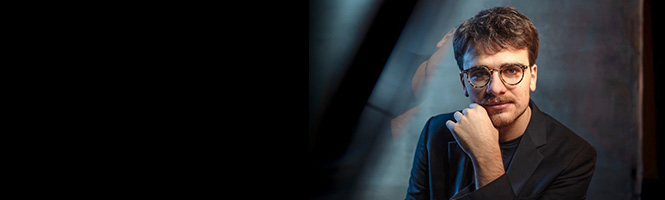





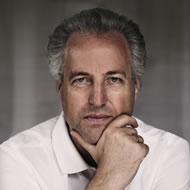
Manfred Honeck has been Music Director of the Pittsburgh Symphony Orchestra since the 2008/2009 season. In addition to concerts at venues such as Carnegie Hall and Lincoln Center in New York, he and the orchestra regularly perform with great success for European audiences. Since 2010, they have toured extensively, appearing in numerous European music capitals and at major European music festivals, including the Rheingau Music Festival, the Schleswig-Holstein Music Festival, the Beethovenfest Bonn, the Musikfest Berlin, the Grafenegg Festival, the Lucerne Festival, the Enescu Festival, the Salzburg Festival, and the BBC Proms. Manfred Honeck and his orchestra maintain a close relationship with the Vienna Musikverein, which will continue during their next major tour of European cities in the fall of 2019. The 2019/20 season will see Manfred Honeck as a guest conductor with, among others, the Deutsches Symphonie-Orchester Berlin, Danish National Symphony Orchestra, Seoul Philharmonic, Chicago Symphony Orchestra, Münchner Philharmoniker, Accademia di Santa Cecilia, Wiener Symphoniker, WDR Sinfoniechester, Oslo Philharmonic, London Symphony Orchestra and the Bamberger Symphoniker.
Classicpoint.net: You grew up with eight siblings and raised six children yourself.
Yes, it was quite common in earlier times to have a large family, especially in rural areas. I grew up in Vorarlberg. I think it was a very happy life, because we had a very strong bond and we also learned to resolve conflicts and be considerate of one another. That's something very special in a large family.
Musically speaking, it was beneficial in that each of the children learned an instrument. We started playing together very early on. But it was also a life of deprivation. For example, all the neighbors already had a television. We simply couldn't afford that. Going to restaurants wasn't possible. My father didn't have the money for it, but we children didn't notice, of course. We were very happy, and I wouldn't want to miss out on that large family, just as I wouldn't want to miss out on my own children now. Having a child is a gift. Having just one child is a gift, but I love children and I love family.
A great deal of musical talent has come out of this large family. Your brother is now concertmaster of the Vienna Philharmonic.
Four of the other children have become musicians. You already mentioned my brother Rainer, who is concertmaster of the Vienna Philharmonic. My sister is a soloist at the Vienna Volksoper, and my eldest brother is now retired, but he was a conductor and répétiteur at the Frankfurt Opera. So, four children out of this family of nine have become professional musicians.
I should mention something else, because it's very important for understanding: My father was very keen for the young children to have a good education on their instruments. He saw that this might not be entirely possible in these small, rural villages. So he decided to move the whole family to Vienna. As I said before, we didn't have any money. He still had the courage and took the risk, for one simple reason: he wanted the best quality, the best education for his children. If he hadn't taken that step, I probably wouldn't have become a conductor. This shows that a decision in life can have far-reaching consequences for an entire life, as has been the case for my siblings and me.
You now have six children of your own. But you travel very often. How do you manage to juggle all that with your travels? Or rather, how did your wife manage, who was often on her own with this large family for extended periods?
Of course, there are sacrifices involved. We have a life together that is somehow adapted to my profession. But I think my wife has been wonderful in that regard. She has supported me so much at every opportunity, with every engagement. She is also aware of the difficulties. But I must also say that nowadays, with the development of technology, communication with children is much easier. I have the opportunity to communicate with my children, who are now adults, almost daily via FaceTime. When I started out as a conductor and went on a tour of Japan, cell phones didn't even exist. We communicated everything by letter, which was, of course, also wonderful. I recently pulled out one of those letters, and it really moves me and makes me very sad that we don't write as many letters these days. I find that a bit of a shame. But the need isn't there anymore, because we can just type in a phone number, and then I can see my wife or my children on my cell phone or laptop. That's something that's a bit easier these days. Of course, physical presence is still very important and can't be replaced by anything, no question. But I think if my wife hadn't been willing to go down this path, it wouldn't have been possible to have a family, or it would have fallen apart. I'm very happy and very grateful that my wife has this understanding, no matter the difficulties, and that we've still been able to have such a family life.
You've been the music director of the Pittsburgh Symphony Orchestra for ten years. What makes this orchestra so special?
It's a magnificent, top-tier American orchestra. André Previn, Lorin Maazel, and Mariss Jansons were my predecessors. The musicians were shaped by these magnificent conductors, and the musical quality is simply outstanding. But that's actually quite common with American orchestras—that they play technically very, very well, and they always come to the first rehearsal well-prepared. They all take their parts home and practice them. But there's something else striking about the Pittsburgh Symphony Orchestra. The Pittsburgh Symphony Orchestra is precise, but it also has a great love for expressiveness and warmth, so they can play with lightness and elegance, they can really get stuck in, they can play with tremendous emotion, and with great energy. It would actually be too simplistic for me to say they have a European sound. You know how it is—European sound, what is European sound? You can't really define it like that, because St. Petersburg plays differently than Vienna, Vienna plays differently than Berlin, and the Orchestre de Paris plays differently than the London Philharmonic. You can't say that there is a truly unified European sound. What we understand as a European sound is actually this warm and profound sound, which is geared towards a full, rich sound. And the Pittsburgh Symphony Orchestra has that very clearly. I personally find that very interesting because it's rare to see an orchestra with a personality, that can play everything, yet is always searching for that special musical color. That's something unique, and that's what distinguishes the Pittsburgh Symphony Orchestra.
You're a guest conductor with some of the world's best orchestras. In your opinion, what do all these orchestras have in common, and where is the difference to an average professional orchestra most noticeable?
I'd like to preface this by saying that orchestras play very, very well these days. You can't compare it to 40 or 50 years ago. The musicians are simply outstanding. I'm sometimes amazed by orchestras that you might consider average, by how good these people, these musicians, are. The standard is very, very high, I think. But of course, sometimes it's true, and this is the most important thing for me: How deeply ingrained is a musical understanding? How strong is the tradition within an orchestra? As I said before, the Vienna Philharmonic plays differently than the Berlin Philharmonic, and a German radio orchestra differently than the Orchestre de Paris, and so on. How cohesive is an orchestra? With what understanding does an orchestra approach rehearsals and the music? But ultimately, it's simply musicality. The feeling for the music is ultimately what matters, and there are indeed differences. The orchestra's ability to react quickly to a movement, to adjust the sound as the conductor desires—this doesn't just apply to me, it applies to every conductor—but to their ability to respond immediately to the conductor. There are differences there. Sometimes I achieve the same results, sometimes I need more rehearsals, sometimes it's just faster. That's the difference.
I read that you are very religious and that you pray before concerts, and that this has become somewhat known. Musicians from the orchestra and sometimes guests also participate.
It simply arose naturally. I don't make a big fuss about it, because I pray every day anyway and seek a relationship with God. Once, after a rehearsal in Pittsburgh, some musicians came up to me and asked if they could pray with me before the concert. I said, "Of course, gladly! I do that anyway, so please do." Then it became a tradition for us to pray at every concert. It's so wonderful because friends, people of other faiths, or even those who have no faith at all have joined us and wanted to pray. A particularly moving moment, for example—you might remember, a few years ago there was an attack on the synagogue in Pittsburgh, and several people died—was when we gave a concert, a memorial concert for the victims of the synagogue. I invited the rabbis and the Jewish community to join me for prayer. It was such a beautiful thing, simply as a preparation.
And with other orchestras, for example, the Czech Philharmonic, people once asked me if they could celebrate a Mass. It was the musicians who asked me. That was wonderful because the cultural communist committees were actually based there. We celebrated a Mass in the very same building where the communists were. There are special moments for me, but I don't make a big deal out of them; it's something I feel a need to do. I'm amazed at how many people share this need, especially in America, to prepare themselves. In sports, this is obviously quite commonplace, but in the cultural sphere, I don't know, I'm not that familiar with it...
You spoke earlier about different orchestral sounds. What do you personally look for in an orchestral sound? What's important to you? What do you value?
It varies greatly. We play music from different eras, different styles, and that's where the approach comes in. I can't simply translate a Bruckner or a Brahms into Mozart. That's impossible. The sound has to come from the content of the piece, from the composition. That's the first thing we conductors have to do. I have to understand the piece and then shape the sound accordingly. If I'm conducting Dvořák's Eighth Symphony, then I'll look to the Slavic world and see what a Czech polka, a Russian march, or a Slavic march sounds like. How were they played? Those are the criteria by which the sound must be shaped. The older I get, the more interested I become in these sonic settings, especially in Bruckner, but also in Gustav Mahler, whose symphonies we all love so much and play over and over again, often forgetting their origins and traditions. Take the Viennese rhythm, for example. We know that Mahler composed within the context of his time and incorporated all these folk dances. In his Fifth Symphony, for instance, and also the Ninth, those are Ländler. I often hear people say, "Wow, this is a wonderful waltz!"
Then I always have to correct them: "No, it's not a waltz, it's a Ländler." But which Ländler is it? There's the Bavarian Ländler, the Styrian Ländler, the Lower Austrian Ländler, and so on. There are different types. If you don't know that, you play the music as it comes, like a waltz, but you don't understand the background. The sound has to adjust accordingly. A Ländler is played differently than a waltz, perhaps more austere, more rustic—I wouldn't say coarser, but Mahler, for example, very often wrote "wild," "coarse," "raw." Those were his expressions in the score and in the parts because he knew how it was played. That's how the sound has to adjust, and I think that's important. It's the same with Mozart. I always say: "If you don't know much about music, then it's best to steer clear of Mozart. You have to understand how the composer himself heard it back then. What was the environment in which he composed it? What was the composer's state of mind? Who was he composing for? What were the prevailing conditions, the traditions, and which ones did he draw upon? Once you become aware of that, I believe you very quickly find the sound, and that's what's crucial for me personally.
How open are you to other musical styles? You just mentioned folk music, and classical music of course. But when it comes to—yes, there's a lot of talk about crossover—incorporating pop, combining rock, building new bridges, what's your take on that?
I mean, music is the language of the world, which everyone understands. I can't resist wonderful entertainment music, or even pop. I'm not entirely immersed in that world and I'm not completely informed about everything. Even jazz—I mean, I've conducted Gershwin, the Piano Concerto, An American In Paris, everything was geared towards jazz styles; they're just different jazz styles. That's something that, of course, constantly inspires me as a musician, and I'm very open to it. But I also have to admit that my profession as a conductor demands that I specialize more and more, and that's very time-consuming. I simply don't have time for other styles.
Is there such a thing as good and bad music? I ask myself that question very often. It's a very serious question, after all. For example, studies have been conducted in hospitals where different types of music were played in individual patient rooms. They then investigated which music promoted the healing process more effectively, or which music was more successful. It turned out that Mozart and Bach were at the top. That shows you: "Okay, I'm not so far off with these two composers."
But I've thought to myself, if there's music that heals, heals faster, then perhaps there's music that doesn't heal. I can't give you an answer to that, but I ask... It's become clear when I talk to doctors who keep telling me that depression is on the rise, especially among young people. I got into a conversation where some doctors are concerned that things like heavy metal, the consumption of that music, might also lead to depression. I can't confirm that, but I wondered if it has an effect, perhaps this concentration of depressive or maybe violent music that they – let's just speculate – listen to from midnight to midnight. That's something where music might have a somewhat unpleasant influence. It would be great if there were a study on that.
Do you have any other passions besides music?
I was interested in football when I was a child. I come from a large family, so of course we played football, and it was a passion. But now I have to admit that my athletic abilities have declined somewhat. In my free time, I enjoy going to the mountains. And as I said before, nature and faith play a very important role in my life. I also love reading books. Biographies. I do those when time allows. Otherwise, I'm very busy with something very beautiful, namely the score, which is also a book, a musical book, where you also embark on musical journeys around the world. That's very exciting. It's very important to me professionally, but it's also a hobby.
Finally, perhaps a look into the future. Which future projects are particularly close to your heart?
I've been fortunate enough to achieve a great deal personally, and I'm very grateful for that. For me, every concert is an event. Of course, it's wonderful when you go on tour. We, the Pittsburgh Symphony Orchestra, are doing a European city tour this October and November, and next summer a festival tour, including the Salzburg Festival. Because 2020 is the big Beethoven year, we're also going to Bonn for the Beethovenfest, and those are always wonderful opportunities, wonderful events for us. Recordings are also important to me. We've just released Bruckner's Ninth Symphony. It's always something very, very special for me when you record a new CD. It's not just about... It's not just about the release of a new CD, but about documenting the current state of knowledge and the orchestra's musical development, as well as my own feelings. These are always wonderful occasions because it's important to me that it's not just another run-of-the-mill CD, released simply because we want to have one. It should be an interpretation, a sound that might remain relevant for years to come. That's the goal; whether we succeed is another matter.
Of course, I also enjoy guest conducting. When I conduct Fidelio at the Theater an der Wien, the very theater where Beethoven premiered it, during this Beethoven anniversary year, it's naturally a special event – and I'm especially pleased that Christoph Waltz is directing. These are all highlights coming up this year.
Interview by Florian Schär | Classicpoint.net | October 3, 2019 |
Photographer: © Felix Broede
January 9, 2027 - Mendelssohn: Elijah, Op. 70
January 21, 2027 - Pablo Ferrández (cello), NDR Elbphilharmonie Orchestra, Manfred Honeck (conductor)
January 28, 2027 - Christina Landshamer (soprano), Catriona Morison (mezzo-soprano), Patrick Grahl (tenor), Franz-Josef Selig (bass), Munich Philharmonic Choir, Munich Philharmonic, Manfred Honeck (conductor)
May 28, 2027 - Seong-Jin Cho (piano), WDR Symphony Orchestra, Manfred Honeck (conductor)
July 4, 2027 - Vilde Frang (violin), Staatskapelle Dresden, Manfred Honeck (conductor)
July 4, 2027 - Bruckner: Symphony No. 7 in E major




























































Do you want to attract more visitors to your concerts?
Find out more about the possibilities this portal offers.
With a concert search subscription, you will receive an email for your selected cantons/federal states as soon as a new concert is listed there. You can unsubscribe from the service at any time.
