
interview
Interview with Elena Stikhina
June 1, 2026
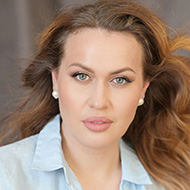
“The Zurich Opera House has a very special meaning for me.” Elena Stikhina is…


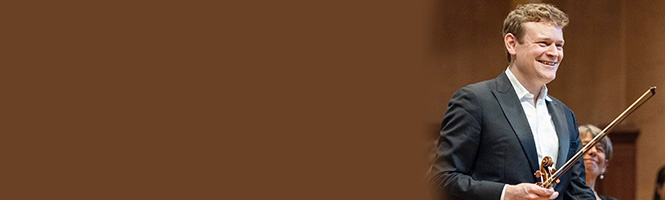


The pianist Reed Tetzloff has long since made a name for himself as a rising star. He gained international attention at the 15th Tchaikovsky Competition, where he was hailed as the "lyrical hero of the competition." The sensitive pianist, whom Gramophone magazine recently praised for his "exuberant virtuosity," has toured extensively, performing in China, Europe, and the United States.
Reed Tetzloff is also an accomplished writer. Huntley Dent of Fanfare magazine lauded Tetzloff's essay on Robert Schumann for its "exploration of the (musical) subtleties, far deeper than any other pianist who has ever attempted to comment on this music, almost on par with Charles Rosen's sublime intellectual level." Tetzloff is currently working on a collection of essays on music and musical performance.
How did you originally come to play the piano?
I don't come from a musical family, but there was a piano in our house that my mother had inherited. As a very young child, I would go to that piano and play certain melodies by ear that I had heard in Disney films and nursery rhymes. At the age of four, I began lessons in the Yamaha program, which emphasized "holistic" musical learning—group lessons, singing, solfège, and so on. I had my first private piano lessons at around six. Throughout my childhood, I loved creating and improvising at the piano, and at the age of eight, I won a national competition for young composers. Today, as an adult, I no longer compose actively, as I haven't yet found a compositional voice that I feel comfortable sharing with others at this time—however, the feeling of actively creating and improvising still shapes my approach to performance.
You write your own CD booklets and also publish essays. How did that come about?
First of all, I love literature, and while many will say (and it's true) that music often transcends words, writing about music and trying to capture the power of music through language has always interested me. Perhaps I'm particularly interested in how these two art forms (music and the written word) intersect, as in those moments when you can hear the melody in a Shakespearean sonnet or feel the symphonic sweep in Melville's prose, or even the rhetorical language and the meaning of spoken dialogue in a Bach prelude or a Schubert impromptu. I also believe that writing and reading about music can be a great way to challenge a sense of complacency or "tradition" that can creep into one's approach to a piece. Often our ears are too accustomed to hearing something in a certain way, and writing is a very effective way to ask ourselves, "Why?"
When I read the famous lecture on Beethoven in Thomas Mann's Doctor Faustus, I was overcome with the desire to listen to all the musical works discussed again and to understand them more deeply. While I am not a professional writer (and certainly not one of Mann's genius), I hope my writing will evoke a similar response: to draw the reader deeper into the world of music.
What does music mean to you?
I can't describe it better than one of my favorite musicians, Robert Levin, did: Levin speaks of how all great artists (not just musicians) are obsessed with the need to describe human existence. And of course, music is capable of capturing certain aspects of life in a particularly uncanny way. If we miss out on this music, we miss out on what gives us the capacity for self-knowledge and self-healing. This art is truly about us, and we cannot afford not to know it.
Spirituality and transcendence are important themes for you. To what extent do they influence your music?
There are things in life we yearn for but can't quite grasp—they simply lie beyond the reach of normal human experience. C.S. Lewis summarized this in his writing on Christianity: "If we find within ourselves a desire which nothing in this world can satisfy, the most probable explanation is that we were created for another world." Regardless of one's religious beliefs, one can find clues to this deeper reality through great music. One of my favorite quotes about music is from the American composer Charles Ives: "Perhaps music was never meant to satisfy the curious determination of man. Perhaps it is better to hope that music will always be the transcendental language in the most extravagant sense."
What are your visions and plans for the future?
Above all, to continue growing and to play better at 75 than I do now at 31! Someday, in addition to the modern piano, which I love, I'd also like to work with historical instruments. Conducting is another goal I'd like to explore later.
What are your favorite works or composers?
The ideal is to be able to honestly say, "Whatever I'm playing at the moment," and that's what I strive for. I also love discovering neglected works from music history. But generally, I would confess to a preference for the German/Austrian tradition (Bach, Haydn, Mozart, Beethoven, Schubert, Schumann, Brahms). I also love a lot of French music, which often feels like a refreshing vacation from the deep psychological experiences of German music. Charles Ives is something of a hero to me, both for his unique compositions and for the heroic individualism he embodies.
How do you recover from concert life, where do you recharge?
I usually (for the most part) enjoy the hectic nature of touring and performing, but there are definitely some challenges. For example, I almost always have trouble getting enough sleep while traveling, and then I don't feel so great physically. A week or two at home in New York is the perfect way to recharge: I read, take walks around the city, and indulge my love of baseball by attending a game or—even better—playing myself (I play in a pickup league that meets in Central Park).
What was your most beautiful musical experience?
Life with music brings so many encounters with beauty that it's difficult to choose just one. The most memorable experiences can be had at home, simply studying scores and playing for oneself. Of course, I've had many impressive experiences at concerts; a recent highlight was John Eliot Gardiner and the Orchestre Révolutionnaire et Romantique performing Berlioz's Symphonie Fantastique. As for my own performances, this year's concert at the Berlin Philharmonie is hard to beat.
Interview by Florian Schär | Classicpoint.net | October 1, 2023
Photo: Steve J. Sherman



























































Do you want to attract more visitors to your concerts?
Find out more about the possibilities this portal offers.
With a concert search subscription, you will receive an email for your selected cantons/federal states as soon as a new concert is listed there. You can unsubscribe from the service at any time.
