
interview
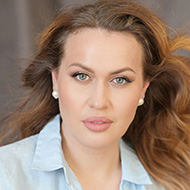
Interview with Elena Stikhina
June 1, 2026
“The Zurich Opera House has a very special meaning for me.” Elena Stikhina is…


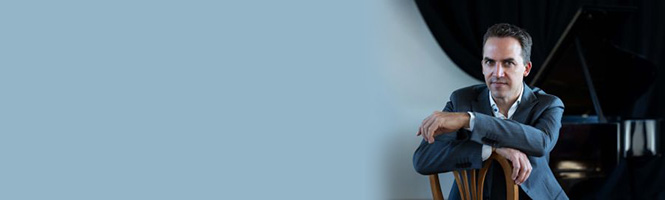

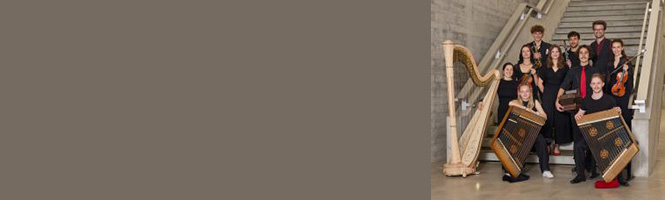


Frank Bungarten occupies a unique position among today's guitarists. On the one hand, this is due to his artistic stance, a clear commitment to the "old school," fidelity to the score, and an uncompromising pursuit of musical truth; on the other hand, it is due to the breadth and lasting impact of his success, which extends far beyond mere recognition within the guitar world.
Classicpoint.ch: You come from improvised music and started out on the guitar as a self-taught musician. Is that typical for the guitar?
Yes, in my early days, the 60s and 70s, that was pretty much always the case, and in many ways, it was a good thing. I wouldn't want to miss my years in the "free music" world for anything. Above all, the anti-hierarchical approach and the heightened awareness in listening and communication. Ironically, my self-taught nature has decisively shaped my teaching. Today, the "next generation" of classical guitarists predominantly comes from Eastern Europe and has a completely different background. Meanwhile, the number of young musicians in Western countries has dwindled.
The classical concert guitar occupies a niche position in classical music, while it's a crucial instrument in pop/rock. Why has the guitar never achieved comparable prominence in classical music?
It certainly did, back in the days of Segovia and Bream! Why did we young people, at a time when we were witnessing the legends of rock music at the height of their powers, see something equally overwhelming, even a greater promise, in the classical guitar?
Julian Bream said in retrospect, "It was in the air." This mysterious attraction of the guitar to audiences, which I also experienced as a performer well into the 1990s, was connected to a social climate and a particular culture of listening. In the increasing acoustic and visual clutter, which I perceive as a form of violence, the finer things have an even harder time. However, I never set out with a mission to give the guitar greater prominence. If I can do my thing the way I want to hear it and find listeners for it, then it's fine with me.
While string players, pianists, and wind players at music academies collaborate extensively in chamber music and orchestral projects, guitarists are mostly on their own or among themselves. Are guitarists loners?
I am as a person. But as a musician, I've always been friends with and in contact with instrumentalists of all genres. The collaboration with flautist Andrea Liebknecht on our CDs was practically symbiotic, and lately I've been playing frequently with ensembles or orchestras. This contributes significantly to reaching new audiences, for example. At the music academy, I deliberately seek out students with strong personalities, but I prepare them for a life with a lot of chamber music activity. In my observation, most guitar students are neither strong enough for an instrument with which one is naturally a soloist, nor strong enough to meet other instruments as equal partners.
However, this doesn't lead to isolation, but rather to a "guitar scene."
You are a professor at the Hanover University of Music, Drama and Media. Do all your students also play rock and jazz alongside classical guitar, or is that frowned upon?
The good ones still play electric guitar, improvise, paint, write poetry; everyone does what needs to be done. For me, only arbitrariness and inauthenticity are frowned upon, regardless of the style. I would immediately trade most of today's attention-seeking "crossover" charade for a single riff from Billy Gibbons, who said: "We only play three chords, but the order matters."
You also play repertoire on your guitar that wasn't composed for the instrument, such as Bach's solo violin sonatas. How do you justify that?
I want to emphasize that my version of Bach's sonatas and partitas for violin is the only transcription I play. For such a project, I have to feel an artistic necessity, stemming from the music itself. I knew I could bring out certain aspects of this music differently, or even better, than I had heard before, so I had to try it. Beyond that, I never gave it much thought.
Bach's solo works for violin or cello are considered sacred by many cellists and violinists. They have little understanding when these works are interpreted with other instruments. Have you received feedback of this kind?
For thirty years, I've received only positive feedback from this quarter. Initially, there were reservations from the record company, but these were resolved with the success of the recording.
Violinists have always been my greatest joy, right up to the present day—constructive and full of mutual respect. Musicians of a certain quality and attitude recognize and understand each other quite naturally. In the course of an honest artistic exploration, boundaries and concepts dissolve, even between people. The essential question facing all Bach interpreters today, whether sacred or not, is how to engage with the undeniable achievements of historically informed performance practice.
The guitar is actually predestined for polyphonic music. Nevertheless, we mainly know melodic pieces with chords. How do you explain that?
The last composing guitarist who was truly able to move polyphonically across the fretboard was Fernando Sor, who died in Paris in 1839. To write polyphonically as naturally as Sor or the masters of the 16th century, one must have mastered the instrument brilliantly. It is indeed that difficult, and composers who don't play guitar often despair of it. In Castelnuovo-Tedesco's "24 Caprichos de Goya," a work emerged after long and dedicated study of the subject matter, in which different voices are constantly required to exhibit different dynamics and articulations. One is always operating at the very edge, but it is also the most complete and impressive guitar work, demonstrating what is possible.
The fact that both musicians and audiences tend to take the path of least resistance, a tendency reinforced by upbringing and society, isn't just a guitar-related issue. I also enjoy having fun, but from a cultural policy perspective, I wouldn't object to reintroducing 16th-century standards and their notions of "mastery."
You've already received the Echo Klassik Award twice. What does it mean to you and the guitar scene?
With everything I do—my radical teaching philosophy in particular, but also my choice of repertoire, my instrument, and even my public persona—I've been a provocation to the guitar scene my whole life. "Scene" ultimately means conformity and mediocrity. Nevertheless, there are people there who say: If at least he's successful, then it's ultimately good for all of us.
Which living composer's newly composed guitar music would you like to play or hear?
I'm currently preparing the world premiere of a substantial new work for live electronics, keyboards, and guitar by the young composer Damian Marhulets, which I'm very much looking forward to. I'm open to new works, but not actively seeking them out. I don't actually want MORE music, but rather more silence, from which music can emerge.
Which piece would you recommend to classical music enthusiasts who aren't yet very familiar with the concert guitar?
That's a valid question, but one I can't easily answer, as I don't know what different people imagine music to be or how open-minded they are. With this question in mind, I recorded the CD "Cancion y Danza" a few years ago, envisioning an unbiased listener, perhaps even someone completely unfamiliar with classical music. It was intended as a teaser, offering diverse approaches while avoiding any "hits." Generally, I recommend listening to any piece you happen to come across with an open mind, but comparing different interpretations! And paying attention to the recording quality and the quality of your sound system.
Interview by Florian Schär | Classicpoint.ch | June 2, 2014




























































Do you want to attract more visitors to your concerts?
Find out more about the possibilities this portal offers.
With a concert search subscription, you will receive an email for your selected cantons/federal states as soon as a new concert is listed there. You can unsubscribe from the service at any time.
