

News
Regensburg's General Music Director to leave in 2027
July 23, 2026
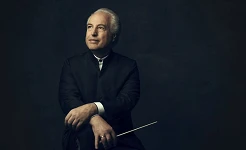
The General Music Director of the Regensburg State Theatre, Stefan Veselka, is leaving the theatre…





Music lessons are considered an important part of school education by a vast majority of the population. 69 percent of people in Germany regard music as a school subject to be important or very important. This is the result of a representative survey conducted by the Allensbach Institute for Public Opinion Research (IfD), which the German Music Information Center (MIZ) presented in Bonn on Tuesday.

Flute lessons
Just over half of those surveyed (52 percent) enjoyed music lessons at school. Nearly two-thirds (64 percent) specifically mentioned singing or making music together in class. According to their own statements, 56 percent learned things in the subject that they still benefit from today – such as reading music, music history, or a sense of rhythm.
For most people in Germany, music lessons are a natural part of their school experience. 61 percent of those surveyed had the subject in most of their school years (38 percent) or even throughout their entire school career (23 percent). Differences exist between East and West Germany. While 20 percent in the West had continuous music lessons, the figure was almost twice as high in the East (39 percent). In the GDR, music was a mandatory subject in all ten grades of the polytechnic secondary school from 1971 onwards.
Adults who had regular music lessons often remain actively involved with music. Forty-two percent of them play an instrument, sing in a choir or band, or make music digitally. In contrast, this figure is only 14 percent for people without formal music lessons.
"The results impressively demonstrate that music education has an impact far beyond the school years," said Stephan Schulmeistrat, head of the MIZ (Music Information Center). "Positive experiences in music lessons often shape a person's later relationship with music." The high regard for music education among the population makes it clear that musical education is perceived as an important component of general education. "School practice should live up to this expectation," he emphasized.
For the survey, the IfD conducted 1,057 face-to-face interviews with people aged 16 and over between March and April.
The MIZ is a project of the German Music Council. It records and documents the structures and developments of musical culture in Germany. The spectrum ranges from musical education and training to amateur music-making, music promotion, and professional music performance, as well as the media and the music industry.
© MH - All rights reserved.













































Do you want to attract more visitors to your concerts?
Find out more about the possibilities this portal offers.
With a concert search subscription, you will receive an email for your selected cantons/federal states as soon as a new concert is listed there. You can unsubscribe from the service at any time.
