
News
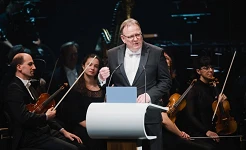
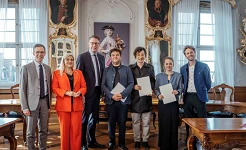
International Opera Award to Teatro Real Madrid
November 22, 2026
The Teatro Real Madrid has won the award for best opera at the 2026 International Opera Awards…










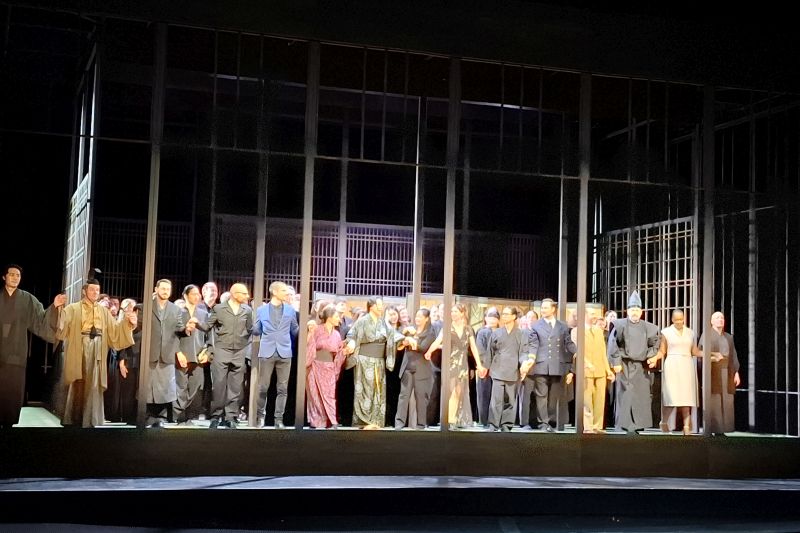
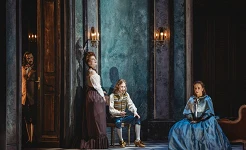
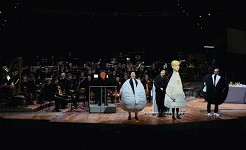
Traditional Japanese costumes, minimalist set design, minimal stage movement – in her production of Giacomo Puccini's opera "Madama Butterfly," director Andrea Breth focuses attention on the inner lives of the protagonists. At the Komische Oper Berlin, where the co-production with the Festival d'Aix-en-Provence, the Opéra National de Lyon, and the Théâtres de la Ville de Luxembourg premiered on Saturday evening, the performance was met with thunderous applause – especially for Gloria Jieun Choi's bravura performance in the title role. The Korean soprano delivers a compelling vocal and dramatic performance as the unhappy geisha Cio-Cio-San, also known as "Butterfly," who is driven to suicide by a broken marriage vow.
"Madama Butterfly"
Latvian tenor Mihails Şuşpajevs gives a masterful performance as the unscrupulous officer Pinkerton, who shamefully abandons his young lover. Together with his wife Kate, portrayed here by American mezzo-soprano Naomi Steele, Pinkerton plans to take their son away from his young mistress and bring him back to the USA. Mezzo-soprano Suzan Sarrabi appears as his maid Suzuki, and baritone Günter Papendell sings the role of Consul Sharpless.
In the performance conducted by Taiwanese conductor Yi-Chen Lin, Puccini's emotionally charged music contrasts with a largely static approach to the actors' movements. The singers move with economical gestures through the sparse, yet aesthetically pleasing, set design by Raimund Orfeo Voigt, who was honored that same evening at the International Opera Awards in Vienna. Japanese actors with paper cranes and elaborate masks, alluding to their country's theatrical tradition, add visual accents to the unhurried stage action.
Breth herself describes many scenes as "a kind of still life." She powerfully foregrounds Cio-Cio-San's inner torment, as her long-held illusion is abruptly shattered, through her play with contrasts – including those between different cultures.
Music expresses universal human emotions, Choi said in a pre-interview interview with the Berlin newspaper "Tagesspiegel." The Korean culture she grew up with helps the singer build bridges between different worlds. "For us, the term 'Han' represents a deep feeling in which pain, sorrow, and longing are combined with a certain inner strength. I find such emotions in Puccini's music as well. Perhaps that's why I'm able to give the characters such a personal depth."
© MH - All rights reserved.

















Do you want to attract more visitors to your concerts?
Find out more about the possibilities this portal offers.
With a concert search subscription, you will receive an email for your selected cantons/federal states as soon as a new concert is listed there. You can unsubscribe from the service at any time.
