Depths of the Soul - Breth's "Madama Butterfly" in Berlin
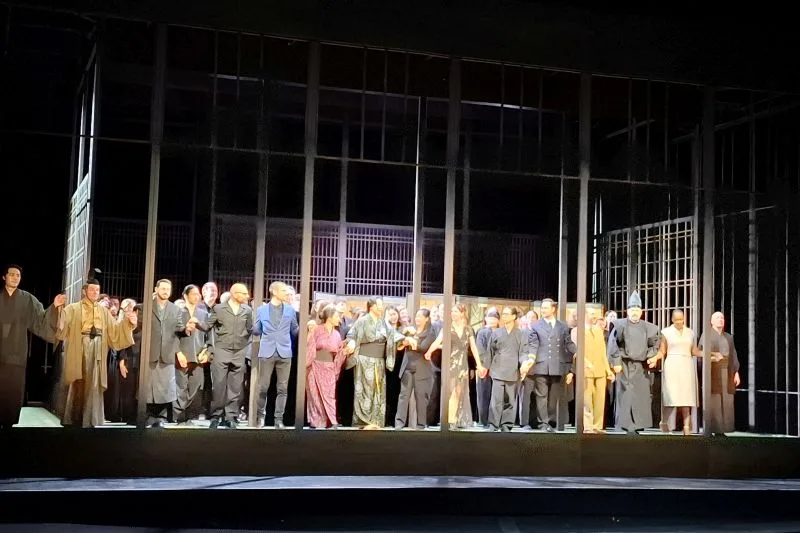
Traditional Japanese costumes, sparse set design, hardly any movement on stage - in her production of Giacomo Puccini's opera "Madama Butterfly", director Andrea Breth turns the spotlight on the inner lives of the protagonists. At the Komische Oper Berlin, where the co-production with the Festival d'Aix-en-Provence, the Opéra National de Lyon and the Théâtres de la Ville de Luxembourg premiered on Saturday evening, the performance was met with thunderous applause - above all for the bravura performance of Gloria Jieun Choi in the title role. The Korean soprano convinces both vocally and as an actress as the unhappy geisha Cio-Cio-San, alias "Butterfly", who is driven to suicide by a broken marriage promise.
The Latvian tenor Mihails Čuļpajevs convincingly plays the unscrupulous officer Pinkerton, who shamefully abandons her. Together with his wife Kate, played here by the American mezzo-soprano Naomi Steele, Pinkerton intends to take the couple's son away from the young lover in order to take him to the USA. The mezzo-soprano Suzan Sarrabi appears as the maid Suzuki, and the baritone Günter Papendell sings the role of Consul Sharpless.
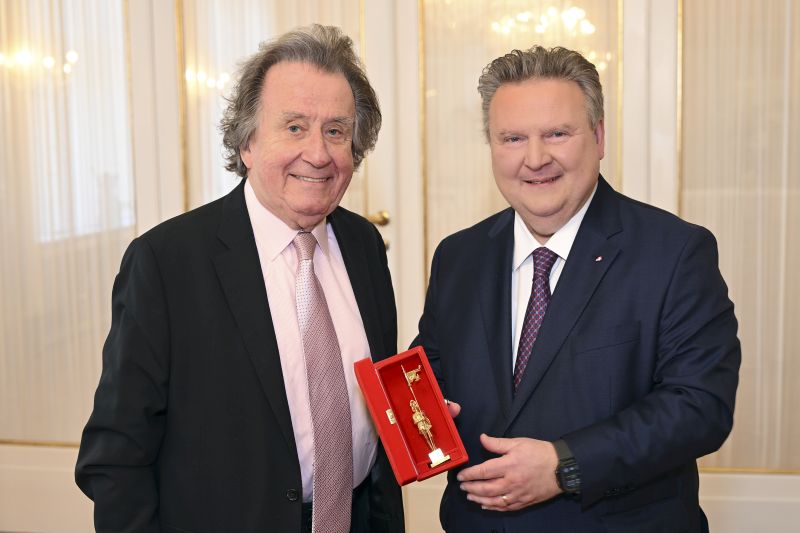
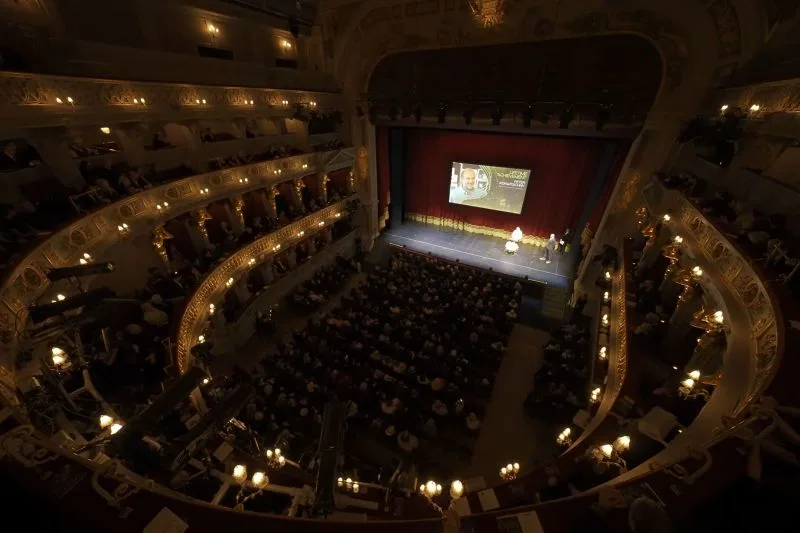
In the production conducted by the Taiwanese conductor Yi-Chen Lin, Puccini's emotionally charged music contrasts with largely static stage direction. The singers move with sparing gestures through the austere, though aesthetically appealing, set designed by Raimund Orfeo Voigt, who was honoured at the International Opera Awards in Vienna on the same evening. Japanese actors with paper cranes and elaborate masks, alluding to their country's theatre tradition, provide visual accents in the unhurried stage action.
According to Breth herself, she has staged many scenes as "a kind of still life". Through her play with opposites - including those between different cultures - she powerfully brings to the fore the emotional torment of Cio-Cio-San, whose long-cherished illusion shatters abruptly.
Music expresses universal human emotions, Choi said in advance in an interview with the Berlin newspaper "Tagesspiegel". The Korean culture in which she grew up helps the singer build bridges between different worlds. "The term 'Han' stands for us for a deep feeling in which pain, grief and longing combine with a certain inner strength. I also find such emotions in Puccini's music. Perhaps that is why I manage to give the characters a very personal depth."
© MH - Alle Rechte vorbehalten.