

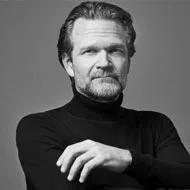
Since his concert debut at the age of 14 in the Laeiszhalle in his home city of Hamburg, Sebastian Knauer has been able to look back on a concert career spanning more than 30 years.
Sebastian Knauer has performed in more than 50 countries on 4 continents, appearing in venues such as the Berlin Philharmonie, the Gewandhaus Leipzig, the Concertgebouw Amsterdam, Wigmore Hall London, the Théâtre des Champs-Élysées Paris, the Tonhalle Zurich, the Wiener Konzerthaus, the Lincoln Center New York, the Harris Theater Chicago, the National Center for the Performing Arts Beijing and the Toppan Hall Tokyo.
He is a regular guest at festivals such as those in Schleswig-Holstein, Mecklenburg-Vorpommern and the Rheingau, the Dresden Music Festival, the Klavierfestival Ruhr, the Beethovenfest Bonn, the Schubertiade Hohenems, the Salzburg Festival, in Gstaad, Montreux, Merano, Bath, Ravinia, Savannah and Shanghai.
In the following interview, Sebastian Knauer talks about his path to becoming a pianist, his festivals, including how he came up with the ideas for them, and the future of classical music.
You come from a family of merchants. How did you become a pianist?
The Knauer family's merchant days lie quite a long way back. The origins of our family date to around the middle of the 18th century. The founder of our family was indeed a very successful and wealthy merchant at the time. However, there was no specific business that could then be carried on through the following generations, as one would normally expect from family enterprises. Moreover, there must have been an event at some point in which a large part of the fortune disappeared. To this day we have not found out what it could have been.
Therefore, I personally come from a family that was not shaped by commerce but rather by journalism.
In addition, there were private musical ambitions, and so I was probably born with a musical streak and came to the piano that way. By the age of 4, it was already clear to me: "I want to become a pianist!"
You repeatedly commission compositions. What is important to you in this?
First and foremost, it is important to me that I like the composer's music.
Then it is important to me that the composition I commission fits into a context, for example in relation to my remaining repertoire, with which I can then combine the new work in a concert programme, or, as in the case of the new work by Arash Safaian, in the context of a composer who is very close to my heart. It is also very important to me that the newly composed work is received by the audience in the same way that I receive it personally; that is to say, the audience should go home after a concert delighted with this music!
You have created the format "Wort trifft Musik" together with actors. Could you tell us something about it?
Almost exactly 20 years ago, I had the wish to record and perform the famous story "Ein Winter auf Mallorca", about Frédéric Chopin's stay with George Sand in Valldemossa in 1838, in word and music. This format was not new as such, but I had a new text manuscript written, based on the book of the same name and George Sand's autobiography. My wish at the time was to win Hannelore Elsner for the reading at all costs. After several attempts, it worked out, and since then I have performed some hundreds of appearances with this format across more than 30 self-conceived "Wort trifft Musik" projects. I am fascinated by standing on stage with outstanding actors, and I am fortunate to be able to work with truly wonderful personalities in this genre. Hannelore Elsner was a very close partner on stage until her death, but I have also by now developed close friendships and collaborations with Martina Gedeck, Iris Berben, Hannelore Hoger, Katja Riemann, Ulrich Tukur and Klaus Maria Brandauer.
You have founded various festivals and serve as their artistic director. Could you introduce them to us?
I founded the festival "mozart@augsburg" in 2010. When a smaller local festival got into financial difficulties and could no longer continue, I spontaneously had the idea of setting up a festival myself at this important historic site in Germany. The Mozart family, as is well known, originated from Augsburg. And that was exactly my intention: to make the Mozart city of Augsburg internationally known through a festival. I have managed to invite more or less every major artist of the classical concert world there, and after we took a short break recently, we will restart in 2021 with a new and very beautiful programme.
The international music festival week at Schloss Bad Berleburg, the residence of the Danish Princess Benedikte, has existed for almost 50 years.
It came about that two years ago I was given the artistic direction.
It is a very special place, and the atmosphere of the concerts in the palace is inspiring.
I conceived the festival "Ludwig FUN Beethoven" for the city of Aachen to mark the 250th birthday of Beethoven. Everything was ready for the first edition of the festival in April this year, but then, as is well known, the Corona crisis arrived, and we had to cancel the festival and postpone it to 2021.
At this festival, Beethoven's music naturally takes centre stage, and it will be held at 8 different concert venues in the city of Aachen over 4 days.
The idea is that people can reach every concert more or less on foot, and so take in the entire programme. Almost every genre of Beethoven's work will be heard, from the solo sonata to the symphony, performed by outstanding artists such as the Beethoven Orchester Bonn, Albrecht Mayer, Martin Stadtfeld, Jan Vogler, Daniel Hope, Simone Kermes, Klaus Maria Brandauer and many more…
You repeatedly put together unique programmes and unearth old works? Which programmes are you particularly proud of? You describe yourself as a bon vivant. How much time do you still have for other things as a concert pianist?
As a classical pianist, one essentially plays a repertoire that in part has existed for centuries. And this music cannot be reinvented: a Bach concerto remains a Bach concerto, or a Beethoven sonata remains a Beethoven sonata. We performers cannot reinvent this music, even though there are always attempts to do so. Personally, I like to place myself behind the composer as a performer, and I see my task as not presenting my own person, but rather presenting the composer's work to the audience in such a way that it is moved and inspired.
And here, a special combination of works can indeed work wonders. Whether one sets the works of Bach and his sons against each other, or the last piano concerto by Mozart against the first by Beethoven.
I greatly enjoy conceiving special programmes, and I notice that audiences receive them with gratitude.
As for my personal allocation of time, I always make sure to take enough time for friends and certain hobbies, but above all for my family.
You are committed to making classical music accessible to a broad audience. How much future do you see for this musical style, let's say, over the next 100 years?
Even in 100 years, people will still listen to classical music with fascination, emotion and enthusiasm – of that I am certain.
We have been listening to Bach for almost 350 years now, and to Beethoven for 250 years. This shows how immortal this magnificent music is. And if we continue to work towards giving young people, or children, access to classical music, so that they can later decide for themselves whether they want to listen to this music or not, classical music will continue to outlive us, perhaps in a completely different form of performance – of that I am certain.
How are you experiencing the current time surrounding the pandemic?
This time is a great challenge for us all. Not only in my industry, that is, the industry of events of every kind, no, it affects every person, above all through a very high level of psychological strain to which we are all exposed because of the great uncertainty about what the future will bring.
Although I am looking ahead, the last 6 months have not passed me by without leaving a mark, and above all I am very worried about our entire classical music industry, because as long as we cannot perform carefree concerts, we receive daily reports of insolvencies among promoters, agencies or artists.
I therefore hope that a vaccine will be available as soon as possible, because we can clearly see that people are unsettled and perhaps even anxious about going to concerts now, even though the offering, although restricted, is available again.
What are your plans for the future?
At the moment I am "driving by sight", like so many in our industry. That means that all planned concerts in the autumn and winter, provided they have not already been cancelled, are being monitored from week to week, in the hope that they can take place.
Long-term planning is of course also under way, but one can already see that promoters are still too preoccupied with the current situation, so a great deal of patience is required.
Otherwise, I am already planning my next CD project, which is due to be released in 2021. Here too, one can look forward to a very special repertoire.
Interview by Florian Schär | Classicpoint.net | 18.09.2020
More interviews
All interviews →


