

«Spohr was a genius and a star.»

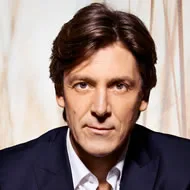
Paul Meyer is among the most outstanding clarinettists in the world and regularly performs with the leading orchestras in Europe, the USA, the Far East and Australia. In recent years Paul Meyer has also increasingly made a name for himself as a conductor, so that his conducting activity now holds an equal place alongside the clarinet in his artistic work.
Classicpoint.ch: As a young, celebrated prize-winner in various competitions, you met the legendary Benny Goodman. How important was Benny Goodman for you at that stage?
I was 19 years old when I gave the prize-winners' concert in New York. At the time I didn't know that Benny Goodman was among the audience. The next day he called me and said that he had very much enjoyed the concert. He invited me to play together with him. I then met with him, and we talked and played a great deal together. That was very interesting and instructive for me. Shortly afterwards I also had the opportunity to play with other great artists, such as Jean-Pierre Rampal or Mstislav Rostropovich.
Luciano Berio, Krzysztof Penderecki, Gerd Kuhrs and others have composed clarinet concertos for you. Did you have any influence on the compositions when these works were created?
Some composers have a great deal of experience with the clarinet and know how to use the instrument to best effect. Others don't yet know the instrument so well. However, composers always have a sound concept that is tailored to the artist to whom they dedicate the work. In my case, my virtuosity was usually the decisive factor, so the composers wrote very virtuosic works for me.
When I receive the score, I of course have to study the work first. This is followed by a phase of active exchange with the composer, whether the composer conducts the work or accompanies me on the piano. During this joint rehearsal phase, adjustments are usually still possible, where I as the performer can intervene and suggest changes. This can concern, for example, the technical manner of playing or the dynamics with regard to the balance between orchestra and soloist. In this phase the composer also sees how a piece has been understood by the performer, and sometimes adjusts the musical text and the instructions in order to achieve as precisely as possible the realisation of his ideas. It is a very interesting process, which I love both as a conductor and as a clarinettist.
Which composer would you have wished to write another clarinet concerto for you?
I would have liked a concerto by Henri Dutilleux. Henri Dutilleux was asked in his early years to write a clarinet concerto and was not willing at the time; he had declined. Later, when he heard me in a concert playing the Mozart Clarinet Concerto, he came to me and said that he would very much like to compose a concerto for me, but had already declined another clarinettist and therefore could not do it. It is a great pity that it did not work out at the time. However, there are many other projects currently under way, and I am very much looking forward to the new works that are being created.
You now conduct just as much as you play the clarinet. How did you begin conducting?
Even as a child I was always fascinated by conducting, and I would think about which tempo I would choose and which voices I would bring out where. Even while I was learning the clarinet, I already knew that one day I wanted to work as a conductor. For this reason I accepted a position in an orchestra, in order to get to know the repertoire and the perspective of the orchestral musician. At the age of 22 I resigned from my post with the orchestra of the Paris Opera and seized the chance to conduct as assistant to John Carew. That is how it all began. In earlier times it was even more complicated to launch a solo career at the same time as a conducting career. Today, on the contrary, orchestra directors regard this as an advantage. Orchestral musicians too appreciate my experience as a soloist and orchestral player when I conduct them.
Has conducting changed your clarinet playing, and if so, how?
I have conducted all the wind concertos, for example. One learns an incredible amount for one's own playing as a soloist, but also in chamber music. One simply understands the music and its forms much better.
When you perform as a clarinet soloist with orchestra, has your collaboration with conductors changed since you have been conducting yourself?
Yes, one understands better what the conductor wants. Nowadays one has incredibly little time for rehearsal with an orchestra. With my experience I can much more quickly sense what is needed and what the conductor has in mind.
You recently recorded all of Spohr's clarinet concertos. What fascinates you about this composer?
Spohr was the most famous musician in Europe in his day. He was a genius and a star. I wanted to bring this wonderful music back to light. It is important to me that not only Mendelssohn, Beethoven, Mozart etc. are played. For me, working on these pieces was very interesting, and it was also great fun.
Do you have further projects planned?
There are various recordings, for example with clarinet and accordion, or the complete Weber concertos. In future I would like to devote myself to the repertoire of the Viennese Classical period with a chamber orchestra, and of course I am interested in projects with contemporary music.
Interview by Florian Schär | Classicpoint.ch | 1.9.2015
Photo Vandoren - Edith Held
More interviews
All interviews →


