

«Honesty is crucial when interpreting the Bach suites.»

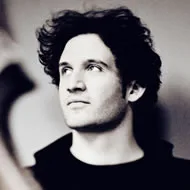
The German cellist Nicolas Altstaedt is one of the last pupils of Boris Pergamenschikow in Berlin, where he completed his studies with Eberhard Feltz. He launched his career with numerous first prizes at international competitions. In 2011, on the proposal of Gidon Kremer, he was entrusted with the artistic direction of the Lockenhaus Chamber Music Festival. As a versatile musician, he engages with everything from historically informed performance practice and the classical cello repertoire to commissioning new works.
Classicpoint.ch: Three years ago you took over the artistic direction of the Lockenhaus Chamber Music Festival from Gidon Kremer. What is special about this festival?
Since the festival began, we in Lockenhaus have always preserved the freedom to announce concert programmes only on the day of the concert. Over the year I devise a theme with various programmes, which all try to shed light on the subject from different angles, but on site there is the opportunity to exchange views again and in greater depth.
I think it is very important to become conscious once more of why one is actually here and to engage with the theme.
In the seclusion of Lockenhaus, on the castle terrace overlooking the forests or in the castle garden behind the church, this is particularly possible. In shared conversation, entirely different creative ideas arise, the programmes are reconsidered and are sometimes also topical in relation to world events. A new identification with what one is doing takes place.
Gidon Kremer himself proposed you as his successor. What connects you with him?
Gidon has always been a role model for me: an outstanding musician who follows his own path and a person of integrity who, in all his interpretations, has opened new doors while always serving the scores. His openness and his unpretentious nature have always deeply fascinated me. Certainly my teacher Boris Pergamenschikow also connected us.
You also perform at the festival yourself. Isn't that very exhausting alongside the entire organisational burden?
Certainly, but also very fulfilling. All the thoughts that circle around so many things during the day are carried away by the music in the concert. In rehearsals too, through the inspiration of the music and my friends, I receive back just as much energy as I give.
The Chamber Music Festival does not pay fees. Are there also artists who therefore do not come, even if they perhaps cite other reasons as an excuse?
I don't know... I only invite artists with whom I feel a connection and who speak to me musically. We have never talked about fees.
You also engage intensively with contemporary music. When is new music good for you?
I don't really engage intensively with new music. I try to engage intensively with good music, and sometimes music of today is included in that. At every time there has been shallow as well as substantial music, and that has not changed to this day. A work by Ligeti, Heinz Holliger's "Romancendres" or the duos of Jörg Widmann can occupy me just as much as a late Beethoven sonata.
Several new compositions have been dedicated to you. Which one do you like particularly well, and why?
I very much enjoy playing Fazil Say's cello sonata with him, because it is always inspiring to make music with the composer as partner. I love just as much the wonderful duo for violin and cello by Thomas Larcher.
I am particularly looking forward to the cello concerto that my friend and cellist Raphael Merlin of the Quatuor Ébène is composing for next year. I admire him enormously as a musician. We share a long-standing friendship and joint concert activity. The work gains another dimension through this. Writing for a person and then performing it belongs to the most intimate and most beautiful things there are.
Have you ever composed pieces yourself?
When I was 7 years old, I set my favourite reading, Homer's Odyssey, to music as a suite for solo cello. It consisted largely of Shostakovich's 1st Cello Concerto... To this day it has remained at cadenzas for classical concertos, but I still keep a great deal open.
Do you understand the people, among them many musicians, who can't do anything with new music?
No, because I don't understand the difference between "new" and "old".
As a student you shared a flat with the cellist Julian Steckel. Can you tell us a funny anecdote from that time?
We moved back then into a house that had been completely renovated. Our flat was the first to be occupied. The house stood empty, we had no neighbours. For half a year our daily and nightly routine was completely turned upside down. At the time we were both studying with Boris Pergamenschikow, who died four months after we had moved in. We then travelled from our flat to the hospital for lessons. It was a very intense time.
At the Bach Weeks in Thun you are playing two solo suites. What is crucial for you when interpreting the Bach solo suites?
Honesty. One must give the works room so that the whole cosmos within them can unfold. It has much to do with perception, "hearing through" and "letting things happen". But it is also dance music and does not tolerate added incense.
Interview by Florian Schär | Classicpoint.ch | 3.8.2015
Image by Marco Borggreve
More interviews
All interviews →


