

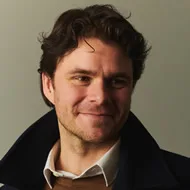
«Before a performance, I now deliberately devote time to meditation.»
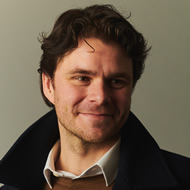
With his appointment as Chief Conductor of the Adelaide Symphony Orchestra, which he led from 2016 to 2019, he became the first Australian in over 30 years to lead one of the country's orchestras. From 2018 to 2021, Nicholas Carter was Chief Conductor of the Stadttheater Klagenfurt and the Kärntner Sinfonieorchester, where he led many new productions and regularly performed in the orchestra's concert series. After his debut at the Santa Fe Opera with Die Fledermaus, he returned in 2021 with Eugen Onegin. He also has an important collaboration with the Deutsche Oper Berlin, where he worked as Kapellmeister for two seasons and to which he regularly returns as a guest conductor. Since the 2021/22 season, Nicholas Carter has been Chief Conductor of the opera and Co-Director of Opera at the Bühnen Bern.
You are regarded as a very versatile conductor. Alongside your role as Chief Conductor of the opera and Co-Director of Opera at the Bühnen Bern, you also appear regularly as a guest conductor in the concert hall. Where do you feel more at home, in the opera house or in the concert hall, and why?
Honestly, I cannot say that I prefer one to the other. What I particularly enjoy about conducting opera is that the focus is very much on what happens on stage. During opera performances, I always feel like part of a large team that together delivers a achievement. Of course, in the concert hall it is always a joy to stand on stage and share the music with the audience, if only because the repertoire is so spectacular. But in the concert hall there is a different emphasis: the purely abstract aesthetics of music, and I also feel it is a great privilege to be part of that there.
Can you remember your earliest opera experience as a child?
As a child I was a member of a children's choir, and one day we were encouraged to audition for a small role in Verdi's Macbeth at Opera Australia. I was lucky enough to get the role of Fleance and the Ghost Child, and got to discover the world of opera for the first time. It was the first time I stood on a stage. It was customary to sing the ghost's part from the orchestra pit, and that was the first time I was surrounded by the sound of an orchestra. I was hooked from the very first moment!
You grew up in Australia and also led the Adelaide Symphony Orchestra as Chief Conductor from 2016 to 2019. Apparently, all the orchestras in Australia have employed foreign conductors over the last 30 years. Are there so few good conductors?
It is a long and complex story why there are so few Australian conductors leading Australian orchestras. First of all, one must bear in mind that Australia is a large country with a relatively small population. The classical music scene is well established but small. There are seven or eight good orchestras across the whole country. Therefore, there are not many opportunities for young conductors to develop and gain experience. Those who aspire to a career have to go to Europe or America to learn and develop further. I did this too, much like the Australian conductor Simone Young. Today, however, there are a number of Australians around the world who have built careers as conductors. Another reason may perhaps be that we Australians are usually people who do not 'love' authority figures very much. It is part of our historical identity to be sceptical of people who like to be at the top and take the lead. I probably am not very 'Australian' in this respect!
You have worked for many years in Germany, Austria and now also Switzerland. Where do you see the greatest differences from your homeland in the field of music?
Classical music is largely an imported art form in Australia. When I came to Europe twelve years ago, I was impressed by how deeply rooted culture, theatre and music are in social discourse, and how classical music continues to develop as a result. It seems to me an integral part of society. Even though some people fear that the significance of classical music is also declining here today, in my experience it still enjoys a much higher regard than in Australia. Europe has incredibly much to offer in this regard. As I said, the top orchestras in Australia are truly world class, but in Germany, Austria and Switzerland there are simply hundreds more! What we are offered here in Europe is a true gift.
What do you personally miss from your homeland?
I of course miss my family and many friends who live there. Also the excellent weather and the magnificent beaches! There is a very high quality of life there. Fortunately, I get to travel back there every year or every other year to conduct.
In recent years you have conducted many new productions. Which of them held a special significance for you, and why?
I am especially proud that I helped to stage the Ring cycle in Bern for the first time. Over the last two seasons we have presented Das Rheingold and Die Walküre, and this year Siegfried is coming. At first, many people asked why we wanted to stage a Ring cycle in a relatively small theatre in Bern. To my great delight, however, enthusiastic responses then reached us: partly because of the brilliant staging by director Ewelina Marciniak, but also because of the wonderful playing of the Berner Symphonieorchester and our fantastic singers. Many people travelled specially from all kinds of countries, including from overseas, to see what is happening here in Bern. This production was also received extremely positively in the regional and international press. "Something very special is happening with the opera in Bern," wrote one journalist. The whole city can be proud of that. I am sure that the Bern Ring will live on in the minds of many people!
When you think of the upcoming productions, which are you especially looking forward to?
That is difficult to say, because for me every project is special! Our next production here is Jenůfa, one of the most heart-wrenching and at the same time most eerie operas ever written. And of course the next chapter of our Ring cycle, Siegfried, promises to be very exciting!
Do you have a ritual before a performance?
Over the last year I have started to take mental training much more seriously. In the world of sport, one trains as a matter of course with the findings of 'performance psychology' and takes this science very seriously. Unfortunately, in the music world it is simply expected that one does not get nervous. That is not healthy, and many of my performances were disappointing for me because I was not in the right state of mind. That is why I now deliberately devote time to meditation before a performance in order to achieve a high level of concentration. It is a process in which one focuses on the breath, frees the mind from external distractions and is grateful for the opportunity to conduct the upcoming performance or concert. Through this ritual I feel much more comfortable before a performance and can show my best side.
How do you relax from stress? What do you do in your private life?
I remind myself every day that it is a privilege to work in a theatre and to be able to engage with such magnificent works of art.
Yes, there are moments when the pressure is there to learn this or that opera quickly, but that is a very privileged form of stress.
Sometimes I have to remind myself to unwind! Reading, walking along the Aare and spending time with my family are good ways to stay grounded and always keep an overview.
Interview by Florian Schär | Classicpoint.net | 01.11.2023
Photo: Florian Spring
More interviews
All interviews →


