

«Too much music in this world is functional and purpose-driven; it lacks insight into profound human mysteries.»
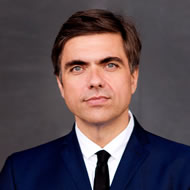
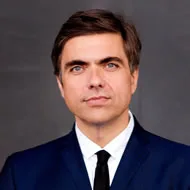
Moritz Eggert (*1965) works mainly as a freelance composer, but he also appears as a pianist, conductor, performer/actor, singer and blogger. Born in Heidelberg and raised there, in Mannheim and in Frankfurt am Main, he began playing keyboards in various rock and jazz ensembles while still at school. Directly afterwards came years of study as a pianist and composer, including in London and Munich. From the outset he worked in all musical genres – his catalogue of works, now almost 300 pieces, includes not only 19 full-length operas but also several ballets and works for dance and musical theatre, orchestral music, chamber and ensemble music, vocal and choral music (with a strong focus on the lied), church music, experimental and electronic music, instrumental concertos, music for children and young people, film and radio music, as well as music for radio plays and open-air performances.
You first studied piano and then composition. Did you always want to compose?
Actually, I studied both at almost the same time – for me they were inseparably linked: because I was a pianist, I wanted to compose, and because I was a composer, I wanted to perform. Today the emphasis is certainly more on composing, but for a long time both activities were perfectly balanced and complemented each other.
Since 2020 you have been President of the Deutscher Komponist:innenverband. Why is this association needed?
It is a professional association that represents the interests of music authors of all genres (art music, film music, singer-songwriters). In times of growing inequality in remuneration and many coming challenges (for example, the topic of AI), I think such an association is particularly important. Recently we have also begun offering a job board for composers, which is intended to connect them with private clients – a unique idea that does not yet exist anywhere else in the world.
You are also an author and write articles about new music for print and online media. In your opinion, how has new music changed in recent years?
I hope it will continue to change…The term “new music” is of course difficult – “New Music” with a capital “N” is hardly used any more; “new music” can mean all sorts of things, quite simply music today, and therefore also pop and film music.
What is not conceived commercially is often described as “art music” or “contemporary music”, but neither term is ideal. I like to use “free music”. As for the so-called art-music scene, in brief: the trend is towards countless small musical sub-scenes and generally less dogmatism. It has become much harder to be perceived as an individual voice, especially for the younger generation, whereas international exchange has grown considerably.
How should new music be, and how should it not be?
It would be quite dreadful if anyone were to decide that. I think it is wonderful when new (free) music represents a wild space in which everything is possible that is not possible elsewhere in music. Too much music in this world is functional and purpose-driven; it lacks insight into profound human mysteries. Ferruccio Busoni was right: “Music is born free, and its destiny is to become free.” Said a hundred years ago and still relevant today.
What significance does classical music have for you?
The term “classical music” means little to me – I know only music history (a much larger realm than most “classical music lovers” are aware of) and the music of today. Since music in itself means a great deal to me, music history and what is happening today matter absolutely equally to me.
What would you like to do in the field of music that you have not yet done?
That is genuinely difficult to say, since I have already done quite a lot of crazy things. I simply want to carry on as I have so far – always new challenges, new impossibilities to overcome.
Which contemporary composers do you find particularly interesting, and why?
That would be a very, very long list. If I name only a few, they would appear strangely singled out, and those not named would be offended that I had not mentioned them. I can only lose either way, especially as I know that colleagues will read this text. I would say, though, that there are very many wonderful talents today, as there have been in every era. And the most interesting are not always those who receive the most applause (although that also happens).
Where does music reach its limits?
Music has no limits.
Why is contemporary classical music so important at all?
Because only today's music can explain to me the things that are happening today.
What passions do you have outside music?
Sport (ultramarathons, swimming marathons), board games, whisky, films and much, much more.
Interview by Florian Schär | Classicpoint.net | 01.03.2024
Photo: Astrid Ackermann