

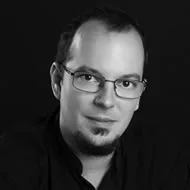
« Everything raw and archaic fascinates me enormously. »
The composer and cellist Martin Jaggi lives and works in Singapore and Basel. His works have been performed in numerous European and Asian countries as well as in the USA, Canada, Mexico, Argentina and South Africa, and have been recorded by various radio stations. The orchestral work «Trieb» and the string quartet «Gharra» were included in the CD documentation «Grammont Sélection», featuring outstanding Swiss premieres. In 2015, a portrait CD was released on the label Musiques Suisses/Grammont Portrait. Since 2016 he has taught the interpretation of New Music at the Yong Siew Toh Conservatory of Music (National University of Singapore).
Classicpoint.ch: You have been living in Singapore for some time now. What brought you there?
It is for family reasons. My wife comes from Singapore, and I had always wanted to live in Asia. It is also easier for us here to combine family (we have two children) and work. Since I recently need far more time for composing than for performing on the cello, this move to Singapore was an obvious step. However, I am still regularly in Switzerland and Europe, where I play as a cellist with, among others, the Ensemble Phoenix Basel or the basel sinfonietta. Here in Singapore I have a small position at the music academy.
Has your way of composing changed since you moved from Switzerland to Singapore?
I don't think this has had a direct influence on my music.
What are the differences in the classical music scene between Singapore and Switzerland?
Concert life here consists almost exclusively of orchestral concerts. There are two magnificent halls, and the orchestra is not bad either. Many international stars drop by. But this is also where the problem lies. There is hardly any independent scene. Chamber music and New Music take place almost exclusively within educational institutions. And if something does emerge from the campus, it is difficult to find funding for it. In Switzerland, of course, there is infinitely more going on that is freer and more exciting!
But things are gradually changing; recently there has even been an ensemble for New Music! And at the pace things are changing here? Ten years ago, when I first came to Singapore, it was a relatively monotonous, boring city. Now it is dynamic and exciting. When I am away for a month and come back, there is guaranteed to be something new. All of this is also slowly beginning to seep into the music scene.
You studied cello and composition. When did you first begin composing?
When my grandfather died, I wrote a Requiem for a cappella choir after Mozart's model. Just went for it, without any rules. I have never stopped writing since. I was 12 at the time.
Your father also studied composition. He then taught you composition when you were 16. To what extent did he shape your composing?
Right after the Requiem I had theory lessons with my father. I think he wanted to bring a little order to my anarchic approach. This was of infinite value to me! At 16 I then came to Rudolf Kelterborn as a young student. Now it became serious. After a year I switched to Detlev Müller-Siemens, as Kelterborn had retired. These two teachers shaped me greatly! I got my love of music from my father and my mother (she was a violinist in the Basel Symphony Orchestra); it was constantly around me. I am very grateful to them for that.
You originally wanted to study palaeontology (the science concerned with the development and spread of life on Earth). Do you still engage with these topics today?
Not really. But my elder son is now interested in dinosaurs. That made me start reading up a little on what has happened in palaeontology over the last 20 years. The findings are earth-shattering! I am still interested in it, of course.
The titles of your works are strikingly often taken from geology: Megalith, Atakor, Acheb, Schebka, Nunatak, Moloch or Gharra. Do you draw your compositional ideas from nature?
From nature, archaeology, the history of civilisation, ethnology… Everything raw and archaic fascinates me enormously.
For more than 15 years you have been working with a "new tonality". Can you describe it for us?
I have developed a harmonic system of order that allows me to work almost as with "conventional" tonality. It is based on complex chords that almost always also contain microtones. Lately, however, I only use it on the margins, if at all. At the moment I am more interested in the horizontal than in the vertical. Lines, polyphony, heterophony…
In his essay on your music, Michael Kunkel suggested that many of your compositions are based on the following question: How do I deform time? More precisely: how do I articulate musical shapes in time in a way that runs as counter as possible to the goal-directed, linear mode of orientation. Is he right?
To a degree, yes. I always try to surprise, to integrate unexpected turns and cuts. We listen to music with strong expectations. I want to break these. This also includes the fact that the cut, the break, sometimes simply does not happen. I often proceed very intuitively in terms of form. It has to feel right to me. Preconceived structures can be bent quite strongly in the process.
Most of your pieces are in one movement. Why?
Perhaps this is also a trend of the times? Most pieces nowadays are in one movement. Why? I don't know. Lately I write and plan mostly in cycles. The pieces can be played on their own, or also cyclically, where they then form individual movements, so to speak.
How does your composing process work?
At home at my desk, amid a flood of papers. And while walking! Most of the time I only sit down once the ideas have already developed quite far in my head.
Interview by Florian Schär | Classicpoint.ch | 2.8.2016
More interviews
All interviews →


