

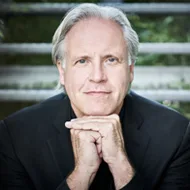
« Music is indispensable – pure life energy! »
Intelligent clarity and a profound, ever-curious musicality characterise the work of Markus Stenz. He has conducted, among others, the Berliner Philharmoniker, the Gewandhausorchester Leipzig, the Münchner Philharmoniker, the Tonhalle-Orchester Zürich, the Wiener Symphoniker, the Hallé Orchestra Manchester, the BBC Scottish Symphony Orchestra, the NHK Symphony Orchestra, the Orchestre Philharmonique de Radio France, the Staatskapelle and the Konzerthausorchester Berlin, the Orchestre de la Suisse Romande, the Bamberger Symphoniker, the Dresdner Philharmonie, the Philharmonisches Staatsorchester Hamburg, and the radio orchestras of BR, HR, WDR, NDR and MDR. In the USA he has worked with the symphony orchestras of Boston, Chicago, Cincinnati, Los Angeles, Dallas and Houston, among others.
In the following interview, Markus Stenz talks about his relationship with Haydn and Mendelssohn, his ideal sound and his visions.
Classicpoint.net: What is your earliest musical childhood memory?
I am lying under the grand piano in our living room, listening to my father play the piano. My memories of church music are even more intense; my father was a choir director and organist. My mother is a passionate amateur singer with a wonderfully clear alto voice, still today – at almost 80!
When did you decide to become a conductor, and why?
My key experience was the "Harvard Lectures" broadcast on German television – six lectures given by the American conductor and composer Leonard Bernstein at Harvard University. They struck me with tremendous force when I was 13, and in my eyes they remain unsurpassed to this day as a path deep into the mysteries of music.
Can you describe your ideal sound?
Great chamber music – music in which listening to one another leads to freedom of phrasing, to vibrant transitions, to delicately felt tenderness and to overwhelming, accumulating large sonorities. And: it must be PERSONAL. Created here and now.
What visions do you have?
When listeners feel that the music is being created anew, right before their ears, in this very moment, irresistibly, as if the composer had invented it for this very instant – that is my vision for the concert experience.
In your opinion, what can music contribute to the development of people today?
Music is irrational and, in our digitalised world, is the perfect counterweight to the reduction to facts, the factual situation and the burden of facts. Music is unfathomable, cannot be digitised, and for precisely that reason is deeply human and indispensable.
What significance does music have in your private life?
Indispensable, pure life energy!
On 20 May 2020 you are conducting Schumann's Spring Symphony in Klagenfurt (Update: unfortunately cancelled due to Corona). Could you tell us a few words about this work and your thoughts on it?
Schumann's music is always a miracle to me. It is music very close to feeling and sensation. Even the most solid analysis cannot capture certain passages that get under the skin. The richness of imagination, the freedom of the melodic lines and the swing in Schumann's symphony are outstanding. Rarely has the awakening of spring life and spring feelings been captured more beautifully than in this music.
The same concert also features works by Haydn and Mendelssohn. What is your relationship with these two composers?
Haydn's music is a box of surprises; one never knows which idea will come next. It is far more unpredictable than, say, Mozart or Beethoven. The playful element in music, everything that awakens joy of music-making in the performers and wonder in the listener, can be found in his music. Music as the art of the moment. Cheeky and unfiltered. This immediacy fascinates me in every Haydn score. And Mendelssohn is, in formal terms, the counterpart to Haydn: all transitions are effortlessly organic. The imaginative soarings are evenly embedded in entirely convincing overall structures. What interests me about our programme is precisely this contrast: the "wild" Haydn in contrast to the "formally beautiful" Mendelssohn. And both creative and sensual paths lead to the profound and soulful music of Schumann. As you can see, I am looking forward to the concert.
What are your interests outside music?
Family, nature, hiking, swimming, playing chess. By the way, the lakes in Austria have a particular hold on me. What could be more beautiful in summer...
Interview by Florian Schär | Classicpoint.net | 1 April 2020
Photography: © Kaupo Kikkas
More interviews
All interviews →


