

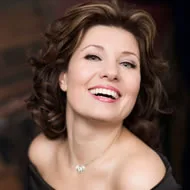
« You have to walk your own path. »
Latvian-born Marina Rebeka is one of the leading sopranos of our time and is regarded as one of the world's finest Violettas in Verdi's La Traviata. She has also earned a reputation as one of the greatest interpreters of Rossini and Mozart of our day. Since her international breakthrough at the Salzburg Festival in 2009 under the direction of Riccardo Muti, she has been a regular guest at the world's leading opera houses and concert halls, including the Metropolitan Opera and Carnegie Hall in New York, La Scala in Milan, the Royal Opera House Covent Garden in London, the Concertgebouw Amsterdam, the Bavarian State Opera in Munich, the Vienna State Opera and the Opernhaus Zürich.
Classicpoint.net: You come from Latvia. This country has produced some very fine singers in recent years. Is there an explanation for this?
I believe the reason is the good musical education. In addition, our standards are based on recordings that we found in libraries, not on live recordings. As we all know, we are human, and a CD is the best an artist can achieve. The higher the standard, the higher the goal we want to reach. That in turn raises our own standard.
You were not really happy with your teachers. What advice do you give young singers regarding their training?
I always say that the teacher shows the way you should go. But you have to walk it yourself. No one else can do it for you. It is good to rely on the teacher, but the best thing is to know how to work on yourself and to be independent. That way you always know what you have done well and what you have done badly, because the further you progress, the fewer people there are around you who will tell you the truth.
Which roles are you most familiar with, and which roles do you respect most?
My favourite roles are Violetta, Norma, Juliette and Thaïs. I perhaps have the most respect for the technically demanding roles that require great stamina, such as Maria Stuarda or Elektra, or small roles that are technically very challenging, in which you have only five minutes to show everything, and where that is your only chance. Examples of such roles are the Queen of the Night or the Italian Tenor in Capriccio.
Have you ever had problems with productions or stage directions from directors that you did not want to carry out?
I always try to understand the directors and to justify their ideas with my own. So far I have never been in a situation where I withdrew from a production because of stage directions. But I have had difficulties understanding and implementing certain stage directions. Good directors always know that if an idea is not supported by the artist, it does not appear authentic. That is why they always seek discussion and try to find a joint solution.
Are there any anecdotes from your career, from behind the scenes or on stage, that you could share with us?
Most of the jokes revolve around tenors, for example: THERE ARE 3 MALE REGISTERS - BASS REGISTER, BARITONE REGISTER AND CASH REGISTER :)
What are your interests besides singing?
Horse riding, sauna, gardening, hiking, painting, books. One day I would like to learn to dive.
Which projects are you currently working on?
I am mostly busy with CD recordings. This year I recorded a Rossini album, recorded Clemenza di Tito in Baden-Baden and recorded the role of Luisa Miller in the complete opera. Alongside recordings, I also have to rehearse new roles for next season. I have three Verdi debuts: Luisa Miller, Simon Boccanegra and Giovanna d'Arco. I am really looking forward to them.
Which roles would you most like to sing in the future?
Thaïs, Manon, Trovatore and Rusalka. Then we will see whether the voice continues to develop.
Do you have any other wishes for the future?
I wish for more free time to spend with my daughter and to be able to practise. I also wish for a few but truly interesting projects with outstanding musicians.
Interview by Florian Schär | Classicpoint.net | 1.1.2018
© Photo: Jänis Deinats
More interviews
All interviews →


