

« A waltz is not a Ländler. »
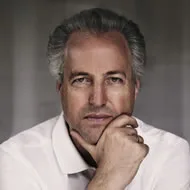
Manfred Honeck has been Music Director of the Pittsburgh Symphony Orchestra since the 2008/2009 season. Alongside concerts at Carnegie Hall and the Lincoln Center in New York, he and the orchestra regularly present themselves with great success to European audiences as well: since 2010 they have toured to numerous European music capitals and to the major European music festivals, among them the Rheingau Musik Festival, the Schleswig-Holstein Musik Festival, the Beethovenfest Bonn, the Musikfest Berlin, the Grafenegg Festival, the Lucerne Festival, the Enescu Festival, the Salzburg Festival and the BBC Proms. Manfred Honeck and his orchestra maintain a close relationship with the Wiener Musikverein, which will be continued as part of their next major tour of European cities in autumn 2019. In the 2019/20 season, Manfred Honeck will guest-conduct, among others, the Deutsches Symphonie-Orchester Berlin, the Danish National Symphony Orchestra, the Seoul Philharmonic, the Chicago Symphony Orchestra, the Münchner Philharmoniker, the Accademia di Santa Cecilia, the Wiener Symphoniker, the WDR Sinfonieorchester, the Oslo Philharmonic, the London Symphony Orchestra and the Bamberger Symphoniker.
Classicpoint.net: You grew up with eight siblings and have raised six children of your own.
Yes, in earlier times it was quite common to have a large family, especially in rural areas. I grew up in Vorarlberg. Of course, it is a very happy life, I think, because we simply have a very good sense of togetherness, and we also learned to resolve conflicts among ourselves and to show consideration. That is something very special in a large family.
Musically, this was fruitful in that each of the children learned an instrument. We began playing together very early on. But it was also a life of deprivation. The neighbours, for example, all already had a television set. We simply could not afford one. One could not go to inns, that was out of the question. My father did not have the money for it, but we children of course did not notice that at all. We were very happy, and I would not want to miss this large family, just as I would not want to miss my own children now. A child is a gift after all. A single child is already a gift, but I love children and I love family.
A great deal of music has come out of this large family. Your brother, I believe, is now also leader of the Vienna Philharmonic.
Four of the other children became musicians. You have already mentioned my brother Rainer, who is concertmaster of the Vienna Philharmonic. My sister is a soloist at the Vienna Volksoper, and my eldest brother is now already retired, but he was a Kapellmeister and repetiteur at the Frankfurt Opera. So four children from this family of nine went into music professionally.
I should perhaps also mention something, as it is very important for understanding: my father was very keen that the young children received good instrumental training. He saw that this was perhaps not entirely possible in these rural, small villages. So he decided to move the whole family to Vienna. As I said before, we had no money. Nevertheless, he had the courage and took the risk, for one simple reason: he wanted the best quality and the best education for his children. If he had not taken this step, I probably would not have become a conductor. This shows that a decision in life can have far-reaching effects on an entire life, as it has been for us, for my siblings and me.
You now have six children of your own. But you are very often on the road. How do you reconcile this with your travels? Or how did your wife manage, since she was for long periods left on her own with this large family?
Of course there are sacrifices here too. We have a way of living together that somehow adapts to my profession. But I think my wife has been wonderful in this. She has supported me in every way, on every occasion, every engagement. She is also aware of the difficulties. But I must add that nowadays, with the development of technology, communication with the children is much easier. I have the opportunity to communicate with my children, who are now grown up, via FaceTime almost every day. When I began as a conductor and made a tour of Japan, there were no mobile phones at all yet. We did everything by letter back then, which of course was also beautiful. I recently came across a letter, and it moves me and makes me very sad that nowadays we no longer write so many letters. I find that a little regrettable. But there is simply no need for it anymore, because we can type in a phone number and immediately see my wife or my children on the mobile or on the laptop. That is something that is a little easier today. Of course physical presence is still very important and cannot be replaced by anything, no question. But I think that if my wife had not been prepared to go this way, it would not have been possible to have a family, or it would have fallen apart. I am very happy and very grateful that my wife has this understanding, whatever difficulties there may be, and that we have nevertheless been able to have such a family life.
You have been Music Director of the Pittsburgh Symphony Orchestra for ten years. What distinguishes this orchestra?
It is a great American top orchestra. André Previn, Lorin Maazel and Mariss Jansons were my predecessors. The musicians have been shaped by these great conductors, and the musical quality is simply outstanding, truly excellent. But it is actually customary for American orchestras to play technically very, very well and always to arrive at the first rehearsal well prepared. They all take the parts home with them and practise them. But something is particularly striking about the Pittsburgh Symphony Orchestra. The Pittsburgh Symphony Orchestra is precise, but it also has a great love of expressiveness and warmth, so that they can play lightly and elegantly, dig in vigorously, play with enormous emotion and with great energy. For me it would be rather too simplistic to say that they have a European sound. You know how it is: European sound, what is European sound? That cannot really be defined, because St Petersburg plays differently from Vienna, Vienna plays differently from Berlin, and the Orchestre de Paris plays differently from the London Philharmonic. One cannot say that there is truly one uniform European sound. What we understand by European sound is actually this warm and profound sound, which is oriented towards roundness. And the Pittsburgh Symphony Orchestra has this very clearly. Personally I find it very interesting, because one very rarely sees an orchestra that has a personality, that can play everything, yet is always searching for musical colour. That is something unique, and that is what distinguishes the Pittsburgh Symphony Orchestra.
As a guest conductor, you stand at the podium of the best orchestras in the world. In your opinion, what is the same across all orchestras, and where is the difference to an average professional orchestra most noticeable?
I should perhaps say at the outset that orchestras today play very, very well. That cannot be compared with 40 or 50 years ago. The musicians are simply outstanding. I am sometimes astonished at orchestras that one might classify as average, how good these people, these musicians, are. The standard is very, very high, I think. But it is of course sometimes the case, and for me this is the most important thing: how far is a musical understanding already present? How far is there a certain tradition within an orchestra? As I said before, the Vienna Philharmonic plays differently from Berlin, and a German radio orchestra again differently from the Orchestre de Paris, and so on. How well-knit is an orchestra already? With what understanding does an orchestra approach the rehearsal and the music? But in the end it is quite simply musicality. The feeling for music is ultimately the decisive factor, and there are indeed differences here. That the orchestra is quick in its response when one already makes a movement, that they already react and adjust the sound as the conductor wishes. This does not concern me alone, it concerns every conductor, but that they can respond immediately to the conductor. There are differences here. Sometimes I achieve the same results, sometimes I need more rehearsals, sometimes it goes more quickly. That is the difference.
I have read that you are very religious and that you also pray before concerts, and that this has become somewhat known. Musicians from the orchestra and sometimes guests also take part.
That came about from certain natural circumstances. So I do not make a big fuss about it, because by my nature I pray every day in any case and seek a relationship with God. Musicians once came to me after I had rehearsed in Pittsburgh and asked whether they could pray with me before the concert. I said: "Of course, gladly! I do that anyway, so please do join me." Then it became established that we pray before every concert. That is so beautiful, because friends, people of other faiths or those with no faith at all have also joined in and wanted to pray. A deeply moving moment, for example – you may remember, some years ago there was an attack on the synagogue in Pittsburgh, and several people died – we gave a concert, a memorial concert for the victims of the synagogue. I invited the rabbis and this Jewish community to pray. It was so beautiful, simply as a form of preparation.
And with other orchestras, for example the Czech Philharmonic, where people once asked me whether they could celebrate a Mass. It was the musicians who asked me. That was lovely, because the cultural-communist committees had in fact been housed there. In the same building where the communists had been, we then celebrated a Mass. There are special moments for me, but I do not make a public display of it; it is a need for me. I am astonished how many people share this need, especially in America, in order to prepare themselves. In sport this is evidently quite customary in some way; in the cultural sphere, I do not know, I am not really familiar with it...
You spoke earlier about different orchestral sounds. What are you yourself looking for in an orchestral sound? What is important to you? What do you value?
That varies a great deal. We play music from different epochs, of different spirit, and the approach is different. I cannot transfer a Bruckner or a Brahms to Mozart. That simply does not work. The sound must emerge from the content of the piece, from the composition. That is the first thing we conductors must do. I must understand the piece and then shape the sound accordingly. When I conduct Dvořák's Eighth Symphony, I will go into the Slavic world and look at how a Czech polka or a Russian march or a Slavic march sounds. How were they played? These are the criteria to which the sound must adapt. The older I become, the more this interests me, these sound settings, above all in Bruckner, but also in Gustav Mahler, where we all love the symphonies very much and play them over and over, and often no longer know what origins and traditions are embedded in them. For example, the Viennese rhythm. We know that Mahler composed from his own time and incorporated all these folkloric dances. In his Fifth Symphony, for example, and also the Ninth, these are Ländler. I often hear people say: "Wow, this is a wonderful waltz!" – "Das ist ein herrlicher Walzer!"
Then I always have to correct them: "No, that is not a waltz, but a Ländler." But which Ländler is it? There is the Bavarian Ländler, the Styrian Ländler, the Lower Austrian Ländler and so on. There are different kinds. If one does not know this, one plays the music as it comes, as I said, like a waltz, but one does not understand the background. The sound must adapt in the same way. A Ländler is played differently from a waltz, perhaps more austerely, more rustically – I do not want to say more coarsely – but Mahler, for example, very often wrote: "wild", "grob" [coarse], "roh" [raw]. Those were his expressions in the score and in the parts, because he knew how it was played. That is how the sound must be shaped, and I think that is important. It is the same with Mozart. I always say: "If you have no knowledge of music, then keep your hands off Mozart." One must understand how the composer himself heard it at the time. In what environment did he compose it? What state was the composer in? For whom did he write? What are the circumstances, the traditions, and what did he draw upon? When this becomes conscious, then, I believe, one very quickly finds the sound, and that is what is decisive for me personally.
How open are you to other musical styles? You have spoken of Ländler, and of course classical music. But when it comes to – yes, people talk a lot about crossover – bringing in pop, combining it with rock, building new bridges. What is your view?
I think music is the language of the world that everyone understands. I cannot distance myself from wonderful entertainment music, or indeed from pop. I am not really immersed in that world and am not entirely informed about everything. As for jazz, I have conducted Gershwin, the Piano Concerto, An American in Paris, where everything was based on jazz styles – they are just different jazz styles. That is something that continually inspires me as a musician, and I am very open to it. But I must also admit that my profession as a conductor demands that I specialise more and more, and that is very time-consuming. I no longer have time for other styles.
Is there such a thing as good and bad music at all? I often ask myself this question. It is indeed a very serious question. For example, studies have been carried out in hospitals, playing different kinds of music in individual hospital rooms. Then they examined which music promoted the recovery process better, or with which music it was more successful. It turned out that Mozart and Bach were at the very top. One can then see: "Okay, I am not so wrong with these two composers."
But I have said to myself that if there is music that heals, that heals faster, then perhaps there is music that does not heal. I cannot give you an answer to that, but I do notice, when I speak with doctors, who keep telling me that depression is increasing a great deal, especially among young people. I once got into conversation where some doctors have fears that something like heavy metal, that is, the consumption of this music, may possibly also lead to depression. I cannot confirm that, but I asked myself whether there is also an effect from perhaps this concentration of depressive or perhaps violent music that people – I am speculating now – listen to from 0 to 24 hours. That is something where music may have a rather unpleasant influence. It would be good if there were a study on this.
Apart from music, do you have other passions?
As a child I was interested in football. I come from a large family, so of course one plays football, and that was a passion. But now I must sadly admit that my sporting abilities have declined somewhat. In my free time, however, I like to go to the mountains. And as I said before, nature and faith play a very big role. I also read books, very much enjoying biographies. I do that when time allows. Otherwise I am very busy with something very beautiful, namely the score, which are also books, musical books, in which one also takes musical journeys around the world. That is very exciting. It is very important to me professionally, but it is also a hobby.
Finally, perhaps a look into the future. Which future projects are particularly close to your heart?
I have been allowed to achieve a great deal personally and I am very grateful for it. For me every concert is an event. Of course it is wonderful to go on tour. We, the Pittsburgh Symphony Orchestra, are doing a European City Tour in October and November, and next summer a festival tour that includes the Salzburg Festival among others. Because 2020 is the great Beethoven anniversary year, we are also going to Bonn for the Beethovenfest, and these are always fine opportunities, fine events for us. Recordings are also important to me. We have just released Bruckner's Ninth Symphony. For me it is always something very, very special when one records a new CD. It is not only about there being a new CD, but about documenting the current state of knowledge and the orchestra's present musical standard, as well as my own feelings. These are always fine events, because it is important to me that it does not become a run-of-the-mill CD simply because we want to have a CD, but that it has an interpretation, a sound, that may remain valid for the coming years. That is the goal; whether one succeeds is another matter...
Of course I also enjoy guest-conducting. When I stage Fidelio at the Theater an der Wien in the Beethoven year, where Beethoven's Fidelio premiered, it will naturally be an event – and if Christoph Waltz is also directing, I am particularly pleased. These are all highlights that are coming this year.
Interview by Florian Schär | Classicpoint.net | 3 October 2019
Photographer: © Felix Broede
More interviews
All interviews →


