

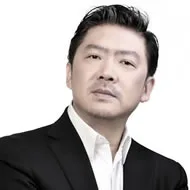
« I hope we can share this sense of wonder. »
Maestro Yu Long is regarded as the most influential figure in the classical music scene in China. The Chinese conductor, with an established international reputation, is founder and artistic director of the Beijing Music Festival, artistic director of the China Philharmonic Orchestra, music director of the Shanghai and Guangzhou Symphony Orchestra, vice director of the MISA Shanghai Summer Festival and principal guest conductor of the Hong Kong Philharmonic Orchestra.
You are named as the most influential figure in the classical music scene in China. Where do you see the greatest potential in the classical music scene in China?
Having turned 50, I have focused even more on passing on music from my generation to the next. The enthusiasm for music in China offers a large platform for young artists. I hope that China's opportunities can help shape the history of music worldwide. With 60–70 orchestras and around 50 million children learning an instrument, we have a great deal to share. Even if not all of these children become great soloists, I hope China will educate the next generation with a love of classical music. That holds enormous potential.
Are there major differences within China?
Classical concerts and education are still an ongoing development in China. Because of the Cultural Revolution, everything is still relatively new. Some of our major orchestras, the China Philharmonic, the Shanghai Symphony Orchestra, the Guangzhou Symphony Orchestra and others, are keeping pace with the best in the world. But some of our provincial cities are only just learning how orchestras function.
What can the European classical music scene learn from China?
The Chinese public has an incredible appetite and great enthusiasm for classical music. With the long tradition of the European classical scene, I believe it can be easy to forget the excitement and response of hearing a Beethoven symphony for the first time, or of discovering Shostakovich. Most Europeans cannot even imagine what it was like when this music was new to them. But many Chinese of my generation can still clearly remember the first time we heard Brahms or Bach. I hope we can share this sense of wonder.
Looking back over the last 20 years, what have been the greatest changes in the classical music scene in China?
It is difficult to single things out, because almost everything in the Chinese classical music scene has changed dramatically over the last 20 years. I founded the Beijing Music Festival exactly 20 years ago. In October we are celebrating its 20th anniversary. This festival is a good example of the spectacular change. When we founded it, we asked ourselves whether such a large music festival could even be viable in China. But it became not only one of the most important classical music festivals in Asia, but also an event acclaimed by critics worldwide. The festival premiered several outstanding works and attracted the best international soloists and conductors.
If you compare the leading orchestras in China with the leading orchestras in Europe, what are the differences?
The differences are getting smaller. My generation was the first to study abroad. After my studies at the Shanghai Conservatory, I continued my studies at the Berlin University of the Arts. There a new world of practice and music opened up to me. Now very many Chinese musicians study all over the world and then return to the orchestras here. Our top orchestras have developed to the point where they are comparable with the best orchestras in Europe.
What sets classical concertgoers in China apart?
When people from Europe or America attend our concerts, they notice that the audience is very young. People here are eager to learn new things.
What are your upcoming projects?
The 20th anniversary of the Beijing Music Festival will be a major project for me. It is truly a dream come true, because through this festival China has been able to experience so many new things: the return of Isaac Stern, the first commissioned composition (Philip Glass's cello concerto), the premiere of Wagner's "Der Ring des Nibelungen" as a milestone, the first church concert of a Mozart Requiem. The list goes on and on. It will be a tremendous celebration. I am moved by how great the support is that we receive.
What are your interests outside music?
I love discovering the world and I am glad that my work takes me to fascinating places across the globe. When I am in a new place, I try to find time to try the local food, to see everything and to learn.
Interview by Florian Schär | Classicpoint.net | 2 August 2017
More interviews
All interviews →


