

«Silence can be very powerful, almost shocking.»
«Silence can be very powerful, almost shocking.»
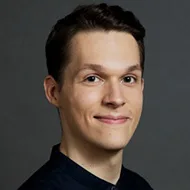
Lukas Sternath (*2001 in Vienna) is an Austrian pianist and one of the most promising young artists of his generation. He gained his first international experience as a member of the Vienna Boys' Choir. He studied piano in Vienna and Hanover with renowned teachers. He achieved international recognition by winning the ARD International Music Competition in 2022. Since then he has performed regularly in major concert halls across Europe and has been honoured, among other things, as an "ECHO Rising Star" and a "BBC New Generation Artist".
Your interpretations often seem very attentive to structure and yet free at the same time. How do you balance analytical thinking and intuition when working on a piece?
I don't see this as a contradiction. Of course, one prepares, analyses and questions. In the moment of performance, however, one needs the freedom to trust one's own intuition and, now and then, to take a different emotional or interpretative direction. The two complement each other and form a structure that is recreated again and again in the moment of playing.
Is there a work that initially completely baffled you and that you first had to come to terms with?
Rachmaninoff's Fourth Piano Concerto. On first hearing I was baffled and didn't know what to make of it. It was not love at first sight. But over time the work grew closer to me, almost physically tangible. It became a key piece for me – I played it in the final of the ARD Competition and at my debut in the Musikverein in Vienna. Precisely because the connection did not come immediately, the relationship became all the more intense.
What role does silence play for you in music – particularly in transitions or after climaxes?
Silence is essential. The moment before the first note is especially intense, when the hall settles, but so is the fading away of a piece. Silence can be very powerful, almost shocking. In Schubert's late works, for example, rifts often arise in which the music passes into silence or ends abruptly. These moments shape the perception of what comes before and after. Silence is never the same – it changes depending on the context.
How do you decide when to adhere strictly to the score and when to deliberately depart from it?
In principle, I follow the score closely and take the composers' indications very seriously. At the same time, practice – for instance with Rachmaninoff's own recordings or in exchange with contemporary composers – shows that interpretation is a living process. Composers, too, change their ideas in the moment. Deviations are possible, but they should always be justified and based on a well-founded understanding.
Which composers do you regard as more "intellectual" – and which as more "emotional"?
I consider this distinction artificial. Music can be both at once. Bach is a good example: highly structured and at the same time deeply emotional. It is precisely what is well thought through that can have a powerful emotional effect. What matters is the diversity of expressive levels.
How do you put your programmes together – more dramaturgically conceived, or out of personal curiosity?
Both play a role. The starting point is always a strong inner need to play a work. From this emerges a programme that is well thought out and has a common thread. What matters is how the pieces communicate with one another and form an arc of tension. In this way every evening becomes a coherent journey.
Is there a work that currently preoccupies you particularly, but that you would not yet perform publicly?
When a work interests me, I want to perform it as soon as possible. Of course, some things need time and planning, especially large works. But it is precisely through playing them that they grow. One sets them aside again and returns to them with new experiences. This process of growing together is important to me.
Was there a concert in which something completely unexpected happened and influenced your interpretation?
No extreme concrete examples come to mind, but in fact something unexpected happens in every concert: the atmosphere, one's own mood or the response of the audience. None of this can be planned, and it makes every performance unique and alive.
What music do you listen to privately that one might not expect?
I listen to very different kinds of music and recognise no boundaries between genres. What matters to me is quality and palpable passion. When music is made with devotion, it is moving and inspiring – regardless of style.
What passions do you pursue besides music?
Philosophy is an important complement for me – a way of reflecting on the love of life. Equally meaningful to me are my fellow human beings and the time spent with them. Humour also plays a major role, for instance through late-night shows. Music, laughter and interpersonal relationships are central sources of my energy.
Interview by Florian Schär | Classicpoint.net | 1 May 2026
Image copyright: Daniel Delang