

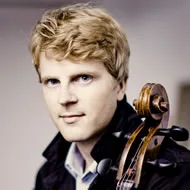
«I have experienced little envy and egoism.»

Since winning the First Prize at the 2010 International ARD Music Competition, where Julian Steckel also received the Audience Prize, the Oehms Classics Special Prize and the Special Prize of the Munich Chamber Orchestra, Julian Steckel has been one of the most sought-after cellists internationally. Alongside his solo career, he also teaches a cello class as a professor in Rostock and devotes himself to chamber music.
Classicpoint.ch: At the end of your studies, you took lessons with the violinist Antje Weithaas. How did that come about, and what did you learn from her?
I knew Antje Weithaas as the teacher of my sister Anna Theresa and as a chamber music partner, and I was musically and personally enthralled by her.
So it was a natural decision for me to continue learning with her. I had the privilege of studying with the best cellists, and I felt the need to gain other perspectives.
Lessons with Antje Weithaas were at the same time a support for my path so far – by knowing the score, the biography and the circumstances of the composers' lives, to get as close as possible to the expression of the work; that is, from "how is something created, structured, composed" to "what does the work want to say to us and to the listeners" – in other words, to arrive at the essence, the expression and the meaning of a work. At the same time, the time with her was simply very refreshing and liberating for me.
Before you had your breakthrough by winning the ARD Competition, you had won many second prizes and had just been appointed principal cellist of the Rundfunk-Sinfonieorchester. Had you stopped expecting to win?
No, I had not yet given up hope. I don't mean that I couldn't sleep peacefully because I had "only" won second prizes at major international competitions – but I nevertheless had the feeling that my time in the orchestra was an interim stop. When I look back on my competition appearances before the ARD Competition, I see that the first-prize winners – with few exceptions – are hardly represented in concert life today. Accordingly, I already realised back then that a first prize, even at the ARD Competition, could not automatically be expected to lead to an immediate entry into concert life.
What did you experience at the competitions you took part in?
Above all, I remember forming friendships. At the cello competitions, the young international generation of cellists always met up. Everyone practised a great deal during the day, and afterwards there was celebrating. The longer the competition lasted, the fewer cellists remained, the more free time there was ... and the shorter the nights became. Of course, one had to be very focused, but the atmosphere was always friendly; I have experienced little envy or egoism.
Now and then a jury member fell asleep, which was of course amusing...
Would it have been impossible to launch a solo career without winning a competition?
Careers have many determining factors. The biggest and, unfortunately, most unfair one is luck. That is the case in many professions where quality cannot be objectively measured. Great ability is present in the vast majority of cases too, but then things like likeability and being in the right place at the right time count – that can be a stand-in, or a conductor who believes in you, or an agent with the power to organise important debuts – as well as great perseverance, strength of nerves and the ability to deal with setbacks.
So even without the competition I would have had the opportunity to fight my way through or to be "discovered" by someone, but there is never a guarantee. Some careers take off steeply and then nothing is heard of the artist for years. Others wait for decades before they are suddenly heard.
You were appointed to a professorship in Rostock almost at the same time as your competition win. Is that the perfect complement to a solo career?
For me, certainly! I simply enjoy the exchange with students very much. Speaking and thinking about music is very important to me. I increasingly sense that the ability to associate and a knowledge that is as broad as possible directly enriches one's own world of feeling and therefore of expression. As a student I was certainly aware of this too, but I did not really live it, and I mostly managed to rely successfully on my gut feeling, which is equally important! By now I can hardly imagine my musical life without teaching. Observing someone as they find their way, develop, and eventually become more or less independent, and guiding that process, I find very exciting.
Where were your teachers Pergamenschikow, Schiff and Rivinius each particularly strong in teaching, and where do you set your priorities in teaching now?
Rivinius, Pergamenschikow and Schiff are all connected with one another. Pergamenschikow and Schiff knew each other already as young colleagues and repeatedly sent each other students; Rivinius studied with Schiff, and Pergamenschikow and Rivinius made a lot of music together in the years before Pergamenschikow's death.
But before these prominent cellists stood, and still stands, my perhaps most important teacher, Ulrich Voss.
I came to Rivinius at the age of 16, having been trained by Voss for over 10 years, entirely calmly and without pressure to succeed as a cellist. Of course I was not "finished", but one never is anyway. Through this thorough schooling, however, I had a very stable technique and, at the age of 15 or 16, had already played many of the great concertos. Moreover, my repertoire was already quite broad; I had spent time with a lot of music from Bach to Zimmermann. Voss was also my most important mentor, not only during that period, but as a person too. Today I can say that I would never have come so far without him. Rivinius, as a former pupil of Voss, was a natural continuation of this path. From Voss I learned a great deal about playing the cello; from Rivinius I heard how it could sound. When he played something for me, it was incredibly inspiring – I wanted to sound that rich, that colourful and that flawless too! Thanks to his fantastic, playful and soloistic abilities, I could learn a great deal from him by observation. At that age, that was exactly the right thing. He did not need to explain much technically; we worked a lot on sound, and I expanded my repertoire. I am very grateful to him for giving me time and never putting me under pressure, although he was very strict in matters of substance and placed great value on stability. During this period I did not play any major competitions, as is often common with teenagers today, and, partly because I was still at school, I could learn in peace.
One year after my school-leaving exam I went to Pergamenschikow in Berlin and studied in a very small class in which every member had absolutely top-level ability. That was a great incentive and a seamless continuation of my drive to keep progressing on the cello, to learn more and to become better, more stable and more expressive. Pergamenschikow challenged me very strongly. I had an incredible amount of lessons, and the "standard" (one of his favourite words) shifted significantly upwards once more. Pergamenschikow was satisfied with nothing other than perfection. In those two years there was also hardly a word about "technique" with him. He always linked his ideas with images, whether from literature, film, cuisine ... That greatly broadened my horizons and my imagination. I try to pass this on in my own teaching today. At the same time as this highest demand on himself and his students, he was incredibly warm-hearted and fair. There are endless stories of what he did for his students. I will be forever grateful to him for his support and, yes, fatherly love.
After Boris's death, Heinrich Schiff took me into his class. With him I studied under another idol of my youth and was fascinated from the start by his complex artistic personality, his intense lifestyle, his sensational sound and the energy he brought to everything he undertook. I was in my early twenties and naturally very susceptible to that feeling of "all or nothing": working very hard, smoking a lot, and so on... Schiff required everyone, whether at the start of a career or not, to go through a technical schooling once more, which concerned above all, but not only, bow technique. A few people had problems with this from time to time, those who already considered themselves too good for it. Schiff also warned me, before I started with him, that his teaching would not be a walk in the park, but that was precisely why I wanted to go to him. This apparent step backwards has, however, made me considerably stronger than I was before. During this time I had to attend closely to my actually already stable musical and technical foundations, question much that was familiar, add new things, confirm... At the same time, I also had my accident, which kept me out of action for several months and cost me a good deal of self-confidence – a very important phase of doubt, but also of reorientation and self-discovery.
Today, when I teach myself, I realise how important it was to go through all of that. Even though the time was not always easy for me, Schiff counts among the greatest cello pedagogues of all time in my view, and I consider myself fortunate to have been able to learn from these very different, yet interconnected, personalities.
After a motor scooter accident, your arm was in plaster for three months. What went through your mind during that time?
The accident was a shock for me. Until then, luck had rather been on my side. Apart from that, very important steps were delayed by years. My first CD recording could not take place; I was in the form of my life and had promising concerts and encounters, but I could not seize and realise those opportunities. Naturally I worried whether I would ever regain my form. Not entirely seriously, but I did consider what I might like to become apart from "cellist"... Fortunately I had already completed school and had always had other interests. But the thought seemed very alien to me, after so many years with the clear goal of becoming a cellist, to have to take a completely different path. I was lucky: I pulled myself together again once the arm had healed and gradually worked my way back. The unselfconsciousness, the technical nonchalance, had gone for the time being, though, and it took years before I returned to my former ease.
You have already made several CD recordings with Paul Rivinius. How did this collaboration come about, and what connects you with him?
I have known Paul since I was about five years old. At that time I went to concerts by his brother Gustav and him with my parents and was a great fan of the two of them. When I moved to Berlin I got to know him, and I was looking for a pianist to "accompany" me in a major competition. Although Paul was no longer doing that at the time, I dared to ask him, and he kindly made an exception for me. The very first rehearsal was a revelatory experience for me. I had never experienced the Brahms F major Sonata like that before. It was at the same time entirely natural to follow and musically akin to me, and yet completely new because of the energy and imagination that his playing radiates. When I gradually received more concert offers, it was only natural for me to ask him. We have played together ever since, travel a great deal together, make recordings, and simply have a lot of fun.
As a soloist you travel a great deal. Are there any funny anecdotes you have experienced travelling with the cello?
Travelling with a cello is rather a tiresome affair. Check-in takes a long time; every 10 seconds one has to explain that one has bought a second seat – yes, really paid for! At the security checkpoint there is always someone who does not believe that the cello fits through the X-ray (no, it has not put on weight since the day before yesterday); fellow passengers are grumpy because, apparently, you are the only one allowed to take an unlimited amount of hand luggage ... but in return you get two of those delicious in-flight meals!
And no, I will not be learning the flute in my next life either.
Do you have passions outside music as well?
Fortunately, I enjoy not only travelling and performing but also am very fond of being at home. And although it does not happen all that often, I enjoy it greatly and devote myself above all to life's physical pleasures such as cooking and eating, ordering and drinking wine. I passionately love going to the theatre and I am a great film fan.
What are your next plans?
At the beginning of the year, after a few days off, I teach my students before travelling with the Junge Deutsche Philharmonie to Italy and Frankfurt, where I will play Gulda's Cello Concerto. So it basically goes on like this: concerts, teaching, and in between a short time at home to recover and prepare. In February, however, I am taking two weeks' holiday from the Berlin winter and will be basking in the sun in a lovely warm spot together with my girlfriend.
Interview by Florian Schär | Classicpoint.ch | 5.01.2015
More interviews
All interviews →


