

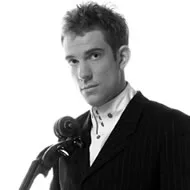
«The combination of technology and music meets with great interest.»
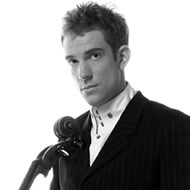
Despite his young age, the German cellist Johannes Moser already belongs to the cello elite. His commitment to contemporary music, his contact with young audiences and his occasional turn to the electric cello make him particularly interesting, alongside all his awards and competition prizes. Since October 2012, Moser has held a professorship for cello at the Hochschule für Musik und Tanz Köln.
Classicpoint.ch: As the son of professional musicians, you were already practising 4-5 hours a day in your early teens. How did you motivate yourself to do so?
Quite simply – I felt like it! I don't believe in forcing children to do something that requires such intensity and dedication as learning an instrument. When I had my first crisis and no longer wanted to play (at the age of 9), my father said to me: "You can stop immediately, no problem at all! But if you carry on, you have to take on responsibility." That responsibility motivated me enormously.
You studied with David Geringas in Berlin. What comes to mind when you think back on your studies?
The memories resurface mainly from the time when I began teaching myself. What inspired me most was the fact that one can always keep searching. Music never ends – it is both a curse and a blessing.
Since this autumn you have been teaching at the Musikhochschule in Cologne yourself. What would you do differently from how you experienced things as a student?
I want to be 100% present when I teach. I find indifference, even when it is calculated, completely unnecessary and out of step with our times. In addition, I require my students to record every lesson. That way they can go through the lesson again during my absence and actively process the wealth of information. I expect my students to be active and not simply to let themselves be entertained by me. I cannot bear passivity.
With almost every concert engagement you also combine a school visit or a masterclass. For school visits you go into secondary school classes with your cello. How exactly does that work?
It is completely open-ended; between great success and total disaster there are often just two wrong sentences... That is what makes it so exciting! I have no problem with rejection; in fact, I secretly look forward to encountering resistance. That is how a discussion becomes possible, an exchange. I consider it a real failure when the reaction I get is indifference. That is then very hard.
In 2010 you travelled across the USA with the American toy pianist Phyllis Chen, giving concerts and workshops focused on contemporary music at universities. How did the students respond?
The combination of technology and music meets with great interest among young people and students. That is why we tried to turn consumer electronics such as a Nintendo Wiimote into a musical controller. In this way, a familiar interface becomes a tool and an entry point for improvisation.
You also play the electric cello, and you have already premiered works with it. For you, is the electric cello more of a fun diversion, or do you aim to discover new territory with it?
The electric cello is still completely in its infancy. What one currently hears from the e-cello is reminiscent of poor electric guitars, and that is exactly where I do not want to go: the electric cello has its own very distinct soul, and uncovering it through contemporary compositions I find exciting. I do not see the e-cello as an alternative to the normal cello, but rather as a completely new direction for artistic expression. My most recent premiere, Chapela's E-cello concerto with the Los Angeles Philharmonic and Gustavo Dudamel, was a great success. What I particularly like is the unpretentiousness of this contemporary music. Donaueschingen bores me!
Are there many composers who are interested in writing music for the e-cello?
There are, yet I take care not to let composers write only for this instrument. I still try to have works written for the normal cello as well; the two are in balance. I have the privilege of premiering at least one new work every year and working with composers. In this way I can expand the repertoire and my profession stays fresh. And – after a premiere I look forward to my friends Dvořák, Elgar and Haydn, who appear completely fresh again after a new work. That is great fun!
Originally you wanted to become an orchestral musician. Then, when you won the Tchaikovsky Competition in 2002, that marked the beginning of your solo career. Are there moments when you would like to swap places with an orchestral musician?
I have the luxury of being able to listen to the second half of every concert (the cello concerto usually takes place in the first half). So I hear a great deal of symphonic repertoire. I dislike listening to CDs; I enjoy the vitality of a live concert.
But I am glad to travel alone, to work alone and to bear responsibility for my artistic decisions myself. In an orchestra, that is only possible to a limited extent.
There are currently several very well-known cellists of your age. Do you know each other personally, and do you exchange ideas?
I have just come from my first cello festival in Amsterdam, and having avoided this kind of event in recent years, I was very pleasantly surprised at how nice it was. There is an exchange between the cellists, and it is reassuring to see that everyone is, after all, only muddling through. Competition certainly exists, but one does not win it by waging war on one another; rather, by trying to be the best version of oneself. This can only benefit the music business, and thus all of us, that there are currently great protagonists on the cello. In any case, I harbour no envy!
Interview by Florian Schär | Classicpoint.ch | 3.1.2013
© Photo: Manfred Esser
More interviews
All interviews →


