

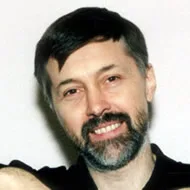
«I give every student as much as they can absorb, and I don't watch the clock.»
The cellist, who lives in Switzerland, is well known both in Europe and in the USA. He was the last student of Mstislav Rostropovich at the Moscow Conservatory and has won several first prizes at international competitions. As a soloist he has worked with leading orchestras and conductors, including the Berlin Philharmonic under Krzysztof Penderecki, the Gewandhausorchester Leipzig under Kurt Masur and the Moscow Philharmonic under Mstislav Rostropovich. Ivan Monighetti has taught at the Basel Music Academy for 26 years and gives masterclasses worldwide.
Classicpoint.ch: How did you come to the cello?
Music played an important role in my family. We often attended concerts together and listened to a lot of music at home. My mother played the piano herself and was determined that her son would play the cello. So I began playing the cello at the age of 8. By the age of 9 it was already clear to me that it would become my professional path. My mother made a great effort on my behalf to find the best teacher.
You were one of Mstislav Rostropovich's last students at the Moscow Conservatory. Could you tell us a little about him?
My dream was to study with Rostropovich. He was a role model as a person, cellist and musician. I attended all of his concerts in Moscow. With every concert, the wish to study with him grew. When I first met Rostropovich to play for him, I had no accompanist and had to start cold, alone, with the second movement of Prokofiev's Sinfonia Concertante. Rostropovich had sat down in an armchair directly in front of me. I had barely time to play the first really difficult passage when he interrupted me with the question: Have you ever been outside Moscow? He listened to my answer and asked me again to start from the beginning. At the same passage he interrupted me again with the question: What are you reading at the moment? Three times he interrupted me with a question, and I had to begin again. Then something crazy happened. He suddenly jumped up, went to the piano, played the orchestral introduction, and we played the whole movement together without a break. It was an extraordinarily intense experience, one I had never felt in my whole life before. An incredible freedom, like flying, a miracle! After the last chord he looked at me with his hypnotic gaze and said casually: I'm taking you into my class.
Studying with him was extremely instructive and incredibly demanding. I remember how, once, as a punishment, he assigned me the Cello Concerto by Reinhold Glière. The concerto is extremely hard to play and very boring to practise. I had to learn it in just one week and perform it at a concert. He was uncompromising with his students and demanded a great deal from them. Later he gave the same punishment to my fellow student Mischa Maisky. Because he travelled a great deal, we sometimes had lessons at the most impossible times. He might come to the conservatory at 2:00 in the morning to give us an hour's lesson. We hung on his every word. What he said was law to us. We attended all of his concerts in Moscow with the greatest enthusiasm and were able to benefit greatly from them, especially since he very rarely used the cello in lessons. But he could also be very funny and sociable. In Soviet times, artists on concert tours abroad were not allowed to take their spouses with them. Only in exceptional cases, such as illness, could one submit a request. Rostropovich once allowed himself the fun of writing a very official letter with a request in which he asked the Ministry of Culture to let his wife accompany him, on the grounds that he was in perfect health.
You are known on the one hand for many new compositions dedicated to you, which you have also premiered, and on the other as an expert in the performance practice of the 18th and 19th centuries. In which era do you feel most at home, and why?
Every era interests me very much. If time travel were possible, I would give a great deal to hear Luigi Boccherini play his cello, or Mozart with his violin or piano.
As artistic director you founded the Moscow Early Music Festival, which no longer exists, but which had a decisive influence on the spread of historically informed performance practice in Russia.
When I was studying historically informed performance practice in Europe, I was determined to set this development in motion in Russia as well. At that time there was relatively little engagement with it in Russia. Today Russia has soloists and ensembles at an international level, and historically informed performance practice is taught at several universities. That makes me very happy.
You have been teaching at the Music Academy in Basel for 26 years. What has changed during that time?
The Music Academy has become much more modern over the years and now ranks among the leading music academies in Europe. The level of the Swiss students too has risen incredibly. The range of subjects on offer has multiplied. I am very glad and proud to be able to work at this Music Academy.
Your most famous student, Sol Gabetta, now teaches alongside you. How have you followed her development?
Sol Gabetta came to me at the age of 10. It was immediately clear to me that she had a very special talent. Even as a child she had an admirable capacity to absorb things. That was a special case. She is an extraordinary musician who has something very important to say to her audience, and who does so with the cello on stage.
Sol Gabetta said about you: “We read books together and listened to operas, we discussed films and went to the ballet. Ivan took me to museums and made sure that I relaxed, but also went running to have a source of energy. Teachers like that hardly exist any more – unfortunately!”
You can't teach all your students so intensively, can you?
During the time in Madrid, when Sol came to me, I had a small class that was like a family. We went on outings together. I often drove the students in a minibus to the Casa de Campo, where we then all practised, played and discussed together. It was a very intense time. I give every student as much as they can absorb, and I don't watch the clock.
Were there students in your teaching career whom you would have expected much more from?
Every student is individual. Great musical talent is a prerequisite but is not enough on its own. It is a complex task. A soloist must feel the need to send a message to their audience. Ideally, I wish for a development programme for an artist that lasts 10 years. With Sol Gabetta and with Kian Soltani, who took lessons with me at the Basel Music Academy for 11 years and is now enjoying great success, we have managed this.
You will be giving a masterclass at the Menuhin Festival in Gstaad. How does your teaching at a university differ from a masterclass?
A masterclass is really the conclusion of intensive preparatory work. I expect all participants to be very well prepared in every respect. It is concentrated work in a short time, where technical problems should not be the focus. There is a lot of music-making, not only as soloists but also in chamber music groups. A great many students applied for the masterclasses in Gstaad. I have to make the selection based on the videos submitted, as I will only be teaching a small number of students. We are all really looking forward to it.
Do you have any other passions besides music?
Life is not long enough to do everything that interests me. I take riding lessons twice a week. I enjoy riding a great deal.
Interview by Florian Schär | Classicpoint.ch | 2.5.2016
More interviews
All interviews →


