

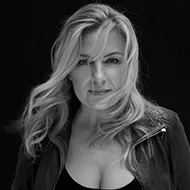
«Sometime (hopefully) a time will come when it is not primarily about trends or appearances, but about personality, when people go to the opera because they want to be moved in their soul.»
The Swiss soprano Gabriela Scherer regularly performs on renowned stages such as the Bayreuth Festival, the Staatsoper Unter den Linden, the Deutsche Oper Berlin, the Semperoper Dresden, the Staatsoper Hamburg, the Festspielhaus Baden-Baden and the Opéra national de Paris, and with her passionate interpretations of roles from works by Gluck, Mozart, Puccini, Strauss, Verdi, Wagner and Weber she has attracted international attention.
Do you remember the first opera you heard?
The very first opera I heard was The Magic Flute. I was four years old when, in Zurich, I would always sit in front of our old record player and listen to The Magic Flute again and again, and that is probably when I first told my family that I wanted to become an opera singer. All the more emotional and uplifting was the moment last year when I sang my first Pamina.
About 20 years ago you began as a mezzo-soprano, then you met your husband now and took a few years' break. In 2015 you switched to the soprano fach and made a new start. How did that come about? And how do you look back on it?
When I was studying, one of my teachers told me that I was not a mezzo but a true contralto, which completely overwhelmed me vocally. I was supposed to study Dalila and Azucena, and that felt completely foreign. At the same time I had just won a competition and had received as my prize my first role, Hänsel, which lies rather high, perfect for a lyric young mezzo. I then went to a well-known singing teacher in Vienna and asked her opinion, and after we had tried a number of things, exercises and cadenzas, she said to me: You are not a contralto, but you are not a mezzo either, you are a soprano. I drove back to Salzburg and listened to Renata Tebaldi's Desdemona, and I remember crying with relief, because I simply felt – that is me. That feels one hundred percent authentic. Nevertheless, my calendar quickly filled up as a mezzo, and I could not simply cancel my contracts and undertake a change of fach, but the high mezzo fach was wonderful for that age. I sang Komponist and Dorabella, Annio, and Hänsel, all roles that can also be sung by a so-called second soprano. When the children were born, I stopped singing completely at first, as I only wanted to be a mother entirely. Only after four and a half years did I think about returning. And then it was clear – this time as a soprano, in the right fach.
Do you sometimes take part in discussions with the director about productions?
I think it is incredibly important to be in good dialogue with a director, just as with the conductor. I want to understand exactly what a director wants and what the ideas and thoughts are, so that I can internalise them well myself and also embody and embrace them. I also ask when an idea simply does not make sense to me. So far, however, I have only experienced twice the situation where I simply could not stand behind a production; that was a long time ago, and I then left the respective productions. Once it concerned paedophile acts that I was supposed to perform as a young singer; I was pregnant with my first child at the time, and that was a no-go for me.
But otherwise I have got along very well with every production, and I have always found inspiration in working with directors.
Have you ever experienced harassment as a woman in everyday opera life?
Thankfully, I have hardly experienced any harassment at work. As a student, yes: I received a dreadful offer, and in return I would have been given a concert in a very well-paid setting. I was so shocked that I left the room speechless and afterwards had to vomit. The second time, a very well-known conductor, of whom everyone knew how his private auditions went, wanted to hold such an audition with me, but I simply brought the then casting director of the house along for protection, and got out of the situation without any problems. I had only just joined the opera studio at the time. Nothing like that has ever happened to me again.
Perhaps this is also connected to the fact that many have great respect for my husband.
What would you advise young opera singers for the optimal planning of their careers?
I am not sure what I would advise a young singer; our business has changed so much, and in my opinion not only for the better. But I would say that, no matter what is currently fashionable, which trend is decisive at the moment, whether one is successful on Instagram with 300,000 followers, or whether it is about ideals of beauty, or other trends that come and go, it should primarily be about singing well – and telling the audience something with an open heart. I would always advise my students to also go to other teachers from time to time, and to keep seeking help from coaches later in their careers as well. And I would encourage them to remain authentic. Sometime (hopefully) a time will come when it is not primarily about trends or appearances, but about personality, when people go to the opera because they want to be moved in their soul. And that only works if one remains honest and true to oneself. The second point would be: healthy and good technique should always come first, so that one does not notice after the first three roles that one only survives the part by screaming one's soul out. Choose the right roles wisely and without pressure, and take your time. Why must one already sing the first Salome or even Brünnhilde at 28? Or a Sachs? I do not understand that, and I consider it wrong. Trend or no trend.
Which are your current favourite roles?
My favourite role is actually always the one I am currently singing, with few exceptions. But roles such as Elsa, or Elisabetta, are particularly close to me; Ariadne – absolutely one of my most beloved roles. I would also like to sing Tosca again one day….
Which roles have you not yet sung that you would most like to sing, and why?
I very much want to sing Desdemona, my greatest heartfelt wish. And further Verdi roles, as well as Strauss; I would very much like to sing the Marschallin and Salome. But I would also like to sing Rosalinde one day… Vitellia, Elettra, Manon Lescaut – there are still so many wonderful roles….
On which stages do you feel most at home?
I love singing at so many houses, the Staatsoper Berlin of course, which is a little bit my home. But I have always enjoyed singing in Dresden too. I am looking forward enormously to Bayreuth again; standing on this stage, in this place, is so special. And I could imagine that I will feel the same way in Zurich in the spring. The Opernhaus Zürich has been in my heart since my childhood. It will be very emotional for me to sing there.
Is there a stage experience you will never forget?
I have had some very moving moments on stage. As Ariadne several times; once my debut as a soprano; then my debut in the role at the Staatsoper Berlin; and as Ariadne I once broke my fingers six times on stage – that was a less pleasant experience. What I will never forget is my deep gratitude when I stood on the stage in Berlin and was allowed to sing Pamina; a few tears flowed. Or my first Elsa – with Klaus Florian Vogt as an absolutely superhumanly good Lohengrin.
What passions do you have besides music?
I am now addicted to going out into nature. I go into the woods with our dog every day, which does me so much good and grounds me greatly in our sometimes stressful everyday life, between travelling and rehearsals and studying. There are a thousand other things I would like to do; I would like to write, and have more time to read, but first and foremost, besides my profession, I am there for my children in every free minute. Despite our truly extraordinary and special profession, they are my greatest happiness.
Interview by Florian Schär | Classicpoint.net | 01.01.2026
Photo: Mandred Baumann
More interviews
All interviews →


