

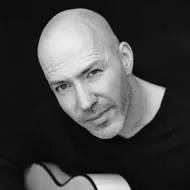
«I have been a provocation to the guitar scene my entire life.»

Frank Bungarten occupies an exceptional position among today's guitarists. On the one hand through his artistic stance of a clear commitment to the "old school", fidelity to the work and an uncompromising quest for musical truth; on the other through the breadth and lasting nature of his success, which goes far beyond mere recognition within the guitar world.
Classicpoint.ch: You come from improvised music and began on the guitar as a self-taught player. Is that typical for the guitar?
Yes, in the early days, in the 1960s and 1970s, that was generally the case, and in many respects it was a good thing. I would never want to miss my years in the "free music" world. Above all the anti-hierarchical attitude and the heightened attention to listening and communicating. Being self-taught has, quite paradoxically, shaped my teaching decisively. Today the "new generation" of classical guitarists comes predominantly from the East and has a completely different background. The next generation in Western countries, meanwhile, has dwindled.
The classical concert guitar occupies a niche position in classical music, whereas in pop and rock music it is a very important instrument. Why has the guitar never become comparably significant in classical music?
It did, in the days of Segovia and Bream! Why do you think we young people, at a time when we could witness the rock legends at the height of their work, saw in the classical guitar something just as overwhelming and an even greater promise?
Julian Bream said in retrospect: "It was in the air". This mysterious attraction of the guitar for audiences, which I also experienced as a performer into the 1990s, had to do with a social mood and a particular culture of listening. In the increasing acoustic and visual pollution, which I experience as violence, the finer things have an additional struggle. However, I have never set out with a mission to give the guitar more importance. If I can make my music the way I want to hear it and find listeners for it, that is fine by me.
While at music conservatories strings, pianists and wind players work a great deal together in chamber music and orchestral projects, guitarists are mostly on their own or among themselves. Are guitarists loners?
I am as a person. But as a musician I have always been friends with and in exchange with instrumentalists of all kinds. The collaboration with flautist Andrea Liebknecht on our CDs was almost symbiotic, and lately I often play with ensembles or orchestras. This contributes greatly, for example, to reaching new audiences. At the university I deliberately seek out students with a strong personality, but prepare them for a life with a great deal of chamber music activity. In my observation, most guitar students are neither strong enough for an instrument with which one is naturally a soloist, nor strong enough to meet the other instruments as equal partners.
Yet this does not lead to loner existence, but to a "guitar scene".
You are a professor at the Hanover University of Music, Drama and Media. Do your students all also play rock and jazz alongside classical guitar, or is that frowned upon?
The good musicians still play electric guitar, improvise, paint, write poetry; everyone does what needs to be done. With me, only arbitrariness and insincerity are frowned upon, regardless of style. I would immediately exchange the largest part of the "crossover" masquerade, which today clamours for attention, for a single riff by Billy Gibbons, who said: "We only play three chords, but the order is what matters."
You also play literature on your guitar that was not composed for the instrument, such as Bach's Sonatas for solo violin. How do you justify this?
I place emphasis on the point that my version of Bach's Sonatas and Partitas for violin is the only transcription I play. For such a project I have to feel an artistic necessity, arising from the matter itself. I knew that I could bring out certain aspects of this music differently, or even better, than I had heard them until then, so I had to try. Beyond that, I have never given it much thought.
Bach's solo works for violin or cello are considered sacred by many cellists and violinists. They have little understanding when these works are performed on other instruments. Have you already received feedback of this kind?
For thirty years, I have received only positive feedback, especially from that quarter. There were reservations at first from the record company, which were resolved with the success of the recording.
Violinists have always been my greatest fans, to this day, constructive and full of mutual respect. Musicians of a certain quality and attitude recognise and understand one another entirely on their own. In the course of an honest artistic search, boundaries and concepts dissolve, including between people. The essential question facing all Bach interpreters today, whether sacred or profane, is how they respond to the undeniable achievements of historical performance practice.
The guitar is in fact predestined for polyphonic music. Yet one mainly knows melodic pieces with chords underneath. How do you explain this?
The last composing guitarist who could truly move polyphonically across the fingerboard was Fernando Sor, who died in Paris in 1839. To write polyphonically in the natural way of Sor or the masters of the 16th century, one must command the instrument brilliantly. It is indeed so difficult that composers who do not play the guitar often despair of it. In Castelnuovo-Tedesco's "24 Caprichos de Goya", after long and qualified engagement with the material, a work emerged in which the various voices are even required to have constantly different dynamics and articulation. One always moves at the very edge of what is possible there, but it is also the most complete and impressive guitar work, showing what is possible.
That musicians and audiences alike like to take the path of least resistance, and are reinforced in this by upbringing and society, is not only a problem of the guitar. I also enjoy having fun, but from a cultural-political standpoint I would have nothing against reintroducing, once again, the standards of the 16th century and their concepts of "mastery".
You have already received the Echo Klassik Award twice. What does it mean to you and to the guitar scene?
With everything I do, my radical teaching philosophy in particular, but also my choice of repertoire, of instrument, down to questions of outward appearance, I have been a provocation to the guitar scene my entire life. "Scene" means, in the long run, conformity and mediocrity. Nevertheless, there are people there who say: if at least he is successful, then in the end it is good for all of us.
Which living composer would you most like to play or hear newly composed guitar music by?
I am currently preparing the world premiere of an extensive new work for live electronics, keyboard instruments and guitar by the young composer Damian Marhulets, which I eagerly look forward to. I am open in that respect, but not in search. I do not actually wish for MORE music, but for more silence, out of which music can have its effect.
Which piece would you recommend to classical enthusiasts who do not yet really know the concert guitar?
That is a sensible question, which I nevertheless cannot answer so simply, since I do not know what different people imagine music to be or how openly they can listen. With such a question in mind, I recorded the CD "Cancion y Danza" some years ago, with the idea of an unbiased listener who may even be distant from classical music. Conceived as a "teaser" that opens up diverse access while avoiding all "hits". In general, I recommend listening to every piece that happens to come your way with an open heart, but comparing the interpretations! And paying attention to the recording quality and the quality of the playback system.
Interview by Florian Schär | Classicpoint.ch | 2.6.2014
More interviews
All interviews →


