

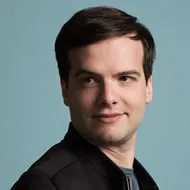
« There is so much cultivation that has been lost in today's music-making. »
Locarno-born pianist Francesco Piemontesi has made an international name for himself through prizes at several major competitions. He is regarded as one of the outstanding new Mozart pianists. Piemontesi's playing is characterised by technical perfection, a large and rich palette of colours, and the cultivation of expression.
Classicpoint.net: You grew up in Ticino and now live in Berlin. Where do you feel at home, and what kind of environment do you need to be able to work creatively?
For my daily work, for my practising, I above all need quiet. I find it in my practice room in Berlin just as much as on Lake Maggiore. I don't think the place has a great influence. As far as all other aspects of life are concerned, Berlin currently offers a great deal. Frankly, though, I can't imagine living there forever. And of course I am also often in my homeland, Ticino, because of the Settimane Musicali.
You are regarded as one of the outstanding new Mozart pianists. What is your personal connection to Mozart and his music?
A very direct, organically developed connection. I have played Mozart from the very beginning. Even as a child I found his music enormously human and communicative. The apparent simplicity, behind which such depths are hidden. Yet behind the balance that seems so effortless there is always a great deal of work: everything in Mozart must be used in carefully measured doses: the tone colours, the articulation, the agogics. Everything is interconnected. If you use just a little too much or too little of this or that, everything collapses. Seen this way, a small Mozart rondo is much more difficult than the most virtuosic pieces by Rachmaninov or Liszt.
Your best-known teacher and mentor was probably Alfred Brendel. In what ways did he shape you?
In very many respects. For example, I worked a great deal on tone colour with him. He developed various techniques for imitating orchestral instruments on the piano through a differentiated touch. What has shaped me lastingly, however, is above all his attitude, his ethos, his great sincerity as an interpreter. Moreover, Alfred Brendel is of course not an interpreter without history; he stands for a school. He always told me a great deal about his most important teacher, Edwin Fischer, whom he revered just as I do. An incredibly cultivated and subtle pianist. We often listened together to old recordings of Fischer from Brendel's private collection and then talked about them. I took a great deal from that as well.
You are artistic director of the festival "Settimane Musicali di Ascona". What distinguishes this music festival from other comparable festivals?
The Settimane is a relatively small festival. In my view, what sets us apart from other festivals is the fact that we are completely financially independent. This allows me to invite artists whose integrity and quality I am absolutely convinced of, without having to worry about their "market value". In our time, a few well-known record companies dominate the market through an overpowering use of PR. Their criteria now lie more in marketability than in artistic quality. By those criteria, legendary musicians such as Leonskaja, Sokolov or Perahia would probably not build a great career today. That is why I think it is doubly important to offer the audience in Ascona a programme that differs from the familiar classical mainstream.
You are interested in quantum physics. What fascinates you about it?
I find it very exciting that things at the micro level behave quite differently from what one would expect. This fascinated me as a schoolboy already. Furthermore, I find beauty in the clear laws of natural science.
Do you see a connection to your work as a pianist?
No, rather the opposite. In natural science, things are right or wrong, true or untrue. In music there are always at least a thousand different solutions. Seen this way, perhaps a longing manifests itself in this preference... But that would probably be over-interpretation.
In an interview you spoke of moments of happiness during concerts. What exactly happens to you then?
It is a feeling that probably every musician knows: you are carried along, you forget everything, you become one with the music. However, this only works if all the preparation has truly been done and you have prepared as well as at all possible. Only then can you let go at the decisive moment.
Can such moments of happiness be explained physically?
Interesting question. On a scientific level I have never looked into it. I suppose one would have to ask a neurologist.
What are your plans and visions for the future?
As an interpreter it is very important to me to cultivate and develop my sound culture. Pianists such as Kempff, Fischer and Brendel did this their whole lives, and I devote many hours of work to this task every day. On average, a great deal of cultivation has been lost in music-making today. This applies to the piano as well as to other instruments, to the orchestral and the operatic field alike. I want to push back against this, as a pianist and in Ascona.
What interests and activities do you have besides music and physics?
Oh, I suppose it is somehow my fate to be fascinated by all sorts of things, which unfortunately means that one cannot always go into depth. Art, architecture, natural sciences, languages, history – the list could go on for a long time. One thing may be worth mentioning: since childhood I have been an enthusiastic friend of campanology, the art of bells. Church bells are among the most beautiful instruments of our culture. In my life I have visited countless church towers, I am working with a friend on a compendium of all historical bells in the canton of Ticino, and I have even had bells cast myself.
Interview by Florian Schär | Classicpoint.net | 1 January 2017
Photo © Benjamin Ealovega
More interviews
All interviews →


