

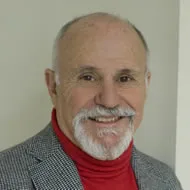
«Every orchestra is different.»

David Zinman has been Music Director and Artistic Director of the Tonhalle-Orchester Zürich since the 1995/96 season. As a guest conductor he regularly appears with the renowned American orchestras and performs regularly in Europe with the Berliner Philharmoniker, the Concertgebouw Orchestra Amsterdam, the London Philharmonia Orchestra, the Münchner Philharmoniker and the Sinfonieorchester des Bayerischen Rundfunks.
Classicpoint.ch: When and why did you decide to become a conductor?
Actually, already during my school days. When I was 14, we had a conductor at school and – although this may sound a little arrogant – I already knew then that I could do it better!
You have been conducting for over 40 years. What has changed in your conducting during this time?
I now know exactly what I am doing, so I can control the whole thing well.
If you had lived your life mainly in America rather than in Europe, what do you think would have been different with regard to your conducting?
Through engaging with a multitude of interpretations by various orchestras from all over Europe, I have become a better musician. If I had stayed in the USA, my approach might have remained a little more one-sided.
You have been the chief of the Tonhalle-Orchester Zürich since 1995. How do you see the orchestra's development during this time?
I think everyone would agree with me when I say that the Tonhalle-Orchester Zürich has constantly improved. The tonality, the ensemble playing, the flexibility and ability to engage with the pieces and, in particular, the great enthusiasm and love of music can be seen in every single member.
If you compare the Tonhalle-Orchester with the most important orchestras in the world, where are the differences?
Every orchestra is different. For me the question is not one of comparison; what is far more essential is that the Tonhalle-Orchester Zürich has become, so to speak, an instrument and speaks with one voice.
You have a Twitter account, you are on Facebook and you also have accounts on other social media platforms. Are you active yourself, or do others tweet for you?
Yes, I do use Facebook a little indeed. And once I have worked out how it works, I will also tweet myself.
You also teach conducting masterclasses. What strikes you about young conductors today, perhaps in contrast to the past?
Young conductors today can draw on very different sources: they can refer to recordings and watch concert recordings of great conductors on DVD or YouTube. However, this does not automatically mean that they are better. If someone has talent, it merely means that they have the opportunity to develop more quickly and get ahead.
What are the most important points you would like to pass on to young conductors at the start of their careers?
It is advisable to behave in a friendly and respectful manner at the beginning of one's career. Because, who knows, you may meet people again on your artistic path, and these people, if they are in leading positions, can influence your career. In addition, one should treat soloists well, because they are the ones who will spread good things about you.
When you look back on your long career, which moments will you never forget?
Actually, I don't look back. I believe the most important moment is the one that comes tomorrow. Everything always revolves around the future.
Interview by Florian Schär | Classicpoint.ch | 07.02.2012
Photo: Priska Ketterer