

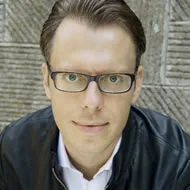
«Fortunately, the ideas come to me.»

David Philip Hefti is the winner of the renowned composition competitions Gustav Mahler in Vienna, Pablo Casals in Prades and George Enescu in Bucharest, and has been awarded the Hindemith Prize and the Composer Prize of the Ernst von Siemens Music Foundation. His considerable oeuvre ranges from chamber music and ensemble works to works for orchestra.
Classicpoint.ch: Where do your ideas come from, and when do they arise?
Fortunately, the ideas come to me. However, it is completely unpredictable when this happens. That is why I always carry my little notebook with me. One of my most creative moments is just before falling asleep, in the twilight state between being awake and the land of dreams – in absolute silence. Furthermore, everyday life inspires me in general, and poetry, visual art, walks and conversations with friends in particular. Although I go to concerts very often, it happens rather rarely that “other” music moves me to put my own music down on paper – which always surprises me.
Can you put your current compositional style into words? And how has your compositional style developed?
Unfortunately not, as I am not a writer! Seriously, it is indeed not easy for me to put my current style into words, since one has to hear music – perceive it with the senses. Nevertheless, an attempt: my musical language has developed quite naturally. At the beginning of my career I worked exclusively with the twelve chromatic tones. After first tonal steps in my childhood, I very soon oriented myself towards the tonal language of Alban Berg, of course without ever having reached his level... In the following years I expanded my sound language with microintervals and natural harmonics, with multiphonics and all contemporary playing techniques, right up to pure noise production, until my current style emerged from these components as an organic fusion. For me, it is not about stringing effects together but about a multifaceted expansion of the sound palette and the harmony resulting from it. However, I have by no means reached the end of my journey! My style will continue to change for as long as I compose. It is entirely open in which direction this development will go, since I will not steer it rationally but let myself be guided by my inner voice.
Where do you see the differences between your works when you look back?
When I finish a new work, it always feels like the best composition I have ever created, regardless of instrumentation or duration. Logically, this would mean that all my pieces could be strung together chronologically like a pearl necklace, automatically yielding a catalogue of works of increasing quality. However, when I look back, I find that quality, originality and musical depth are all different. Development therefore by no means takes place in a linear fashion! What can be observed, however, is that the compositional craft, the handling of instruments, becomes ever finer and more delicate thanks to years of experience. Stylistically, two works written within the same period are relatively similar, since my style, as already mentioned, has developed slowly and organically. Looking back several years, though, the greatest differences are found in emotional expression, in formal design and in the transparency of the music.
How does your biography feed into your work?
My biography flows into my work everywhere and constantly. Even if I wanted to, this could not be prevented, since I am not a robot but a human being with emotional fluctuations. I venture to claim that this is the case for every artist. One must by no means conclude, however, that I compose cheerful music when I am doing well and dark, sad music when I am unwell. All the factors that influence my life therefore flow indirectly and unconsciously into my music. Where I am geographically at any given time is also crucial for me. For example, I lived in London for about half a year and during that period did not compose a single note, because I was simply overwhelmed by the cultural offerings, the pulse of the city and, of course, the many pubs, so that I felt unable to work. After the London stay, my compositional energy welled up out of me like an inexhaustible spring. Only after a few months was I evidently able to process the overwhelming stimuli, channel them and put them onto manuscript paper. My private life also has a very significant influence on my work: after I met my wife four years ago, the number of my completed compositions per year doubled. Married life has turned the originally slow writer into a somewhat faster and extremely inspired composer!
Would you compose differently if you lived in a completely different place in the world?
Absolutely! The brief London stay is just one example of this. Naturally, my music is already present in my body and mind and only waits to be freed and notated. I draw, so to speak, from within myself. External influences, including other places, do however affect the sounds within me. If I lived in Japan, my music would surely sound quite different, although my musical handwriting would certainly remain recognisable. But here too one must not conclude that my music would acquire an audibly “Far Eastern touch” in Japan. The geographical influence would make itself felt very subtly and, again, unconsciously.
Can you describe for us the process from the creation of a work in your case?
Since composing is not only my calling but also my profession, I try to make my everyday life as interesting and varied as possible. Therefore, each individual work has a different creative process. I will allow myself to outline the two extremes between which my compositional approaches, with all their mixed forms, lie: I first develop the structure and the formal progressions of the entire piece and draw a timeline scheme into which all musical parameters are inserted. For this I use individual words, self-invented signs or also notes. The dramaturgy and the relationships of tempi, formal sections, motifs and so on also flow into this sketch, like an architect's blueprint. Only then do I sit down in front of the blank sheet of music and begin writing out the whole piece, whereby the act of writing itself also has an influence on the music. In the early days of my composing, I implemented the existing concepts meticulously and forced myself not to deviate from the plans. With growing experience I let myself be driven more and more by inspiration and left the corset of the sketch, though I always returned to it. The second extreme of a creative process came much later – with even more experience and self-confidence: there is no concept, no idea, no restriction. I sit down in front of the blank sheet of paper and wait to see what happens. This painful moment can last forever! When inspiration then comes – if (or rather, if!) it does – that is for me the most blissful way of composing. As if guided by an invisible hand, note after note is written down until the finished, organically grown piece lies before me. It is remarkable that a work created in this way often turns out more strictly composed in the subsequent analysis than a work that follows a mathematical concept. This shows me that one composes not only with the gut and not only with the head, but with both at once, since they are inseparably linked. Between these two kinds of creative process there are, of course, endless and appealing mixed forms. Yet all creative processes have in common that, with the notation of the thick double bar at the end, they signal the definitive completion of a score. From that moment on, the works are never touched again, neither for corrections nor for well-intended 'improvements', and are sent out into the musical world just as they are.
You are currently working on your first opera. Could you tell us something about it?
I had an enormous respect for this task, although my craftsmanship with the orchestra can by now, after decades of compositional experience, be regarded as routine, as can my work with singing voices. An opera, however, is much more than just an orchestra, chorus and soloists! The mere full-evening dimension – my longest work to date lasts 35 minutes – drove the sweat onto my brow, not to mention the dramaturgy of such a “giant undertaking” and the development of the individual roles or characters. I have, however, the great fortune of being allowed to set an astounding libretto to music. It is called “Annas Maske”, after the novella of the same name by Alain Claude Sulzer. The author, who is an enormous lover and connoisseur of music and opera, wrote the libretto himself. His language is so rhythmic that it began to sound in my head already at the first reading. Meanwhile about half of the opera has been composed, and the initial fear has vanished. More than that: working on my opera gives me as much pleasure as rarely in my entire career. Of course there are always standstills, critical phases and obstacles that must be overcome, but the joy in this work by far outweighs them. I repeatedly attribute this to the outstanding libretto, which, despite all the tragedy – murder! suicide! – very often makes me smile and even laugh in my quiet little room. I would never have dreamed that working on an opera would inspire and delight me to such an extent. And so I can hardly wait for the premiere in May 2017 in St. Gallen...
Do you see an influence of the internet medium on the development of contemporary music?
The new media have a major influence on the development of (contemporary) music. It is noticeable that, particularly in the areas of electronic music and multimedia projects, there are practically no boundaries any more. Today artists have at their disposal not only highly developed software but also entire sound databases. Composing with electronic aids has become technically easier, while the artistic and aesthetic demands are (and must be) just as high as before. It has therefore become more difficult to pick out the good works from the endless abundance of composing today. This naturally also applies to acoustic music. A score set up by notation software almost always looks magnificent graphically; and so one must sharpen the inner ear extremely to be able to recognise whether the beautifully printed music is also truly artistically valuable. For the dissemination of contemporary music, however, the internet is of the greatest importance. Today a complete set of performance material can be sent to an orchestra at the other end of the world, printed out and performed. The same applies to sound recordings. It is therefore no longer absolutely necessary for a composer to have a publisher distributing the works. With some skill and a certain amount of time, one can do this oneself. I must admit that I welcome the fact that both scores and sound files are available always and everywhere. However, it bothers me enormously that today everything has to be free. Ultimately, this harms not only the artists but also entire branches of the music industry. The entire publishing sector is already in upheaval as a result, and I am very curious to see how this development continues. Innovation is needed! When I consider music education, I am entirely positive about the internet. I am convinced that social media will play an extremely important role in the future in attracting audiences of all age groups into concert halls. The possibilities seem to me to be unlimited and are already being used tentatively today. The focus will, however, increasingly fall on social media. Of course, the internet also teems with endless nonsense, but if one knows how to handle electronic media and derives a positive benefit from them, the internet is a wonderful additional channel of information.
What is important to you in all your works; do you set generally applicable standards and criteria?
It is extremely important to me that my music – regardless of the density of the instrumentation – is always transparently audible. Every single note has its compelling place and wants to be perceived by the ear. This means that even thickly and darkly orchestrated passages sound lucid. A paradox! In addition, I attach great importance to a formal stringency that takes the listener, so to speak, by the hand and leads them through the whole composition, so that important cornerstones of the work remain in memory even on first hearing. And finally, it is my aim to notate my scores so precisely that performers, even with complex works, practically have no questions about technical feasibility. Only then can I be certain that the pieces sound exactly as I imagined them, even without my presence at rehearsals and concerts – although this meticulousness of course does not extend to the interpretive contribution of the performers!
What do you want to achieve with your music?
The people who hear my music should be emotionally moved in some way. Whether this leads to enthusiastic approval or radical rejection is secondary. Only apathetic indifference is a thorn in my side. If my music, beyond that, stimulates thoughts that then change or bring about something in the listener's life, I am very happy! Although all music is political, the greater part of my music carries no political or socially critical message – it is nothing more and nothing less than sound.
Do you have an overarching life goal in compositional terms?
I turned 40 this year and asked myself exactly this question. Statistically speaking, I am still working on my early works... When I look back, it astonishes me how much music I have already composed. And so I actually asked myself whether I should simply write further orchestral works, further chamber music and further vocal music. In this respect, the opera commission came as an unpredictable challenge at the perfect moment. Alongside the opera, I am working on my extensive symphony, which I am writing movement by movement on commission from four different orchestras. Two movements have already been premiered: one by the Orchestre symphonique de Montréal under Kent Nagano, and one by the Bamberger Symphoniker under Jonathan Nott. I would gladly devote myself to such special, also extensive projects in the future. Of course, there are also a good number of orchestras and performers with whom I would like to work. However, I do not plan my career, since life is well known to be completely unpredictable. I proceed slowly and cautiously, step by step, and look forward to all forthcoming commissions, projects, performances and especially to further encounters with interesting artists.
Interview by Florian Schär | Classicpoint.ch | 2.11.2015
© Photo: Manu Theobald
More interviews
All interviews →


