

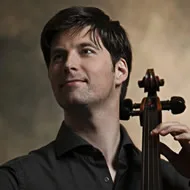
«Such moments never happened.»
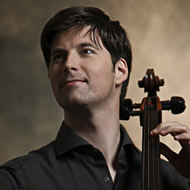
Daniel Müller-Schott is today among the world's finest cellists and can be heard on all the major international concert platforms. Alongside performing the great cello concertos, Daniel Müller-Schott has a great passion for discovering unknown works and expanding the cello repertoire, for instance through his own arrangements and collaboration with composers.
Classicpoint.ch: You won the first prize at the Tchaikovsky Competition in Moscow when you were just 15. Wasn't there a danger of losing your footing and getting carried away? What was the time immediately after that win like?
At that time I was lucky to have a very good and grounded environment. Immediately after winning the prize, my parents and teachers made sure that I had enough time to grow into the life of a musician, and also to be able to determine over the years: How do I cope with life as a musician? Because that means not only playing your instrument, but it affects your whole life: How do I cope with travelling, for example, or with the frequent situation of having to play new works in quick succession? And can I also continue to develop freely as a person? In hindsight, I can say that precisely this continuous and perhaps somewhat calmer development has been very good for my maturing process. I was able to develop slowly as a musician.
You are the musical partner of Anne-Sophie Mutter. She has been your mentor since your childhood. How did this connection come about?
I was the first scholarship holder of her foundation, a very formative time. Even then I got to know the demands placed on a professional musician, the responsibility one bears for the music, and the passion it takes to embark on the path of a soloist. As early as 2000, Anne-Sophie Mutter invited me to a debut concert at Carnegie Hall in New York. Over the years a wonderful musical partnership has developed, in the Brahms Double Concerto and as a trio partner, for example in the Mozart project or recently on a tour of Spain with the Beethoven and Tchaikovsky trios.
André Previn and Peter Ruzicka have composed a cello concerto for you. Sebastian Currier and Olli Mustonen have also dedicated works to you. You premiered all of these works with the composers or under their direction. Did you have any influence on how the works came into being?
With both composers there is a backstory. I had previously been able to work with Peter Ruzicka as a conductor, and playing together with André Previn in a trio and with orchestra led him to want to write a concerto for me. That exchange then continued during the creation of the works. It was particularly inspiring, and I am very grateful for these encounters. I am especially looking forward to the next works by Olli Mustonen and Sebastian Currier.
You are touring the world with concerts. In which crazy places have you already practised because there was no other option?
By now I have, so to speak, given private concerts for passengers at many airports around the world. Long waiting times at airports are often unavoidable. Then I usually unpack my cello to practise. This often leads to conversations with fellow travellers who are waiting. A curious episode was my "stranding" in a gymnasium in France in the spring. So much snow had fallen over several hours that the roads were closed, and I had to wait in a gymnasium for onward travel. There I then had a great deal of time to play the cello...
With the Rhapsody in School project you visit schools and try to bring classical music closer to children. What experiences have you had?
Unfortunately, music lessons are being pushed more and more to the margins of the timetable at schools. I attended a science-focused grammar school myself, and there I sobering realised what status music lessons have and how little of the cultural treasure of our classical composers is conveyed. When the pianist Lars Vogt then told me about his idea for this project, I was enthusiastic about the idea of going into schools and showing children directly why we musicians feel such a passion for the classical composers. Because in classical music it is especially important to come into contact with the variety of this music early on. I am always surprised how open-minded and grateful the children are when I play something for them and talk about my experiences and my love of music. I was recently in Bilbao, at a German school.
There are currently a great many young cellists who enjoy considerable renown. Do you feel this competition, or are there enough performance opportunities for everyone?
I am glad to see my colleagues, and I find it very positive when we all help to present the cello as a solo instrument to an even larger world public. Earlier generations also had a variety of marvellous cello soloists; think of Rostropovich, Fournier, Tortelier, Gendron, du Pré and others. This tradition should be an obligation and an incentive and be carried on.
In your youth you also sprayed graffiti with friends. Were there moments when you were perhaps even ashamed to play the cello because it was uncool?
No, there were never such moments. After winning the Tchaikovsky Competition I decided to become a musician. But I never stopped pursuing my passion for football, literature or art. As soon as I am in Munich, I organise football matches with my friends. These private activities of a quite different kind, my family, all these places of retreat, are what an artist needs in order to draw strength again for the music.
You studied with Heinrich Schiff, Steven Isserlis and Mstislav Rostropovich, among others. How did you experience these three great cellists?
Through 'Slava' and my longtime teacher Steven Isserlis, I became aware of Britten's Cello Symphony, for example. I still draw on Slava's stories today whenever I play this music. It is thanks to his great love of Britten's music and Britten's warm-hearted personality that we can today experience the magnificent Cello Sonata, the Solo Suites and the dramatic, gloomy Cello Symphony. With Heinrich Schiff I was able to work on Bach suites and on concertos of the modern era, such as those by Lutosławski and Henri Dutilleux. And Steven Isserlis, with his enthusiasm for Robert Schumann, for example, awakened the romantic fire in me.
You sometimes try to push boundaries. For example, you performed a Shostakovich concerto before several thousand heavy metal fans at the Roskilde Festival in Denmark. Another promoter engaged you as the "support act" for Metallica. There you then played Bach's D minor Suite. How did the audience react?
At both concerts the audience initially reacted with astonishment, and of course the noise level was very high at first. But very quickly people let themselves be carried away by the intensity of the music. What matters is conveying the musical power, the concentration and the beauty; then the setting is almost irrelevant. Open-air concerts, of course, cannot be compared acoustically with the marvellous concert halls we have today. It is no coincidence that halls such as those in Amsterdam, Berlin, Vienna and New York are the most beautiful in the world. In these spaces one can truly 'float' while making music.
Interview by Florian Schär | Classicpoint.ch | 3 September 2013
Photo: Uwe Arens
More interviews
All interviews →


