

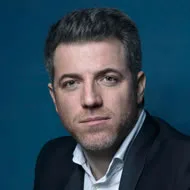
« Whatever you are criticised for, cultivate it, for it is your true “self”. »
Cédric Pescia, born in Lausanne, of Swiss and French descent, won in 2002 one of the most prestigious piano competitions in the world, the “Gina Bachauer International Artists Piano Competition” in Salt Lake City (USA). Cédric Pescia performs in numerous countries across Europe, South America, North Africa, China and the USA. Alongside his solo career, his love of chamber music leads him to perform regularly with renowned partners. He has enjoyed a long-standing artistic collaboration with the violinist Nurit Stark. He is a founding member and artistic director of the Lausanne chamber music series Ensemble enScène. In addition, he served on the jury of the Concours Clara Haskil in 2005 and 2007. He gives masterclasses in the USA and Europe. In 2012 he was appointed Professor of Piano at the Haute Ecole de Musique de Genève.
Classicpoint.net: Three years after you yourself won one of the most prestigious piano competitions in the world, the “Gina Bachauer International Artists Piano Competition”, you were already a member of the jury at the Concours Clara Haskil. How did it feel to switch sides?
In both cases I felt like an outsider. The “Gina Bachauer” was the first international competition I took part in. It has also remained the only one. There were many pianists present who had already won major competitions. I was no longer so young (26) and had little self-confidence. All the other candidates played the great Russian virtuoso pieces, while I played, among other things, the Goldberg Variations and a Mozart concerto, and did not believe I had any chance at all. The very idea of taking part in a competition was alien to me. I am not a competitive person by nature, I wasn’t back then and I haven’t become one. I must say, though, that winning this competition did a great deal for me. Without it, I don’t believe I would have the same career today.
When I sat on the jury of the Haskil competition, I was not taken seriously by most of my colleagues and candidates, and certainly rightly so: too young, too inexperienced. I also did not really know how to handle the whole situation, nor the playing of most young pianists, which seemed to me smooth and impersonal.
Above all, I had not yet understood that the sole purpose of sitting on a jury (and the reason I do it from time to time) is to help gifted musicians and open doors for them, as the jury members of the Bachauer competition did for me back then.
What do you look for most when assessing as a jury member?
I am interested in pianists who are able to communicate with the audience, who can tell a story. It is a subtle blend of fidelity to the work and to its style, honesty, intelligence, spontaneity and generosity. This naturally requires a refined, solid and varied finger technique, which should not be understood as an end in itself, but as a means of expression.
You are a founding member and artistic director of the Lausanne chamber music series Ensemble enScène. What sets this series apart?
It has been taking place in Lausanne for 13 years, in a theatre for spoken drama directed by a brilliant Colombian director named Omar Porras.
I have several aims there:
- to work closely with Omar Porras. We have already staged many projects combining music, words and stage (including a piece about Satie, one about Schumann and Novalis, and one about Chopin and Musset). Over time, my original role as a pianist has somewhat expanded. I now recite texts and move around the stage. I will not become an actor, but I enjoy experimenting in the theatre.
- to organise concerts for which I am completely free to choose the works and performers. I play a lot and gladly in the concerts myself, but I also invite other pianists and musicians with great pleasure. From the very beginning there has always been a lot of new music, and occasionally music from other traditions (North Indian classical music, African music).
- to bring people who normally go to the theatre to classical concerts.
- to build a long-term relationship with an audience; there are people who have attended almost every concert for 13 years, who follow me as a pianist and programmer; I value this very much.
You are a professor at the Geneva University of Music. What criteria do you use to select your students?
The most important thing is that the student has a good ear. This can (and must) of course be trained, but one does need a natural aptitude.
I mainly train future teachers. Very few of them will find a place on the concert stage. I try to select students in whom I can see the ability to pass on their knowledge and their passion for music. This is not always easy to tell. Many are still shy at 17 or 18. Over the years, however, I try to develop a feel for it.
The prospective student must also be willing to discover and develop their own personality, must be open to experimentation, hard-working... and pleasant to work with.
What must successful pianists learn during their studies?
There are so many important points; I would like to name three here:
- being able to practise well. Many young musicians practise badly, repeating the same passages countless times to no purpose and without thinking, practising under pressure and without enjoyment. We pianists spend a large part of our lives practising. It should always be a creative, non-automated, positive and physically relaxed time. I show my students how they can achieve this.
- freeing oneself from all unnecessary physical tension. Piano technique is complex and individual. There is no pattern that works for everyone. It is also important that the student explores where the centre of their emotions lies, how they can find access to it and transfer it to their piano playing.
- being able to read the texts well. First, what is written in the score (which requires a good knowledge of the style and language of the respective composers), and then what is hidden, what lies behind the notes, what the composer did not wish to write (or what he considered unnecessary to write, because he was writing for his contemporaries, who often moved within just a single stylistic direction). But reading the text well also means imagining the path that led the composer from the blank page to the finished notation.
What were the 3 most important things you personally learned during your studies?
- to keep training the ear ever more finely, above all with the help of transposition. I spent thousands of hours transposing most of the pieces in my repertoire into all keys, purely by ear. Then the way to make music depends less on fingers and eyes; one hears and feels the harmonic tensions and the power of intervals much better.
- to get to know my body better, to explore it and to use it more consciously with regard to making music and playing the piano.
- a sentence (out of hundreds!) from a teacher that has stayed with me: whatever you are criticised for, cultivate it, for it is your true “self” (“ce que l’on te reproche, cultive-le, car c’est toi”, loosely after Jean Cocteau)
You recorded Bach’s “The Well-Tempered Clavier” at the end of September. Can you describe the process of engaging with this work up to the recording?
I learned the work as a teenager. At 18 I performed both volumes in public for the first time and later repeatedly played excerpts from them. Then I did not play the work for about 10 years. I began again when I started teaching (2012). It is the work I teach most. I learn a great deal from it. I performed both volumes in concert several times last season. At 41 the time was right for me to make a recording.
What do your next projects look like?
- At the moment I am in the process of performing Bach’s entire work in public. A long (12-concert) and fascinating journey.
- I have been playing with the violinist Nurit Stark for 17 years. Now we would like to perform Mozart’s complete works.
- There are two composers from the second half of the 20th century who interest me greatly at the moment and whose works I would like to study: Gérard Grisey and Luigi Nono.
You are still young. What are your long-term goals?
- To continue deepening my knowledge of the music I love and to share it with an audience that is as interested and receptive as possible.
- To pass on to younger musicians what I have learned from other wonderful artists and through life experience.
- I would also like to deepen my knowledge of jazz and improvisation.
- And I have recently been learning tabla. This instrument has always fascinated me. It is interesting for me to learn another musical tradition (from North India).
What interests and hobbies do you have besides music?
I read a lot; constant travel makes it possible.
I have a great interest in Central European literature, particularly that from Hungary. Otherwise, the great literary discovery of the year for me is the brilliant Chilean writer Roberto Bolaño.
I very much enjoy watching films (I especially like Bergman, Antonioni, Godard and David Lynch).
Interview by Florian Schär | Classicpoint.net | 3.12.2018
© Photo: William Beaucardet
More interviews
All interviews →


