

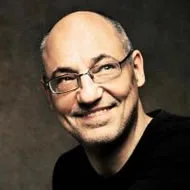
«The intermediate gradations are given far too little consideration today.»

Andreas Staier studied piano and harpsichord in Hanover and Amsterdam and was harpsichordist with the ensemble Musica Antiqua Köln for three years. In 1986 he began his solo career as a harpsichordist and fortepianist. He has established himself as one of the most influential interpreters of his field, reilluminating composers from Haydn to Schumann both intellectually and emotionally, while also opening up major literature beyond the standard repertoire.
Classicpoint.ch: What kind of piano do you play, and how does your instrument differ from a modern grand piano?
I play on a variety of instruments. It always depends on where the concerts take place. For concerts in Switzerland, for example, I cannot take my own piano with me, since the permits for ivory are very complicated and the import costs would even exceed the purchase price. The difference from a modern grand piano is that the case is built much lighter, the strings are much thinner with less tension, and so on. I could now list the differences in detail, but that is probably not particularly interesting. Let me instead address the aspects of musical relevance. If you look at the literature, one can say that the composers wrote for the instruments they knew, almost tailoring their music to them. There are few reasons to assume that the composers wrote better than the instrument makers were able to build instruments. Particularly in the indications for the pedals, there are of course strong differences, since a modern grand piano sustains the sound much longer, and as a result chaos arises more quickly and the pedal must therefore be used differently. The earlier piano articulates better and more clearly. This is because the hammers were covered with leather back then, not with felt as on the modern piano. And take as an example a piano from Vienna from the 1820s, an already Romantic instrument, which has certain registers that colour the sound in a whispering, moonlit way, something the modern piano simply no longer has. Moreover, the Viennese pianos of this period sometimes have guitar stops and 6–7 pedals, which are used above all in the literature for piano duet. Back then the instruments were produced according to the customers' orders and vary greatly.
Do you prefer to play on an original historical fortepiano or do you favour newly built fortepianos?
Unlike a violin, a piano has an elaborate action. If a piano does not function well, however beautiful it may be, it is unfortunately not usable. That is why an original must already be in very good condition; otherwise one must find a good copy. The problem is also that individual parts often cannot be repaired. If a piano still has its original strings, it is hardly possible to replace individual strings, since they would then deviate too much in sound from the original. The leather of the hammers also changes over time, regardless of whether the instrument is played or not. It becomes harder.
Can you, with your eyes closed, purely by ear, without playing the instrument yourself, hear the difference between an original and a good copy?
That is very difficult to answer, if only because pianos used to be far less standardised than they are today. A modern Bechstein hardly differs any more from a Steinway or a Yamaha. When copies are made today of very well-preserved instruments, they certainly sound different, though not worse or better.
In the 18th century there was, alongside the fortepiano, also the clavichord and the harpsichord. Which qualities of these instruments particularly appeal to you in comparison?
For me it is difficult to view the tonal qualities of the individual instruments independently of the repertoire. A Viennese piano is for me so closely bound up with a Schubertian aesthetic. It is also interesting that Schubert was not a great pianist and yet wrote for the instrument better than Beethoven, for example. Certain facets of the French harpsichord literature of the 17th and 18th centuries are written so intimately for the harpsichord that the essential things – rhythm, phrasing, the treatment of the high, middle and low registers, and how a composition is scored – are all lost on a modern piano. The modern piano is, put negatively, less colourful and, put positively, more balanced today. The more pianistic a music is, the more is lost. Take Couperin or Chopin as examples: an incredible amount is simply lost there. With music conceived in a more 'abstract' way, the difference is smaller, even though the music is not necessarily older. There are, for example, wonderful recordings of the Well-Tempered Clavier.
Do you sometimes get annoyed when you hear, for example, Bach, Mozart or Haydn interpretations that pay no attention at all to historical aspects?
Of course there are colleagues who play in such a way that one finds it relatively immaterial. But there are also colleagues who have a completely different aesthetic and who are at the same time such outstanding musicians that conversations with them are incredibly interesting. I have, for example, time and again talked with Alfred Brendel and also argued with him in a very entertaining way, and likewise with András Schiff. But such musicians are of course also interested in historical performance practice. They simply draw different conclusions from it. Such conversations give me personally a great deal. For one learns far more from the source literature about how not to do something than about how to do it. It is interesting when one compares the sources with the first recordings by pupils of Chopin's or Liszt's pupils. There one sees that, for example in Brahms, much more arpeggiation was done than is written in the score, and that the sources say nothing at all about this, because it was simply clear at the time. That then also makes me humble, for if we go back in time, unfortunately there are no recordings by pupils of Bach's pupils, etc. In that respect we will never know how Bach played. I am sure that if a recording by Bach were to surface, modern pianists would be just as surprised as the advocates of historical performance practice.
Is there, for you, a 'no-go' when interpreting historical works?
Of course there is, yes, certainly. But that is relatively difficult to name. Perhaps one example: the question of tempo. Even before the metronome was invented, there were pendulums of different lengths for fixing tempo, especially for dances in France, that is, for the ballet dances, which were codified. If someone plays a dance at a tempo that is too far removed, everything is rearranged. The piece objectively becomes a different one, because the relationship between details and the whole changes. In general one can say that today the intermediate gradations are given far too little consideration. As soon as Allegro is marked, a tempo that is far too fast is often taken, and when Andante is prescribed, a tempo that is far too slow is often chosen.
How do you explain the phenomenon of 'historical performance practice', why does the desire for historical performance practice arise only today and not much earlier?
The First World War is a watershed here. Until then there were many pianists who simply played within a certain tradition. Let us say, for example, pupils of Clara Schumann or Karol Mikuli. They played only selected literature, and played it, so to speak, correctly because they had absorbed it with their mother's milk. At some point these traditions broke off. Moreover, we must look at the developments of the 20th century. With the New Objectivity, people first tried again to leave great feelings out and to simply do what was written. Then came the idea of Urtext editions, and afterwards there was a certain stage in which one thought that if we play the notes exactly, then we are authentic. The next stage was people such as Harnoncourt, who said: what do we do in a case such as Italian Baroque music, where so very little is notated, where so much ornamentation and rubato was expected of the performer? Then the questions arose: what is all not notated but nonetheless part of the musical language of a certain epoch?
Which treatises or writings on historical performance practice do you recommend to a piano student as an introduction?
As compulsory reading I recommend Carl Czerny's great piano school. Moreover, with YouTube there is now a huge treasure trove of old films. Search, for example, for recordings by pupils of the Chopin pupil Karol Mikuli. Compare the recordings very precisely with the score, and listen for the aspect of what this person plays that is not in the score: where he arpeggiates, where he slows down, how the dynamics are, and so on. For earlier literature one must read and study the treatises and writings.
Interview by Florian Schär | Classicpoint.ch | 2.03.2015
Photo Josep Molina
More interviews
All interviews →


