

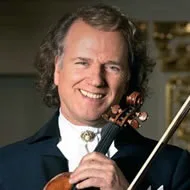
«There are no musical boundaries for me.»
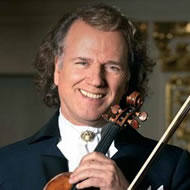
Since the mid-1990s, André Rieu has been touring the entire globe with his “Johann Strauss Orchestra”. He performs in stadiums and large halls, drawing an average of 10,000 listeners per concert. André Rieu interprets classical pieces in a popular form with his orchestra and aims to reach as broad an audience as possible through presentation and show effects. The classical repertoire is supplemented by orchestral versions of schlager and pop songs. Alongside lighting effects, he also makes extensive use of technology for sound amplification and colouring. Critics who are devoted to serious music consider his productions musically superficial, as Rieu uses well-known melodies from classical music in order to present them in an agreeable way.
Classicpoint.ch: What does classical music mean to you?
Classical music is something wonderful. I grew up with it. My father was a conductor, and at home only classical music was listened to and played, everything – Mozart, Bach, Bartók – the entire repertoire. We were six children, and all of us learnt an instrument: harp, cello, violin or piano. It was much later that I first got to know other music, the Stones, the Beatles, ABBA. But to this day I love classical music. Especially that of Johann Strauss. It makes me happy. I think we can agree that the world would be poorer without it.
Besides salon music and waltzes, do you also play other classical repertoire?
Oh yes, of course. There are no musical boundaries for me. In our early years we played salon music as a salon orchestra, back then still in a small ensemble. But for over 25 years I have had the largest private orchestra in the world with the Johann Strauss Orchestra, with around 60 musicians, including the choir. They are all permanently employed by me. So I can't say, I'm now only playing with five people and next week maybe with ten. At the moment, on tour, we are playing, for example, “O Fortuna” from Carmina Burana, Granada, an opera medley, arias from operetta and musicals, film music – everything very colourful. Waltzes are part of the evening and belong to it; “The Blue Danube” is always included. But by no means does the whole concert consist of them.
You are also called the Waltz King of the modern age and say of yourself that you live your life in three-four time. When did you first hear a waltz in your life?
I think at around the age of 8. I can still remember that moment precisely. As a very small boy I always attended all of my father's concerts. That evening he played Mahler and Beethoven, and then as an encore “The Blue Danube” by Johann Strauss. And suddenly something changed in the audience. People began to smile, they were happy. That totally impressed me. I sensed that this music radiates a very special magic. It never let me go.
Could you imagine performing a classical concert without show effects, sound amplification and lighting effects, or is that simply part of it for you?
That is part of it, because the images we choose intensify the music in its expression. Around 10,000 spectators come to our concerts each evening; on the stadium tour with Schloss Schönbrunn in Melbourne there were over 38,000 on a single evening. Without sound amplification, of course, that is not possible. But fortunately the technology has become so good that one can achieve a wonderful sound even through microphones. Symphony orchestras in the classical sense, in concert halls, exist in every city. I think what sets us apart is that we simply do something completely different. I always say: I can only do big. And I have to, because I have 120 permanently employed staff, who are paid all year round. I receive no subsidies.
In 2009, despite millions of tickets and CDs sold, you were in debt to the tune of around 34 million euros and had to pledge everything. What gave you the strength to believe that you could earn it all back?
I had already overcome the debts in 2010. They came about because I had Schloss Schönbrunn rebuilt three times as a backdrop for my concerts. That swallowed up enormous sums. Just one example: 500 people needed 5 days to set it up and 3 days to dismantle it again. On the Australian tour in 2009 alone, we booked 15,000 hotel rooms. But I never doubted that we would succeed in overcoming the debts. My family supported me completely, as did my German promoter and my record company, and someone at the bank said “Let him keep playing”. That Schönbrunn story then generated so much publicity around the world that by 2010 all the concerts were completely sold out. That is how we got back on our feet.
In 2010 you had problems with your sense of balance and had to cancel many concerts. Did you change anything in your life as a result?
Yes, and I have to say that frightened me more than the debts, because health is the most important thing for being able to practise my profession. The dizziness came on very suddenly in the night. Everything was spinning, which was really not pleasant at all. Marjorie and I sat down the very next morning and made a list of things I should no longer do. I had simply accepted too many invitations: openings, award ceremonies, etc., and five years without a holiday... I then concentrated only on the music. In addition, I changed my diet and do sport regularly, proper strength training. Up to the age of 40 everything more or less takes care of itself, but after that you have to do something!
You have been composing since childhood and also improvise on the violin. Do you compose in your usual genre, or do you also try out new styles for yourself?
I compose now and then, because I enjoy it enormously. Unfortunately I have very little time for it, because we are on tour so much. Mostly I write on request. I wrote the theme music for Donna Leon. At the Winter Olympics in Sochi, the German figure skaters skated to my arrangement of Chris de Burgh's “When Winter Comes”. And I have just composed for a Dutch feature film set in Italy, which includes a tarantella, among other things. So yes, I like trying out new styles.
What do you say to classical musicians who criticise your performances as popular sing-along music?
Classical music, especially in the German-speaking world, is really regarded as a “sacred treasure”. That is not the case abroad and was quite different in the past too. Opera was entertainment, and operetta certainly was. And many of those who criticise me have never been to one of my concerts. What has always bothered me about classical musicians is that they are so serious. They play the most cheerful works with a face as though they had stomach ache. My orchestra and I really enjoy ourselves up there on stage, and that carries over to the audience. People get up and dance who have not done so for years. That is surely a fine thing.
You have been threatened several times, and there were even plans to kidnap you. Do you have enemies, or how do you explain this danger?
Fortunately it is not quite that dramatic. Years ago there were death threats from a woman who was mentally confused. I also go out onto the street quite happily without a security service, but I do have security with me at public appearances and my concerts, though that is entirely normal; all world-famous musicians do. When you are in the public eye, you automatically become the target of fans' projections. Most of them are truly wonderful, I receive so many lovely letters from all over the world, but it can happen now and then that someone believes you “belong” to him. One then has to be careful.
Your orchestra is also a family business, in which your wife and children are involved in management. What does your family mean to you?
Everything. I always wished for a wife with whom I could get along well not only privately but also work with professionally. Without Marjorie I could never have built this up. In our early days she earned the money. We had two small sons at the time. It is really amazing how alike we think. My elder son, Marc, is a painter; the younger, Pierre, works as a manager in my company. He is also often with us at the concerts. That is of course wonderful for me, because the profession demands a great deal of travel. That way, family is always there with me. I love my four grandchildren more than anything. They are so sweet when they try to play the violin. They are four and five now.
Your parents and siblings were, and some still are, musicians. How was and how is your relationship with your parents and siblings?
My relationship with my father was not easy. He was an absolute conductor even at home. I remember that once we went on holiday without him. Suddenly the whole atmosphere was different, much more relaxed. My mother is over 90 and still totally fit, which is wonderful. I rarely see my siblings, because I am travelling so much. One brother plays cello in the orchestra of the Opera in Marseille; I always tell him: “Get out of there, become self-employed.” Because we have more fun than he does (laughs).
What do you wish for the future?
Really only that things carry on as they have so far. That I can make music for many more years. And that one day I can give a concert on the moon.
Interview by Florian Schär | Classicpoint.ch | 3.3.2014
More interviews
All interviews →


