

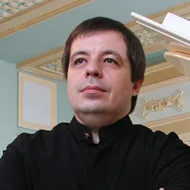
«The Goldberg Variations have become part of my DNA.»
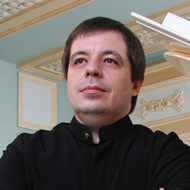
Alexey Botvinov has performed in 45 countries around the world, including at festivals such as the Chopin Festival in Poland and the Zurich Festival. In 2015, Alexey Botvinov founded the festival "ODESSA CLASSICS", of which he is artistic director and president. The festival has since established itself as one of the most successful in Ukraine.
You founded the ODESSA CLASSICS Festival, which has established itself as the most successful in Eastern Europe. What is your recipe for success, and what is particularly important to you?
I come from a family that has been based in Odessa for several generations. I love my home city – its true hidden jewel on the Black Sea. It was and still is the cultural capital of Ukraine. It is a city with a fantastic Mediterranean charm and open-minded people who love culture and know how to enjoy life. Odessa's legendary classical music tradition is known to every classical violinist or pianist in the world. I love the city and am more than proud of the astonishing success of Odessa Classics over the last seven years. The main idea was to put Ukraine back on the European festival map and to establish cultural ties between Europe and Odessa. I think we have succeeded. The festival has a very good reputation among the top artists who have performed in Odessa, and great audience interest among Ukrainian and European music lovers. Perhaps one of the keys to our success was my wish to keep the quality of the programme as high as possible – this was always my top priority, far more than financial gain. "Odessa Classics" became a kind of obsession for me and my wife Elena, who is the festival's general director; we simply wanted to create the best festival in Eastern Europe. It was constant work, 365 days a year. From 2015 onwards, we held Odessa Classics every year in June in Odessa. There have been seven editions, beginning with four concerts in 2015, and from 2018 onwards – up to two weeks with several events every day. Alongside concerts on major stages – the Odessa Opera (1,500 seats) and the Philharmonic (1,100 seats), open-air concerts on the legendary Potemkin Stairs (up to 12,000 spectators) – we have staged art exhibitions, a piano competition for young people, a programme of contemporary music, readings, literary projects, and theatre and ballet performances. We also invited the Zurich Chamber Orchestra to Odessa twice, for three concerts each time. The ZKO's artistic director, star violinist Daniel Hope, was the official "Odessa Classics Artist-in-Residence".
At 19, you were the youngest participant to win the All-Union Rachmaninoff Competition. Today you sit on juries, for example at the 5th International Rubinstein Competition. What is your view of competitions, and where do you see their advantages and disadvantages?
I am not a great fan of music competitions. I believe the essence of music lies in the shared experience of musician and audience, which is harmonious, joyful and very spiritual; the purpose of any competition is to find a winner, which automatically means that the majority of participants lose, and that is not a very positive experience for them. Yet music competitions are the most common way for young artists to find their place in the professional music world. I have a fairly good record in competitions – three of my prizes came from truly important competitions: Rachmaninov in Moscow, Bach in Leipzig and Clara Schumann in Düsseldorf. In the 1980s and 1990s, when I took part in competitions, there were far fewer of them than today, and they were much more special. There was no such devaluation of the title "prize-winner" as we experience today. I feel that the "competition mania" of our day has gone far too far in the wrong direction. In most cases, we can see that young musicians are not being trained to discover something special, but to reach a kind of professional standard, which can be rather limited and dull. As president of the "Odessa Classics" festival, I also launched a piano competition for young people aged 11 to 15 as part of the festival. We have tried to make our competition different – much freer and more open in the search for musical individuality, going beyond mere virtuosity and correctness. By the way, our first winner, Roman Fediurko, will perform on 19 February 2023 at the Kunsthaus Zürich as part of our new festival "Odessa Classics in Zürich" – I am very pleased that this great talent will be presented to Swiss audiences.
You have performed the «Goldberg Variations» live more than 300 times with the Zurich Ballet. How has your relationship with this work developed?
I have performed the Goldberg Variations live on stage 320 times so far – around 250 times with the ballet, choreography by Heinz Spoerli – mostly with the Zurich Ballet, but also with the ballet companies of the Deutsche Oper Berlin, the Strasbourg Opera and La Scala in Milan. And around 70 performances as solo concerts.
I remember that when I was nine years old, my parents gave me the score of Bach's Little Preludes and other short piano pieces for New Year. Children normally have great difficulty with Bach's music, but for me it was love at first sight. I played a great deal of Bach. I dreamed of taking part in the Bach Competition in Leipzig, and I succeeded – I became a prize-winner at the age of 24. But I did not dare to touch one piece: the 'Goldberg Variations'. Of course, I had heard and seen Glenn Gould's version and admired it, but I was certain it was too complex a piece for me. When I met Heinz Spoerli in Düsseldorf at the age of 30 and was offered the chance to play this masterpiece for his ballet, I decided it was time to immerse myself in this universe. Even then it was clear to me that the "Goldberg" is the summit of Bach's oeuvre and one of the most important masterpieces of classical music of all. Working on the variations became the greatest challenge of my musical life; and it continues. With every new concert, this piece reveals a new facet to me; it is very special, unique music. I have the privilege of performing it live on stage so often – almost a whole year of evenings – that it has become part of my DNA.
You have recorded three very successful albums with Daniel Hope, featuring works by Schnittke, Silvestrov and the «Music for Ukraine» project. What was the collaboration like?
It is a great blessing to find a musical partner with whom you speak the same musical language, who shares your vision and your ideas. My artistic collaboration with Daniel Hope is one of the most exciting and priceless creative achievements of my life. It is astonishing, but when we begin to play a new piece together, we do not need to talk about the music; everything runs like clockwork, in the same flow, and it is simply incredible. This feeling of making music together, when everything is natural and joyful, is extraordinary.
In concerts we have played very different music – Romantic, early, modern, jazz. For the recordings in question, made for Deutsche Grammophon, Daniel wanted to record very modern music with me. I would say that was probably the most difficult decision for a major record label, but I think we did it well. The worldwide success of the Schnittke recording, for example, was so overwhelming that it surprised even us and DG. And in this dramatic year we made two recordings of Ukrainian music, which was very logical; but I must say that the Silvestrov recording had been planned for a long time, before the terrible war that began this February. In fact, the idea behind both CDs is that modern music can be very exciting for a broad audience; that in today's music we can find melodies of timeless beauty; that modern music lives both for a demanding audience and for very "ordinary" music lovers. So if I am to say something short and essential about our collaboration with Daniel, I can only say that for me he is a "dream partner" in matters of music.
You have already given concerts in more than 46 countries. Which places were particularly special for you, and why?
Yes, as a child I had two great dreams: to become a concert pianist and to see the world (which, in Soviet times, when I was growing up, was quite a challenge). I can say that I am a happy person, because both of my dreams have come true. I totally enjoy the travel that comes with my profession. It is really exciting to experience the audience's reaction to the same pieces of music in countries with completely different cultural, social and religious backgrounds. You can see how unique classical music is – it is true Esperanto, because the audience's reaction is the same. Even in countries such as Indonesia, Malaysia or Thailand, where classical music is only slowly finding its way onto the major stages. Among the special concert venues is, for example, one in Switzerland – the Villa Senar, where I had the honour of playing the legendary Rachmaninov Steinway": when I was a child preparing for the Rachmaninov Competition, I read about this piano, and I would never have dared to dream of touching this instrument even once in my life. It was a very special experience for me – and this piano really is something very special, even today. Of course, all the great halls such as the Berlin Philharmonie, the London Wigmore Hall or La Scala in Milan are special, and one remembers one's performances there. You feel the character and energy of these places; you feel yourself to be part of their vast musical history, and that makes such experiences special. But perhaps the most exciting for me are the various open-air stages. Every concert in a good open-air location is special. There I also feel the magic of the place, the connection with nature or the city; it is an unforgettable feeling. Last summer I played two Rachmaninov concerts in the mountains and forests of the Italian Val Saisera. While I was playing, I felt as if I were in a fairy tale; it was unforgettable. By the way, I have played several open-air concerts in Murten, and it was pure magic too – the most common venue there is the courtyard of the old castle, but once I played Tchaikovsky's "The Seasons" quite close to the river, with the piano practically standing on the grass, early in the evening – such concerts cannot be forgotten, never. I am very proud that "Odessa Classics" managed to stage several open-air concerts on the legendary Potemkin Stairs in Odessa, with more than 10,000 listeners. I think this place is one of the most exciting venues for classical music in the world. These concerts were undoubtedly highlights of my musical life – as a pianist and as an arts manager.
What has happened to your festival since the outbreak of war in Ukraine?
Because of the war, it was of course impossible to hold Odessa Classics in Ukraine, and we decided that the right idea would be to move the festival to another location in Europe. The mere thought that our festival, which had become the most important platform for classical music in Ukraine, could simply be discontinued was unbearable. But with the help of my musical friends, we have indeed succeeded in staging very successful festivals under our brand in Estonia, Greece, Germany and Lithuania.
When we landed in Switzerland and it became clear that there would be no "Odessa Classics" in Odessa this year, our aim was to hold the festival this year in Europe with a "minimum programme" of three to five concerts. In the end, we achieved far more: 17 concerts of the highest standard in four countries, with star artists such as Daniel Hope, Pinchas Zukerman, Thomas Hampson and others, three national symphony orchestras, and a Europe-wide broadcast of the opening night in Tallinn on ARTE TV, and so on and so forth. So it was actually quite unforeseen that the festival project's success would expand in this way. And since I now live in Switzerland with my family, it was a very natural idea to hold the festival here too.
Are any concerts still taking place in Ukraine at present?
That is very difficult. Many of my colleagues are now in very different countries in Europe or in the USA. There are many towns in Ukraine that have been destroyed to such an extent that it is impossible to speak of cultural events. In some cities such as Kyiv, Lviv and Odessa there is some cultural activity, but mostly in very small venues. Opera theatres also try to stage performances, but even when they begin, in many cases after a few minutes everyone – artists and audience alike – has to go to bunkers (or simply into large cellars) to wait until the air-raid sirens stop. It was like this in the Second World War. And afterwards everyone has to go home... Of course people want culture, but right now it is really not a good time for it, when the whole of Ukraine lives under constant threat of bombing and many places are terribly destroyed.
You currently live in Switzerland. Why did you choose this place to live?
As a professional musician I had been very closely connected with Switzerland for over 25 years – there were my own concerts, and of course 17 years of collaboration with the Zurich Ballet under Heinz Spoerli – for me Switzerland has long been a second home. I love this country, I have many friends, I knew Zurich very well, and I have always greatly admired the Swiss democratic system. But I had no plans to leave Ukraine. The war changed everything, and my second home became my first.
Apart from music, do you have other passions?
I love travelling; that is my great passion. But there are many other things too – literature and cinema, for example, are probably the most exciting aspects of my interests besides music.
Interview by Florian Schär | Classicpoint.net | 01.02.2023
More interviews
All interviews →


