

«The dark figure is huge.»

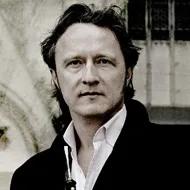
As a soloist, chamber musician and principal oboist of the Berliner Philharmoniker, Albrecht Mayer is among the most sought-after oboists of our time.
Classicpoint.ch: Why and when did you decide on the oboe?
In Bamberg, where I grew up, there was an acute shortage of oboists in the youth orchestra. My father was a doctor and was asked whether he knew anyone who might play. He organised two oboes and brought them home. There he placed them on the kitchen table and announced to my brother and me that we would now learn this instrument. That is how we began to learn and to love the instrument. My brother, however, no longer plays today.
In an interview you once said that the word talent is hugely overrated and counts for perhaps only five per cent. In your opinion, what is the key to a international career?
An international career is fundamentally not something that can be planned. But indeed, great talent alone does not help. I know only very few highly gifted musicians such as Lang Lang, Sarah Chang or Evgeny Kissin. However, there are many musicians of average talent who have gone very, very far. Ultimately, what is decisive is that a musician does not give up, always wants to develop further, never stands still, develops a passion and is also willing to push himself hard.
You moved to the Berliner Philharmoniker at the beginning of the 1990s. How did you experience the first years?
That was still the Karajan orchestra with its long-established colleagues. I remember that it was very difficult for me to fit into this tradition-steeped structure. There was no room at all for discussion. One had to do what the maestro and the experienced colleagues prescribed.
How do you experience the orchestra today?
The mood in the orchestra is good, but it is not easy, because democracy in an orchestra and in music in general is unfortunately not possible. The stronger personalities always assert their ideas and visions. I remember rehearsing a wind octet with wonderful artists such as Sabine Meyer. We had the idea that everyone should set out all their ideas about the piece and that we would then try to bring everything together. We failed miserably. When too many ideas come together, the lowest common denominator is unimaginative and dull.
Claudio Abbado and Simon Rattle have a very different style of leadership from Karajan back then. Are there still any famous conductors with an authoritarian manner today?
Of course, for example Barenboim or Thielemann. However, there are becoming fewer and fewer of them.
Doesn't an orchestra band together against the conductor if he becomes too authoritarian?
Yes, that can certainly happen. Young conductors cannot afford such a manner for that reason. Established conductors with world fame, however, simply move on and no longer come back. That is why it works much better with them.
By which deceased composer would you most have wished for a work for solo oboe and orchestra?
That is a very difficult question. There is a solo concerto by Beethoven that has been lost. I would be very interested in that concerto, or else a work by Brahms, Schumann or Tchaikovsky.
What about contemporary music? Do you champion new works with the oboe as a solo instrument?
Yes, absolutely! I try to motivate composers to write new works. Heinz Holliger has of course already done an incredible amount for the oboe. I enjoy playing contemporary works and am always open to new compositions. For example, I have just performed a concerto by Peter Ruzicka, and on 11 August next in Thun I will play the Concertino by the Swiss composer Gotthard Odermatt.
In October 2011 you founded the Albrecht Mayer Foundation, which supports research and therapy development for retinal and optic nerve diseases. How did that come about?
A friend of mine, Franz Badura (trumpeter), is almost blind and regularly attends my concerts as a listener. When he once raised his illness with me and asked whether we could do something together, it turned out that this disease had also appeared in my family. The dark figure is huge. Many people do not know at all that they have a predisposition to it. Through the foundation we support research and therapy development.
What does Albrecht Mayer do in his free time when he is not playing the oboe?
I have a collection of bicycles and I passionately ride road racing bikes. I also love diving, as far as my ears allow. I have just returned from a diving holiday in Madeira.
Interview by Florian Schär | Classicpoint.ch | 8.8.2013
Image: Decca / Mat Hennek
More interviews
All interviews →


