

Samuel Coleridge-Taylor
1875–1912
Life
Samuel Coleridge-Taylor was born in London on 15 August 1875 and grew up in Croydon. His father came from Sierra Leone, and his mother was English. As a child he already learnt the violin, before studying violin at the Royal College of Music and then turning to composition, taught by Charles Villiers Stanford. With the Ballad in A minor he achieved an early success at the Gloucester Festival in 1898.
Alongside composing, he worked as a conductor, teacher and adjudicator at music competitions, which took him throughout England and Wales. On his journeys to the United States, including in 1904, 1906 and 1910, he met with great public interest. In 1904 President Theodore Roosevelt received him at the White House. In 1900 he took part, as the youngest delegate, in the first Pan-African Conference in London. He died in 1912 at the age of 37 of pneumonia, which had been aggravated by long overwork.
Works and Style
Coleridge-Taylor wanted to incorporate elements of traditional African music into the classical tradition, much as Brahms took up Hungarian influences. His musical language remains at its core late Romantic and clearly structured. The main melody of his Hiawatha Overture, for example, refers to the spiritual "Nobody Knows the Trouble I've Seen". His output comprises orchestral, chamber, choral and piano music, and he liked to set texts by poets, including Paul Laurence Dunbar.
Well-known Works
Coleridge-Taylor became famous with the cantata trilogy after Henry Wadsworth Longfellow's narrative poem "The Song of Hiawatha", composed between 1898 and 1900: "Hiawatha's Wedding Feast", "The Death of Minnehaha" and "Hiawatha's Departure". The first part was premiered in November 1898 at the Royal College of Music. The overture to "The Song of Hiawatha" was heard in 1899 at the Norwich Festival. His repertoire also includes the String Quartet No. 1 "Calvary" and the suite "Four Novelettes", which can still be heard in concerts today.
Concert Life Today
In November 2026 Coleridge-Taylor can be heard in several concerts in the German-speaking region and in Switzerland. At the Advent Concert in the Kurhaus Bad Tölz, he is on the programme together with works by Charpentier, Corelli, Mozart and others. In Solothurn the "Four Novelettes" will be performed at the Stadttheater alongside Schumann's Violin Fantasy and a work by Camille Pépin, under the title "Alte und Neue Welt" ("Old and New World"). The same programme can be heard in the same month at the Kongresshaus Biel as the 3rd Symphony Concert. In the Wiener Konzerthaus the Wiener KammerOrchester under Joji Hattori accompanies the soprano Martina Neubauer in a programme that also includes him.
His name also appears in chamber music and organ concerts: in August 2026 the Ensemble der Bothmer-Musik at Schloss Bothmer in Klütz plays alongside Schumann and Hindemith, and in July 2026 he is on the programme of organist Katelyn Emerson at the Heilig-Kreuz-Münster in Schwäbisch Gmünd. In April 2027 his String Quartet "Calvary" will be performed in the Grosser Saal of the Hamburg Laeiszhalle, played by the Poiesis Quartet.
Upcoming concerts featuring works by Samuel Coleridge-Taylor
Friday 27 November
19:30AdventskonzertBrian Isaacs (Viola) Münchner Kammerphilharmonie Dacapo Franz Schottky (Leitung)Kurhaus, Bad Tölz (Gabriel von Seidl-Konzertsaal)Saturday 17 April
16:00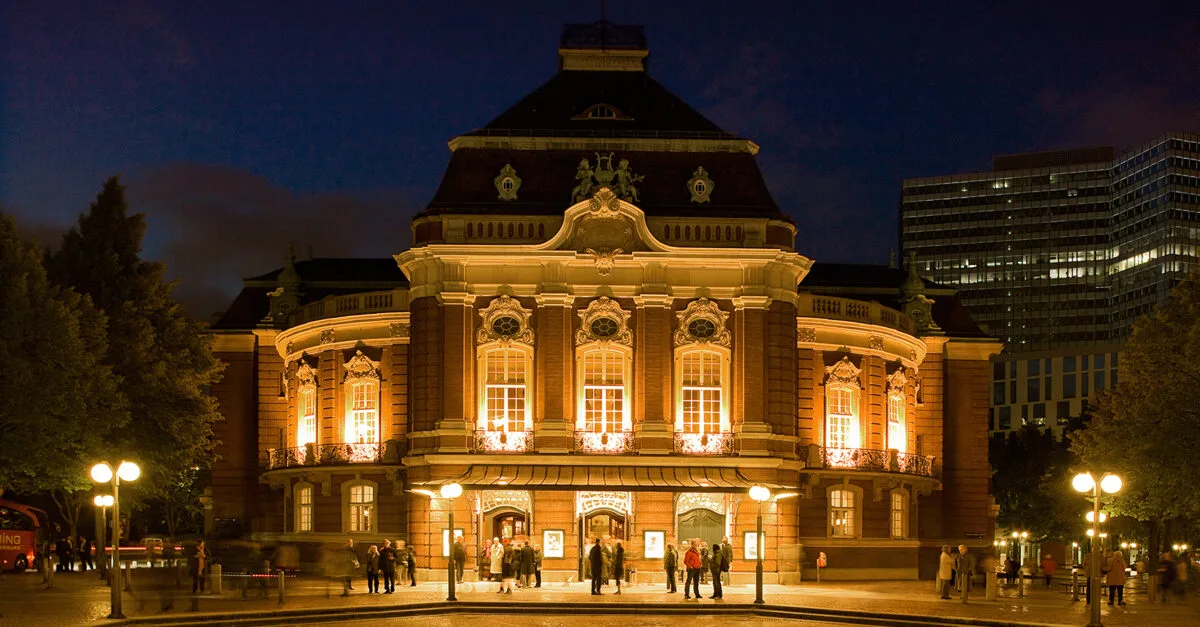 Poiesis QuartetPoiesis QuartetLaeiszhalle, Hamburg (Großer Saal)