

Pavel Haas
1899–1944
Life
Pavel Haas was born in 1899 in Brno, a city in what was then Austria-Hungary and is today called Brno. He grew up in a Moravian-Jewish family. His musical talent became evident early on, and at the age of fourteen he made his first attempts at formal composition. Between 1920 and 1922 he studied at the Brno Conservatory with Leoš Janáček, who had a lasting influence on his style.
The German occupation of Czechoslovakia profoundly changed his life. Performances of his works were banned, and he and his wife were forbidden to work. At the end of 1941 he was taken to Theresienstadt, where he continued to compose. In October 1944 he was deported to Auschwitz, where he was murdered.
Works and Style
Haas left behind more than fifty compositions, but only some of them carry an opus number, as the composer was very self-critical. Janáček was by far his most important teacher, and Haas proved to be his best pupil. His music draws on Moravian folk music, Jewish synagogue music and jazz, which was then spreading into Central Europe. In addition, influences of Stravinsky are evident, whose irony and transparent instrumentation fascinated him.
His chamber music and song cycles are of particular significance. The opera Šarlatán (The Charlatan) is regarded as the high point of his mature style. Only a few pieces survive from the Theresienstadt period; the Study for String Orchestra had to be reconstructed after the war by Karel Ančerl from the surviving parts.
Well-Known Works
Among his most important compositions are the String Quartet No. 2 Op. 7 "From the Monkey Mountains", the Wind Quintet Op. 10 and the String Quartet No. 3 Op. 15, written in 1940 and 1941. The Study for String Orchestra is today regarded as his most frequently performed piece. The Suite for Oboe and Piano Op. 17 also belongs to the repertoire and appears again and again in concerts.
Concert Life Today
In July 2026 his piece "Präludium und Con molta espressione" was performed in the Max-Littmann-Saal of the Regentenbau in Bad Kissingen, played by pianist Dmitry Yudin, who combined it with works by Lutosławski, Schulhoff and Bach; Waltraud Meier took part as narrator. In November 2026 the Wind Quintet Op. 10 was on the programme at the Cuvilliés-Theater of the Munich Residenz, as part of an evening with Henze, Jolivet and a Schumann arrangement.
Two dates are planned for 2027 in which the Pavel Haas Quartet, named after him, plays an important role. In August it performs at Schloss Grafenegg in Austria together with Rudolf Buchbinder and Colin Currie; alongside the String Quartet No. 2 "From the Monkey Mountains", works by Dessner and Dvořák are on the programme. Anyone wishing to hear Haas's chamber music in concert will therefore find the most reliable opportunities in southern Germany and Austria.
Upcoming concerts featuring works by Pavel Haas
Sunday 23 May
11:00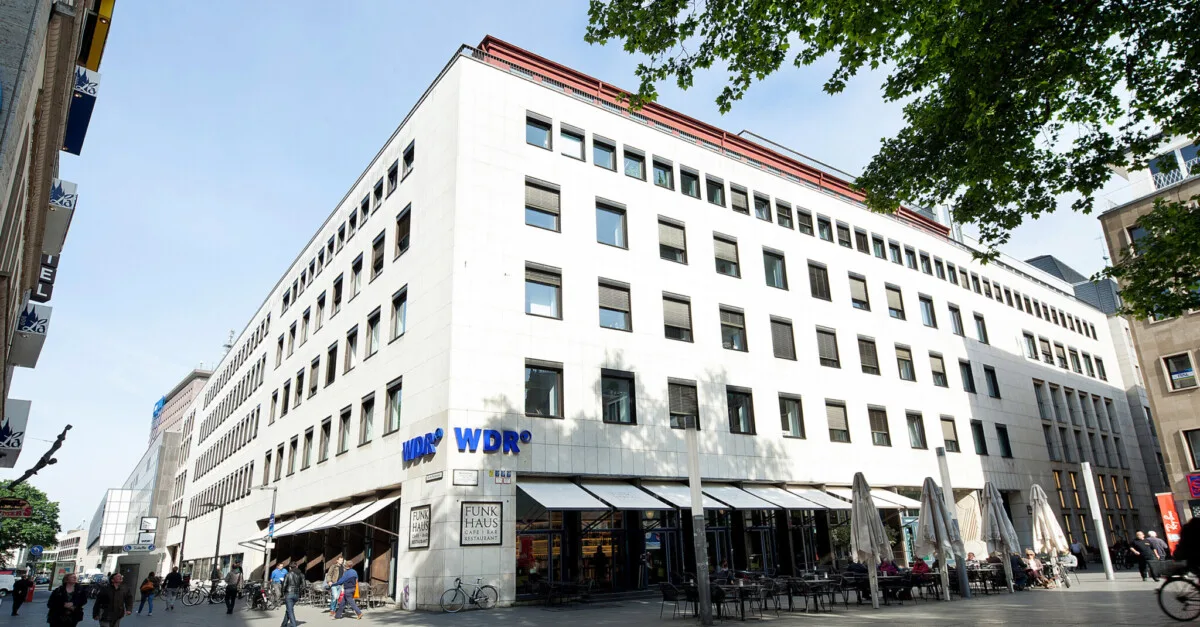 Christiane Tétard (Flute), Svetlin Doytchinov (Oboe), Dörte Sehrer (Clarinet), Augusto Velio Palumbo (Bassoon), Haeree Yoo (Horn), Sara Etelävuori (Violin), Elizaveta Goldenberg (Violin)Christiane Tétard (Flöte) Svetlin Doytchinov (Oboe) Dörte Sehrer (Klarinette) Augusto Velio Palumbo (Fagott) Haeree Yoo (Horn) Sara Etelävuori (Violine) Elizaveta Goldenberg (Violine)Funkhaus Wallrafplatz Köln, Köln