

Leó Weiner
1885–1960
Life
Leó Weiner was born in Budapest on 16 April 1885, where he also died in 1960. From 1901 to 1906 he studied with János Koessler at the Royal Academy of Music in his home city, where he won numerous prizes. He then worked as a repetiteur at the Budapest Comic Opera, and a travel scholarship, the Franz Joseph Jubilee Prize, took him to Vienna, Berlin, Leipzig and Paris.
His career as a teacher began in 1908 at the Academy. Initially he taught music theory there, from 1912 composition and from 1920 chamber music, until he retired in 1949 as a professor emeritus. His pupils included Antal Doráti, Georg Solti and János Starker. In 1960 he received the Kossuth Prize for his life's work.
Work and Style
Weiner is regarded as a composer of the Romantic tradition. He is placed in the line of Brahms and Mendelssohn. His music is technically accomplished, melodically rich and colourfully orchestrated. It is conservative and Romantic in character, yet contains elements of Hungarian folk music. Unlike Bartók and Kodály, he did not develop the folk music into a personal style; he tended to treat it as raw material. All the more significant is his chamber music output, which includes string trios and string quartets.
Well-Known Works
His best-known piece is the incidental music to Mihály Vörösmarty's fairy play Csongor és Tünde, composed in 1903. Other orchestral works include the Serenade Op. 3, with which he won several prizes, and the Divertimento No. 1 Op. 20, written in 1923 and dedicated to his friend Fritz Reiner. This Divertimento is probably Weiner's most recorded work. It is based on old Hungarian dances. In the field of chamber music, the String Trio in G minor Op. 6 is among his most performed works.
Concert Life Today
In Switzerland, Weiner is currently present mainly in chamber music. In September 2026 he was on the programme of the prize-winners' concert of the Swiss Chamber Music Festival at the Reformierte Kirche Adelboden, performed by the A-Delta Trio. In the same month, the same saxophone trio performed his String Trio in G minor Op. 6 at the Verein Musikdorf Ernen, as part of the "Newcomers" series. In August 2026 Weiner's music rang out in the open air on the village square of Ernen, as part of the chamber music festival with the Festival Orchestra Musikdorf Ernen, alongside Mozart.
Encounters with Weiner's music in churches in eastern Switzerland are announced for the coming months: the Winter Concert of the Stadtorchester Frauenfeld in November 2026 takes place at the Evangelische Stadtkirche Frauenfeld and at the Reformierte Kirche Elgg. According to the current information from Classicpoint.net, Weiner can be heard in Germany in June 2027, at the Konzerthaus Blaibach with the Franz Liszt Chamber Orchestra, clarinettist Pablo Barragán, cellist István Várdai and the Lajos Sarkozy Trio. There his Divertimento No. 1 appears alongside works by Kodály, Hartmann and Bartók. Austria is not represented in the concert dates currently available.
Upcoming concerts featuring works by Leó Weiner
Friday 27 November
20:00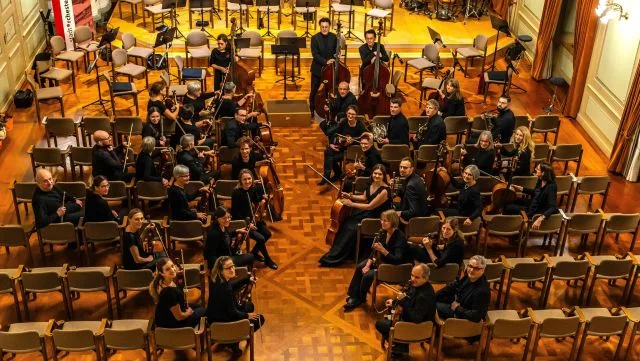 Winter Concert Stadtorchester FrauenfeldStadtorchester Frauenfeld · Konradin HerzogEvang. Stadtkirche Frauenfeld
Saturday 28 November
17:00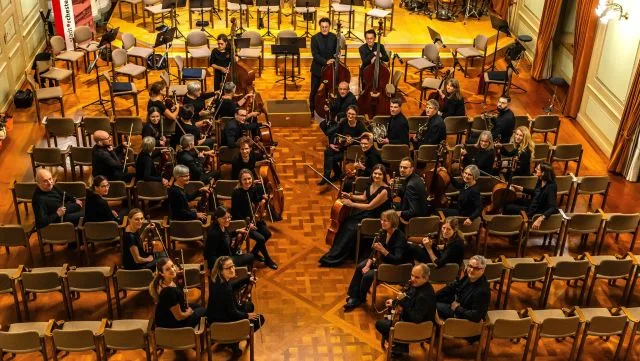 Winter Concert, Stadtorchester FrauenfeldStadtorchester Frauenfeld · Konradin HerzogReformierte Kirche Elgg