

Hans Leo Hassler
1564–1612
Life
Hans Leo Haßler was baptised in Nuremberg in October 1564. He received his first organ lessons from Leonhard Lechner, among others. From 1584 he was a pupil of Andrea Gabrieli in Venice, where he also met Giovanni Gabrieli. In 1585 he became chamber organist to Count Octavian II Fugger in Augsburg, as well as organist at St. Moritz.
After the death of his employer, his place of work shifted: in 1601 he moved to Nuremberg, where he worked above all as a businessman and maker of automatic organs. In 1604 he relocated to Ulm. From 1608 he was chamber organist to the Elector Christian II of Saxony, who resided in Dresden. During the coronation celebrations for Emperor Matthias, Haßler died of tuberculosis on 8 June 1612 in Frankfurt am Main.
Work and Style
Haßler is regarded as one of the first German composers to make Venetian music known north of the Alps. With his songs in the style of foreign madrigals and canzonettas, and with the Lustgarten, he brought villanelles, canzonettas and dance songs by Gastoldi and Vecchi to Germany. His particular significance lies in the combination of Italian song forms with German texts.
Although he was a Protestant, he wrote numerous masses and directed the music for Catholic services in Augsburg. This versatility is also reflected in the fact that his works could be used in both Catholic and Protestant contexts.
Well-Known Works
His principal works include the collection Canzonette a quatro voci of 1590, the motet collection Cantiones sacrae (Augsburg 1591) and the Lustgarten neuer teutscher Gesang, Balletti, Galliarden und Intraden, which scholarship regards as his best-known song collection. Alongside these stand masses, such as the Missae of 1599. A further legacy concerns the chorale: the melody for „Herzlich tut mich verlangen“ originated around 1600 as a secular love song, which was printed in the Lustgarten in 1601.
Concerts Today
In November 2026, Haßler's Missa secunda is the focus of a concert in the Hofburgkapelle Vienna, a venerable space for sacred Renaissance music. Also in November, he can be heard at the Parktheater Bensheim in the programme The Lute Song Book, an evening of lute songs in which works by Dufay, Dowland and Purcell sit alongside pieces by Senfl and Haßler.
In December 2026, Haßler features in a concert by the Windsbacher Knabenchor under Ludwig Böhme in the St.-Gumbertus-Kirche in Ansbach, together with works by Bach, Brahms and Reger. In summer 2026 he was also part of an organ tour that led via Fürstenfeld in Styria, with programmes in which Sweelinck, Mozart and Haydn were alongside him. Anyone who wishes to experience his music live will therefore find it both in vocal programmes and in major sacred concerts and on historic organs.
Upcoming concerts featuring works by Hans Leo Hassler
Friday 27 November
19:00Adam Riis (tenor), Concert Clemens, Carsten Seyer-Hansen (conductor)Adam Riis (Tenor) Concert Clemens Carsten Seyer-Hansen (Leitung)Stiftskirche Stuttgart, Stuttgart, Telefon: 240893Saturday 28 November
20:00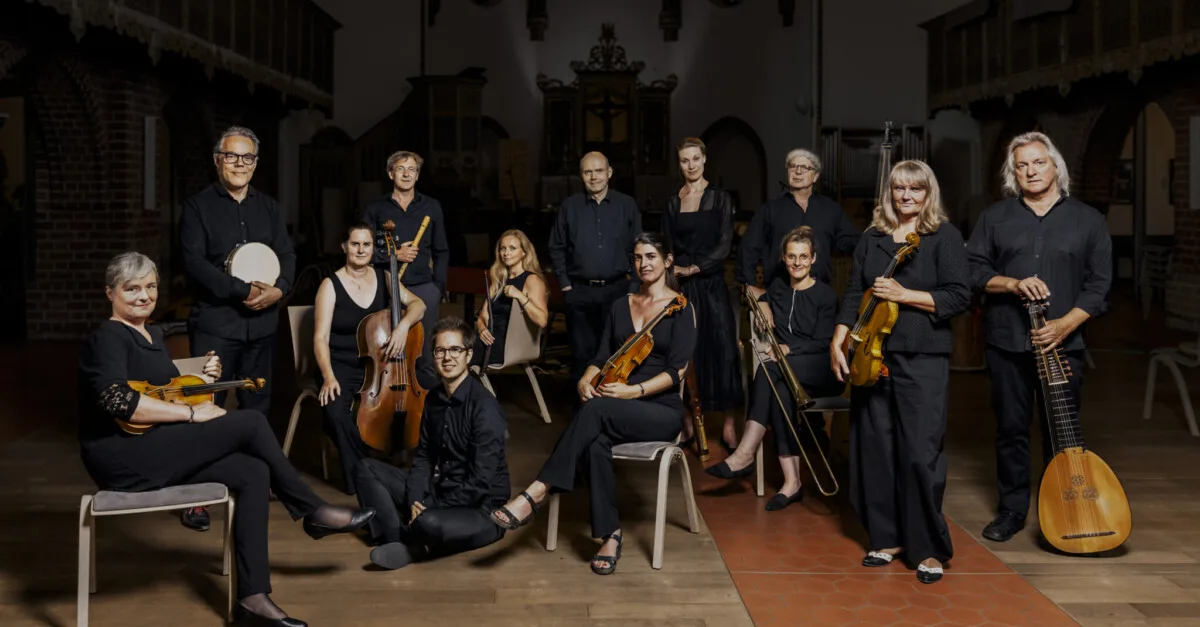 The Lute Song BookLautten Compagney BerlinParktheater Bensheim, Bensheim