

Dieterich Buxtehude
1637–1707
Life
Dieterich Buxtehude is regarded as the leading representative of the North German organ school of the Baroque. He was probably born around 1637 in Helsingborg and died on 9 May 1707 in Lübeck. Little is known about his early years. As the son of an organist, he initially worked as an organist himself, including in Helsingborg and Helsingør. From 1668 he served at the Marienkirche in Lübeck, where he remained until his death.
In Lübeck he continued the Abendmusiken, a series of non-liturgical concerts begun by his predecessor Franz Tunder, and made them widely known. The young Johann Sebastian Bach travelled to Lübeck specifically in 1705 to hear him; he stayed until the following spring and took numerous copies of his works away with him.
Works and Style
Vocal music makes up the largest part of his surviving output, although his post did not require it. Many of these works have been preserved mainly through the collection of Gustav Düben, court Kapellmeister in Stockholm. During his lifetime, mainly trio sonatas for strings were published, written in the free, at times improvisatory-sounding stylus phantasticus.
Buxtehude's lasting fame, however, rests above all on his organ works, in which preludes, toccatas and chorale settings find a virtuosic and freely shaped idiom.
Well-Known Works
His best-known vocal work is the cantata cycle Membra Jesu nostri from 1680. The seven cantatas each contemplate one part of the crucified body of Christ, from the feet to the face, and are dedicated to Gustav Düben. In Lübeck, sacred cantatas such as "Herr, wenn ich nur dich habe" (BuxWV 38) or the Missa brevis (BuxWV 114) are also regularly performed.
In Concert Today
Membra Jesu nostri is currently scheduled in two places in the German-speaking world: in February 2027 at the Munich church of St. Stephan, and in March 2027 at the Nikolaikirche Spandau in Berlin. The organ also remains an important setting for his music. At the Berlin church Zum Heilsbronnen, Buxtehude features in January 2027 on the programme of organist Bernhard Haas, framed by Scarlatti, Bach and Reger. In November 2026, works by Buxtehude will be heard at the Kurfürstliches Palais in Trier in a "Barocke Weihnacht" alongside Telemann and Froberger. In May 2027, Musikverein Wien presents Buxtehude on historical keyboard instruments together with Schubert. Anyone wishing to experience his music at the place where he worked will find the Buxtehude-Tage held every year in Lübeck's Marienkirche.
Upcoming concerts featuring works by Dieterich Buxtehude
Friday 27 November
19:00Adam Riis (Tenor), Concert Clemens, Carsten Seyer-Hansen (Leitung)Adam Riis (Tenor) Concert Clemens Carsten Seyer-Hansen (Leitung)Stiftskirche Stuttgart, Stuttgart, Telefon: 24089319:00Barocke WeihnachtEnsemble ZuléiaKurfürstliches Palais Trier, TrierThursday 3 December
19:30Memento OdesaSebastian Studnitzky & Band Kammerorchester der Philharmonie Odesa Volodymyr Dykyi (Leitung)Halepaghen-Bühne, BuxtehudeMonday 4 January
19:30Martin Haselböck (Orgel), Karl Markovics (Rezitation)Martin Haselböck (Orgel) Karl Markovics (Rezitation)Martinskirche, BottropFriday 8 January
19:00Bernhard Haas (Orgel)Bernhard Haas (Orgel)Kirche Zum Heilsbronnen, BerlinSunday 28 February
15:00Buxtehude: Membra Jesu nostriE.Leutheria Gambenklasse Heumann Johannes Lamprecht (Orgel & Leitung)St. Stephan, MünchenSunday 7 March
19:00Buxtehude: Membra Jesu nostriRIAS Kammerchor Berlin Collegium Musicum ’23 Grete Pedersen (Leitung)Nikoaikirche Spandau, BerlinFriday 12 March
19:00Susanne Kujala (Orgel)Susanne Kujala (Orgel)Kirche Zum Heilsbronnen, BerlinMonday 10 May
19:30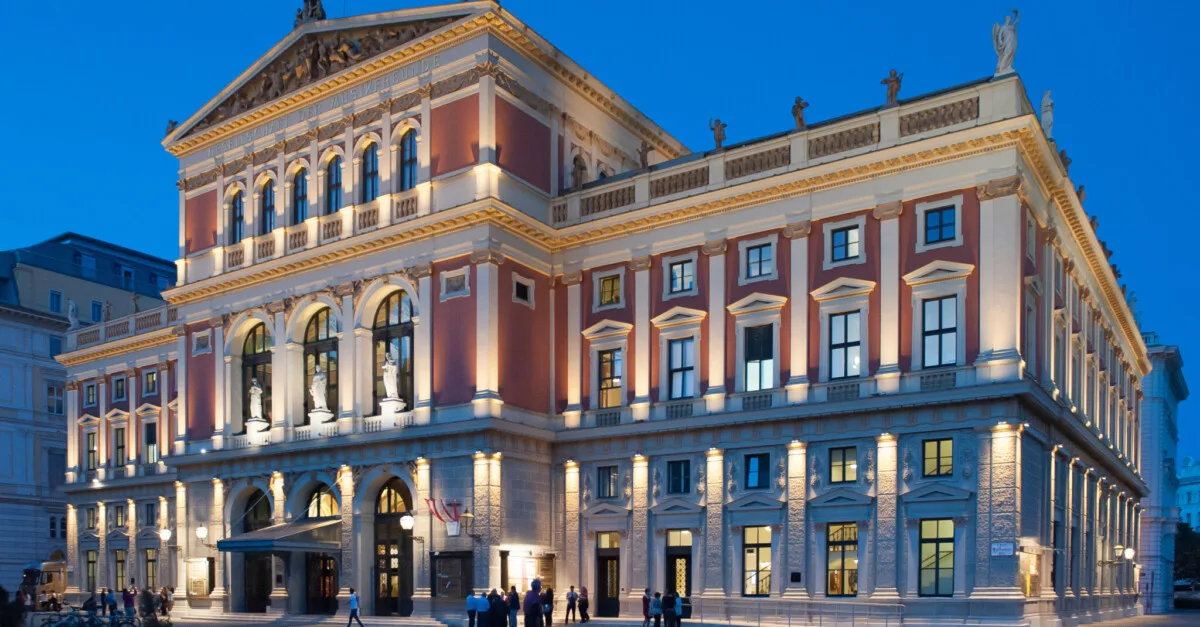 Florian Birsak (Hammerklavier), Jutta Täuber-Holzapfel (Hammerklavier), Anton Holzapfel (Physharmonika)Florian Birsak (Hammerklavier) Jutta Täuber-Holzapfel (Hammerklavier) Anton Holzapfel (Physharmonika)Musikverein Wien